
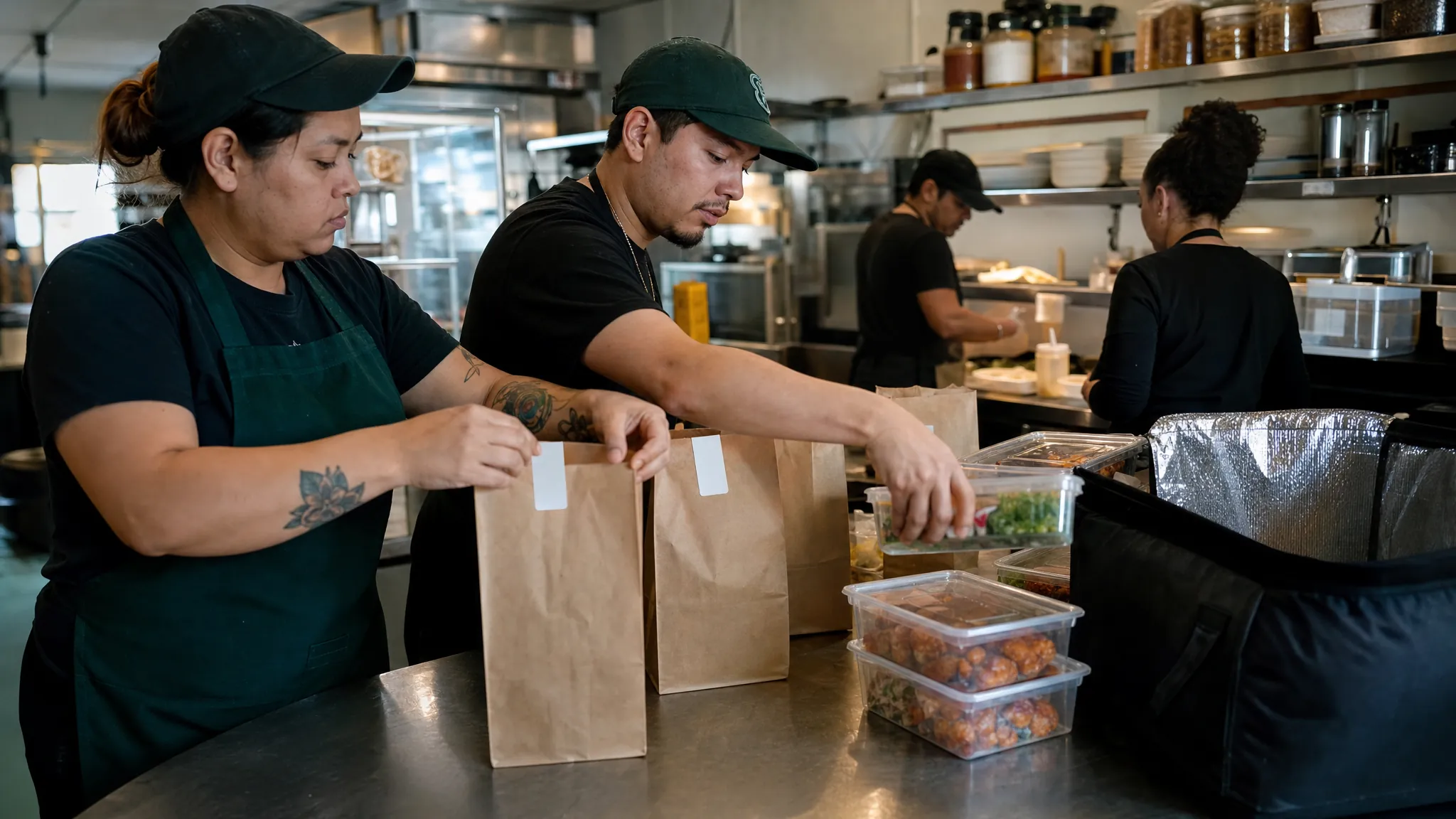
Meal packaging for a school lunch program has to protect the food, keep orders identifiable, and make delivery and handoff workable from the restaurant prep line to the student. It gets dismissed as a box problem right up until lunch arrives with a wet bag, a missing side, two meals that look identical, and a school receptionist trying to work out who ordered what. Then everybody remembers that the package was part of the service all along.
Restaurant-prepared school lunch has a longer journey than a restaurant table order. A meal has to be made from a real count, packed, labeled, grouped, carried, delivered, received, and handed to the right student. The container is only one piece. The whole package includes the food arrangement, lid, bag, label, sauce cup, utensils, thermal carrier, and the school-side routine.
This guide is for schools and restaurant partners building a parent-ordered lunch service. It is not a substitute for a food-safety plan or local rules. It is the practical operating layer: how to choose packaging that makes the meal easier to prepare, deliver, identify, and hand off on a real school day.
Key takeaways
- Meal packaging for school lunch programs is part of the service, not an afterthought. It has to work through prep, delivery, distribution, and student handling.
- The best container depends on the actual meal, its temperature needs, the travel time, the student age group, and the school's handoff routine.
- A clear label and repeatable bagging pattern matter as much as the container because school staff need to move a known meal to a known student.
- Run packaging tests on a real delivery day. Countertop samples do not reveal crushed bags, condensation, missing sides, or a bottleneck at the school door.
- Buy My Lunch keeps orders, restaurant counts, labels, delivery details, credits, and school handoff connected so teams can test a packaging plan against real conditions.
Start with the whole lunch journey
A package can look sensible on a prep counter and fail everywhere that follows. The lid may pop during stacking. A cold side may warm against a hot entree. Condensation may soften the paper bag. A sauce cup may roll into the bottom. A student may not be able to open the container without asking an adult. None of those are abstract packaging concerns. They are lunch-period concerns.
Before choosing a material or ordering a case of containers, map the sequence. What food is being packed? How long until it reaches the school? Is it carried in an insulated tote? Does the school receive one grouped delivery or distribute bags by classroom? Who checks the count? Where do bags sit between delivery and handoff? The answers determine what a container needs to do.
This is especially useful for teams starting a new program. The back-to-school lunch program checklist covers the wider launch work: rosters, ordering cutoffs, delivery instructions, family communication, labels, and day-one handoff. Packaging should be tested inside that plan, not selected in isolation because a supplier sample looked tidy in the office.
Protect the meal before you worry about presentation
Food protection comes first. The FDA's Food Code identifies improper holding temperatures and contaminated equipment among the major food-service risk factors. The exact procedures depend on the restaurant's food-safety plan and local requirements, but the operational question is simple: does the package support the way that meal needs to be held, carried, and served?
USDA's school food-safety guidance treats packaging and transportation as part of the food flow, along with receiving, storing, preparing, cooling, holding, assembling, and serving. Its school food-safety program guidance is written for school meal operations, but the principle applies to restaurant partners too: protect the food through every handoff, not only while it is still in the kitchen.
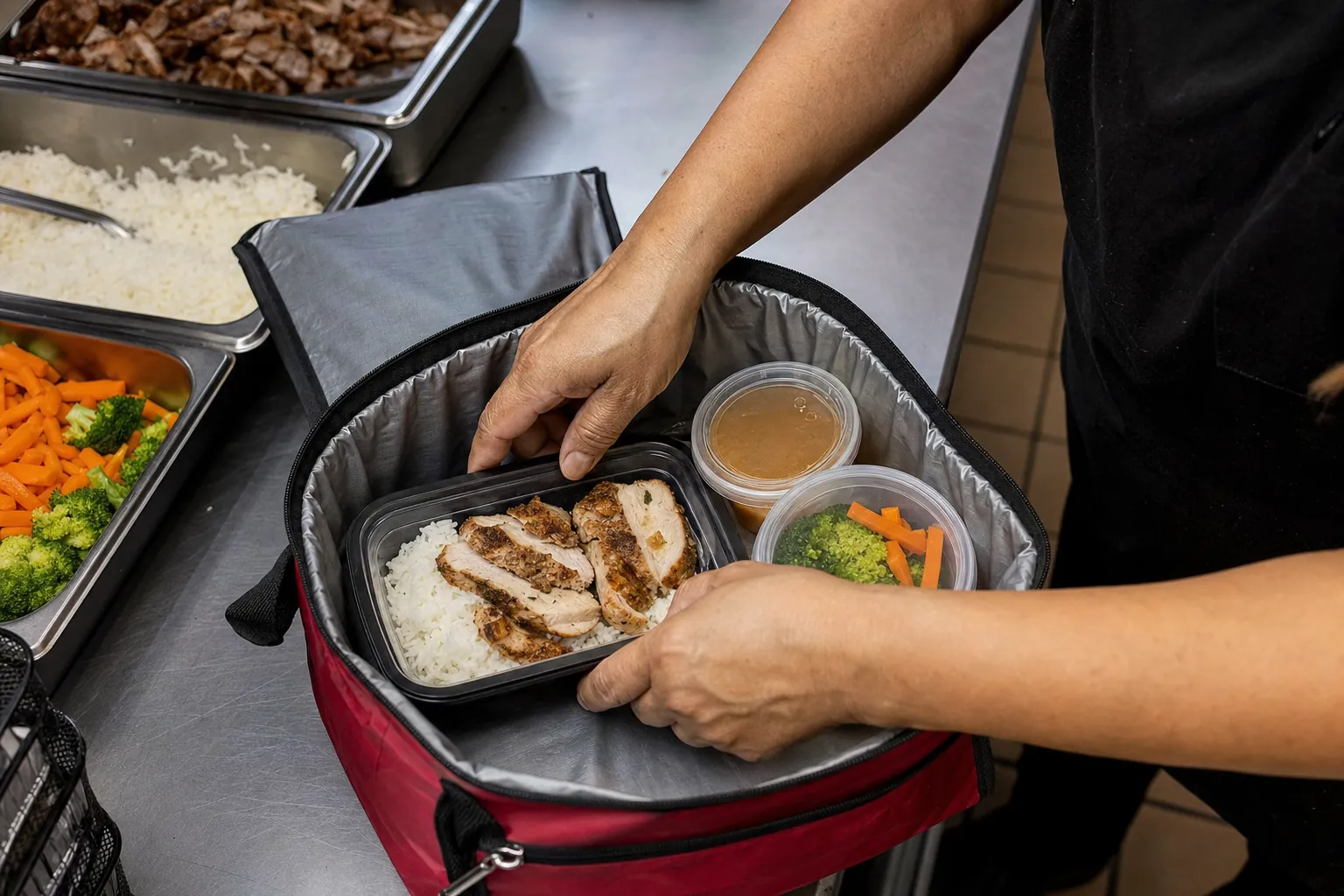
Work from the meal backward. A hot bowl with a cold fruit side may need separation. A crisp item may need room to breathe. A saucy entree may need a better seal and an upright bag position. A meal with a chilled component may need a different carrier than a dry sandwich. No one container wins every menu. A small approved set that fits the actual meal types is usually more useful than one heroic container asked to do everything.
Build each meal like it has to survive a commute
The quickest way to make a menu item unreliable is to pack it as though the student is sitting ten feet from the pass. A school lunch is likely to sit through final prep, bagging, a short route, delivery reception, and distribution. Test it in that order.
Give each regular item a simple packaging specification. Record the base container, lid, any divider, sauce placement, side placement, bag size, utensil need, label location, and carrier. For example, a rice bowl might use a sealed base, a separate cold side, a sauce cup that sits upright, and a label placed on the bag rather than a damp lid. A wrap might travel better in a paper sleeve inside a shallow bag with its side secured separately. The point is not to over-engineer lunch. It is to stop re-deciding it at 10:55 a.m.
The school lunch menu ideas guide makes the same point from the menu side: a popular meal still needs to be portioned, packaged, labeled, delivered, and handed out cleanly. If a dish only works on a plate, it may be a restaurant special, not a practical school lunch item.
Make labels and bags do real work
The bag is not merely the thing around the container. It is the handoff unit. Once lunch reaches a school, staff need to identify a bag quickly, match it to the school's distribution method, and move on. That is why a label needs a stable home, clear print, and only the details the school needs.
Agree on one label format with the school. It might include a student name or approved identifier, class or teacher, meal detail, and a school-specific sorting cue. Confirm which details should be visible to staff and avoid adding extra personal information just because there is room on the sticker. The school setup guide is the right place to align rosters, distribution, parent communication, and the people who will receive the bags.
Then test the bag itself. Does it hold the meal upright? Does a drink or sauce make the base weak? Can it be stacked in a tote? Is the handle sturdy enough for the delivery contact? Does the label stay flat and visible after the bag is moved? A perfect label on a crushed paper bag is still a bad label.
Give the packing line one last checkpoint
The final packer is the last person who can catch a small mistake before it becomes a school problem. That person does not need a complicated audit form. They need one clear sequence: match the meal to the label, confirm the included components, close the container, place it in the assigned bag, and put that bag into the correct delivery group. When the same sequence happens every time, a missing side is easier to notice before the driver is halfway across town.
Keep exceptions visible. If a meal needs a substitution, a credit, a different pickup plan, or a last-minute school note, do not tuck that information into a bag and hope the right person sees it. Give the restaurant and school one agreed way to flag it. The exception should be obvious in the order details, reflected in the label or delivery group when appropriate, and known by the person receiving lunch at school. An exception handled quietly is usually an exception rediscovered loudly.
This is where ordered-ahead lunch has an advantage over a loose collection of lunch requests. The restaurant can work from a final count instead of estimating demand, and the school can expect a defined delivery. Use the same discipline when a family needs help after ordering. The parent ordering guide gives families a direct support path for account, order, delivery, credit, and missed-order questions, instead of turning the packing line into a customer-service desk.
Plan the tote, route, and school door
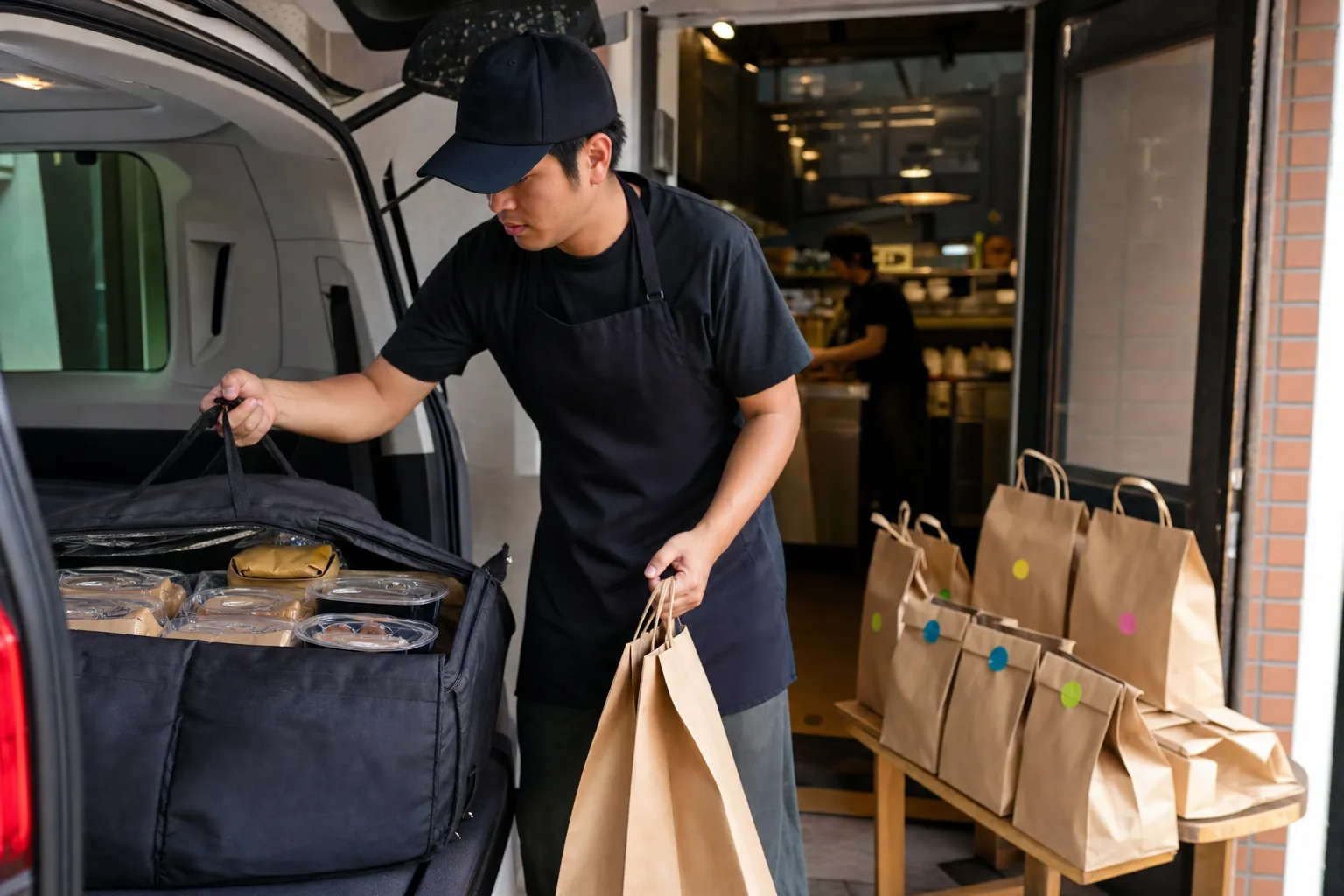
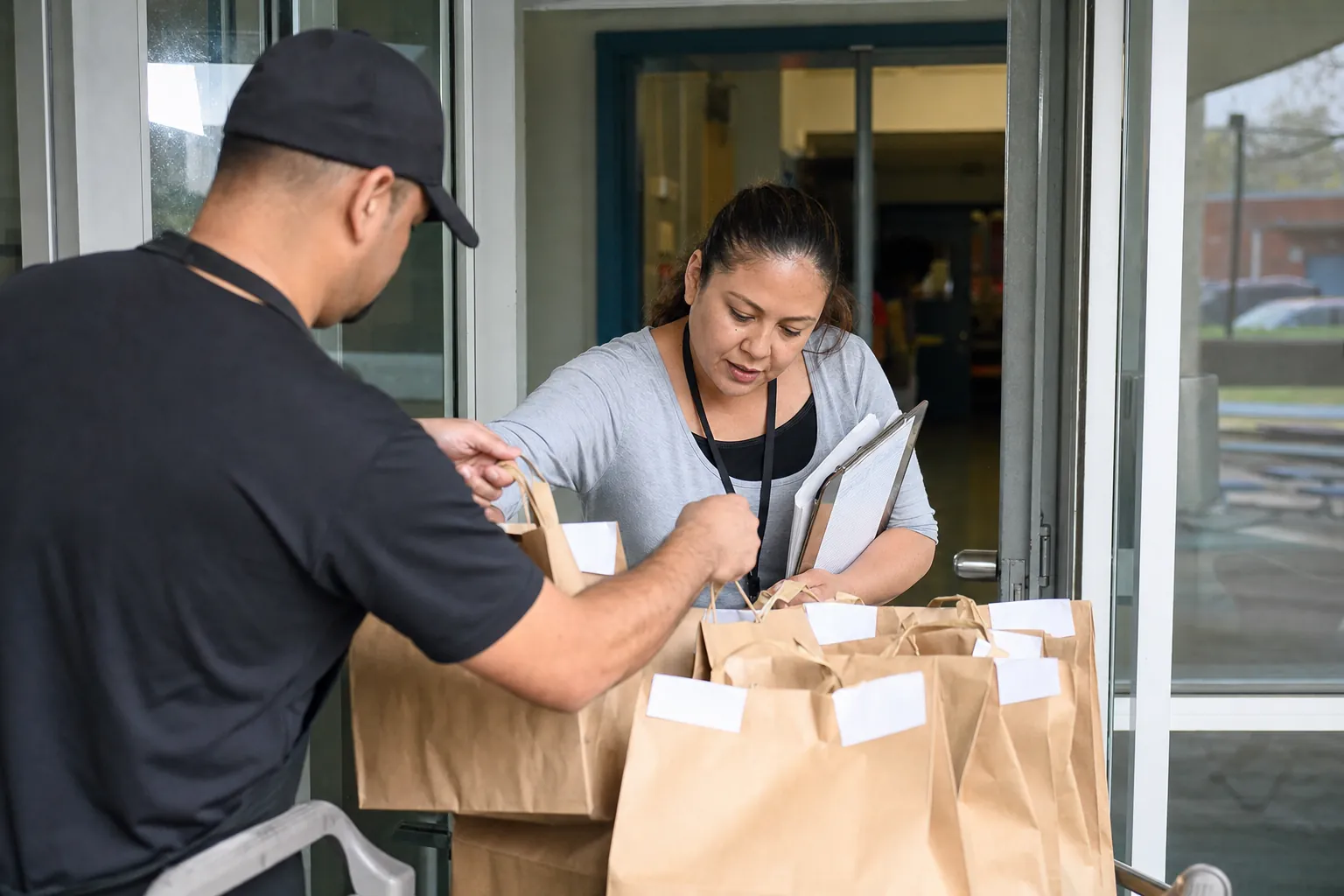
Packaging decisions show up again when the driver leaves. Bags need an order. Totes need an order. The driver needs a destination, delivery window, and named school contact. The school needs to know how many meals are coming and where they will land. Without that agreement, the bags become an unsorted pile at the exact moment the school is busiest.
Use a repeatable packing sequence: final count first, labeled meals second, grouped bags third, carrier loaded last. Keep the school grouping consistent with the handoff plan. If the school distributes by class, pack that way. If one coordinator receives everything at a designated entrance, keep the carrier count simple and visible. The school lunch delivery guide walks through the wider delivery promise, including the arrival window, recipient, discrepancy plan, and first-week review.
For restaurant partners, this should feel like a system they can actually prep around. The restaurant partner guide covers menu setup, order reporting, packaging, delivery, and payment. The useful packaging plan is the one a kitchen can repeat from a real order count without needing a new group text every lunch day.
Run a school-day packaging pilot
Do not judge packaging only from one sample meal. Run a controlled pilot on an actual delivery day with a small set of real orders. Watch the entire trip: prep, label application, bagging, tote loading, vehicle movement, arrival, handoff, distribution, and student opening.
Ask direct questions. Did every meal arrive in the expected condition? Were all sides present? Did labels remain readable? Did the bags stand up? Did the count match? Did a staff member have to re-sort the order? Did students know how to open the package? Did the meal still make sense when they sat down to eat? That is the test. A packaging choice earns its place when it survives the normal lunch day, not when it looks polished in a catalog photo.
Make one change at a time after the pilot. Change the container, bag size, sauce placement, label position, tote grouping, or school receiving step, then see what moved. Changing six things at once feels energetic and teaches you almost nothing.
Where Buy My Lunch fits
Buy My Lunch is designed for restaurant-prepared lunch that has to arrive as an organized school-day service. Families order ahead from school-specific menus. Restaurants work from known counts. Meals can be labeled for the school handoff. Delivery details, parent payment, and credits stay connected to the order instead of living across a paper form, a kitchen printout, and three inboxes.
That does not choose a container for a restaurant. It gives the school and restaurant a steadier operating picture to test one honestly. The team can see the menu, count, label, delivery, and handoff together, then choose packaging that fits the work instead of making the work fit a box.
Schools comparing the full model can explore online lunch ordering for schools or review school lunch ordering software. Both explain the connected details that sit behind a calmer lunch-day handoff.
A school lunch packaging checklist
- Map the real path from restaurant prep to student handoff.
- Choose packaging around the menu, temperature needs, travel time, and school routine.
- Write a simple approved specification for each regular meal type.
- Decide where the label goes and what school staff need to see.
- Test bag strength, stacking, tote loading, and delivery order.
- Use a named school delivery contact and a clear expected count.
- Run a real service-day pilot before making the packaging permanent.
- Review meal condition, label failures, missing parts, and handoff friction after each early run.
Frequently asked questions
What packaging is best for school lunch delivery?
The best packaging is the one that protects the specific meal through the full route: restaurant prep, bagging, travel, school delivery, distribution, and student handling. Schools and restaurant partners should test it with the actual menu, delivery window, label, and handoff process rather than choosing by appearance alone.
How should school lunch meals be labeled?
A school lunch label should give the school enough information to hand the meal to the right student without turning the bag into a spreadsheet. Programs commonly use the student name or school-approved identifier, class or teacher, meal detail, and any necessary school handoff note. The exact approach should follow the school's privacy practices.
How do restaurants keep school lunches organized for delivery?
Restaurants can use a stable packing sequence: prepare from the final count, label each meal, group bags in an agreed order, use the right carrier for the food, and give the driver one clear school destination and delivery contact. The school should know the expected count and where the bags will be placed on arrival.
Should hot and cold school lunch items be packed together?
That depends on the menu, travel time, and applicable food-safety procedures. Hot and cold components may need separate containers, carriers, or bag placement so the intended serving condition can be maintained. Restaurant teams should follow their food-safety plan and local requirements when deciding how food is held and transported.
What should schools check during a packaging pilot?
Check whether meals arrive in the expected condition, labels stay readable, bags stack safely, all components are present, the delivery count matches, staff can distribute without re-sorting, and students can open the package. Review the first few service days with the restaurant before making the packaging choice permanent.
How does Buy My Lunch support school lunch packaging?
Buy My Lunch organizes school-specific menus, parent orders, payment, restaurant preparation counts, labels, delivery details, credits, and the school handoff. That gives schools and restaurant partners a practical way to test packaging around actual meals and actual order volumes instead of guessing.
Related posts
 School Lunch OperationsSchool Lunch Menu Template for a Real School Day
A practical school lunch menu template that helps schools and restaurant partners plan clear choices, ordering cutoffs, prep, delivery, and a reliable handoff.
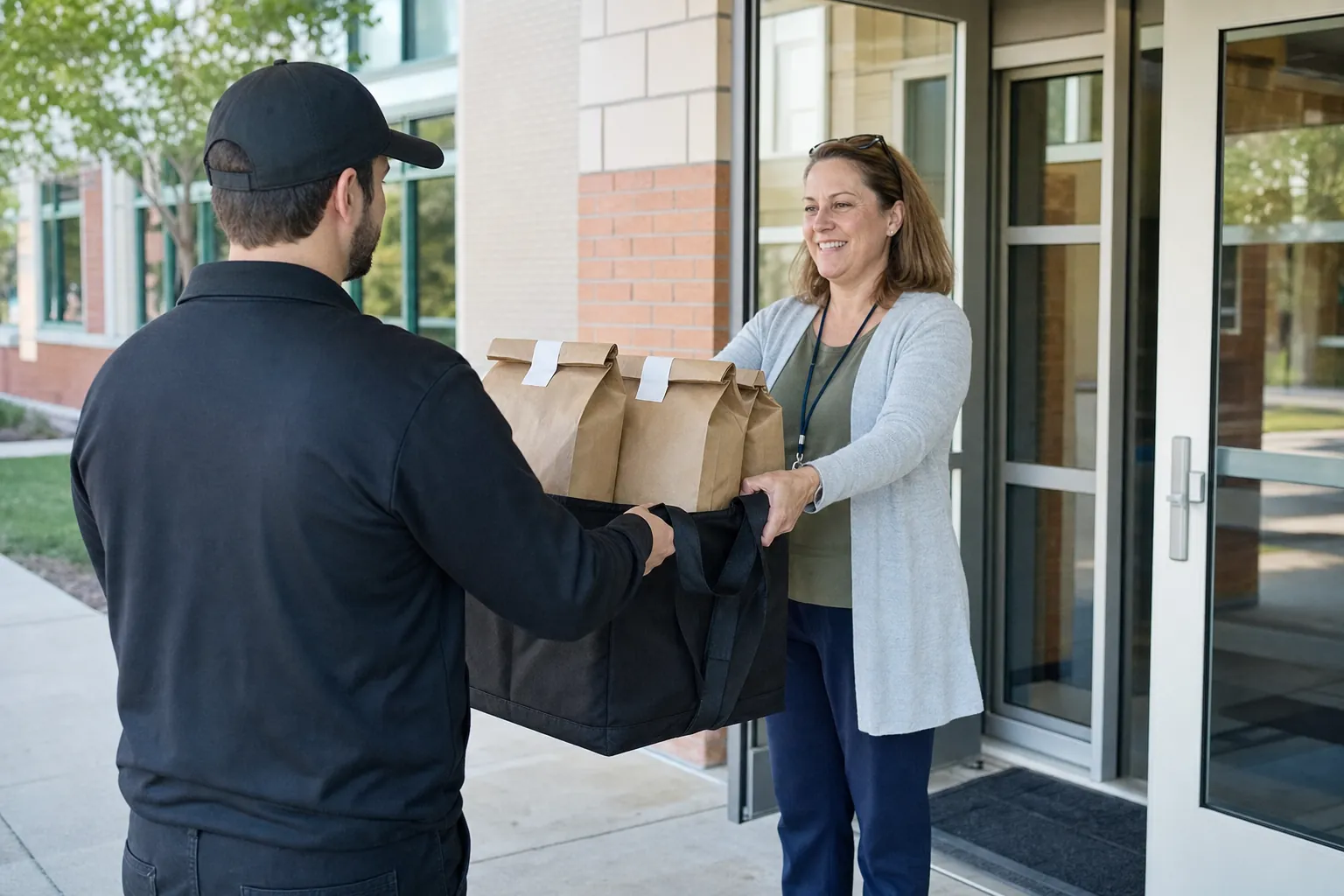 School Lunch OperationsCan You Get Food Delivered to School?
A practical guide for families and schools on when food delivery is allowed, what to check first, and how an approved lunch program keeps the handoff organized.
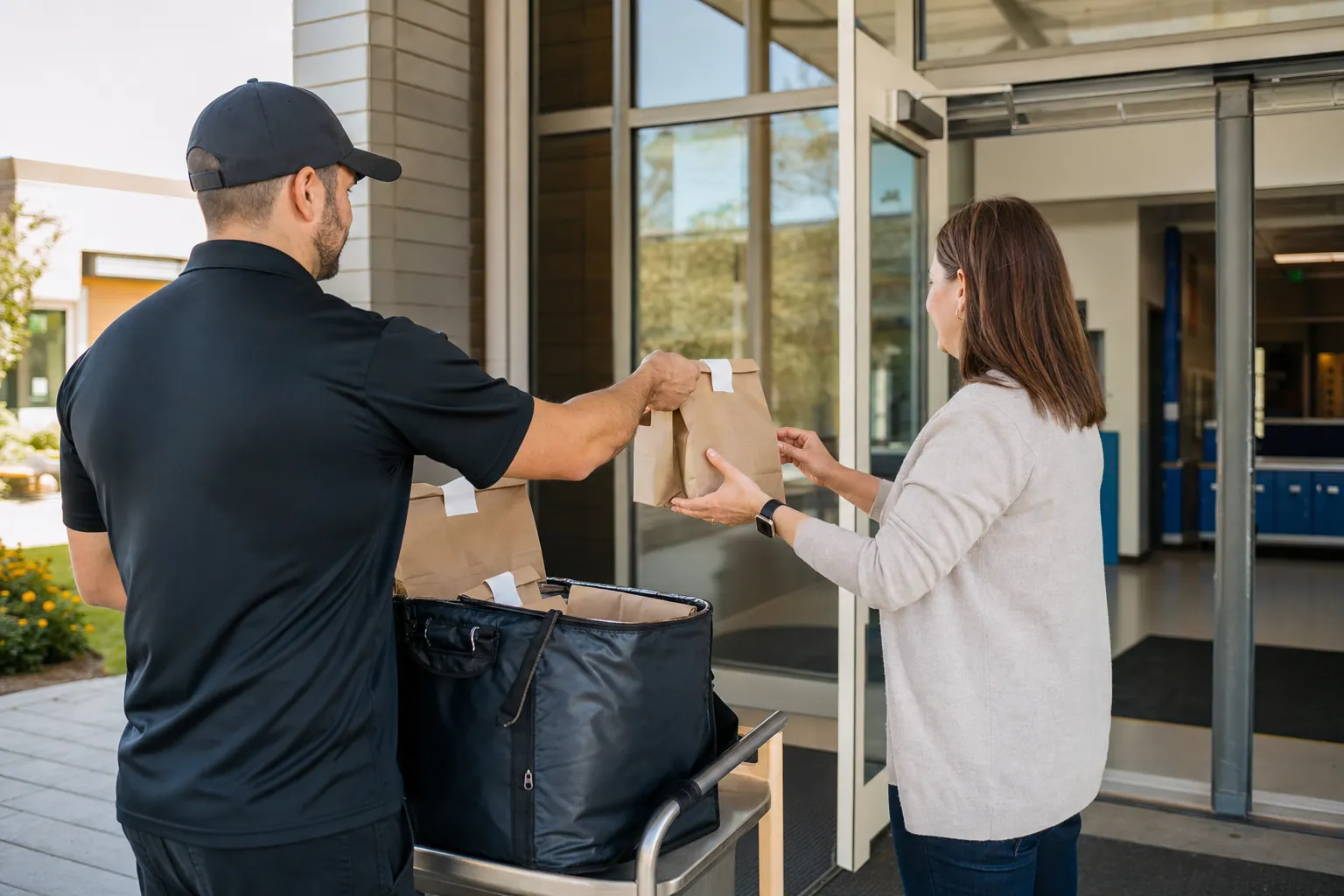 School Lunch OperationsHow School Lunch Delivery Works: A Practical Guide
A practical guide to school lunch delivery, from parent orders and restaurant prep through route timing, labels, school handoff, and launch-week review.