
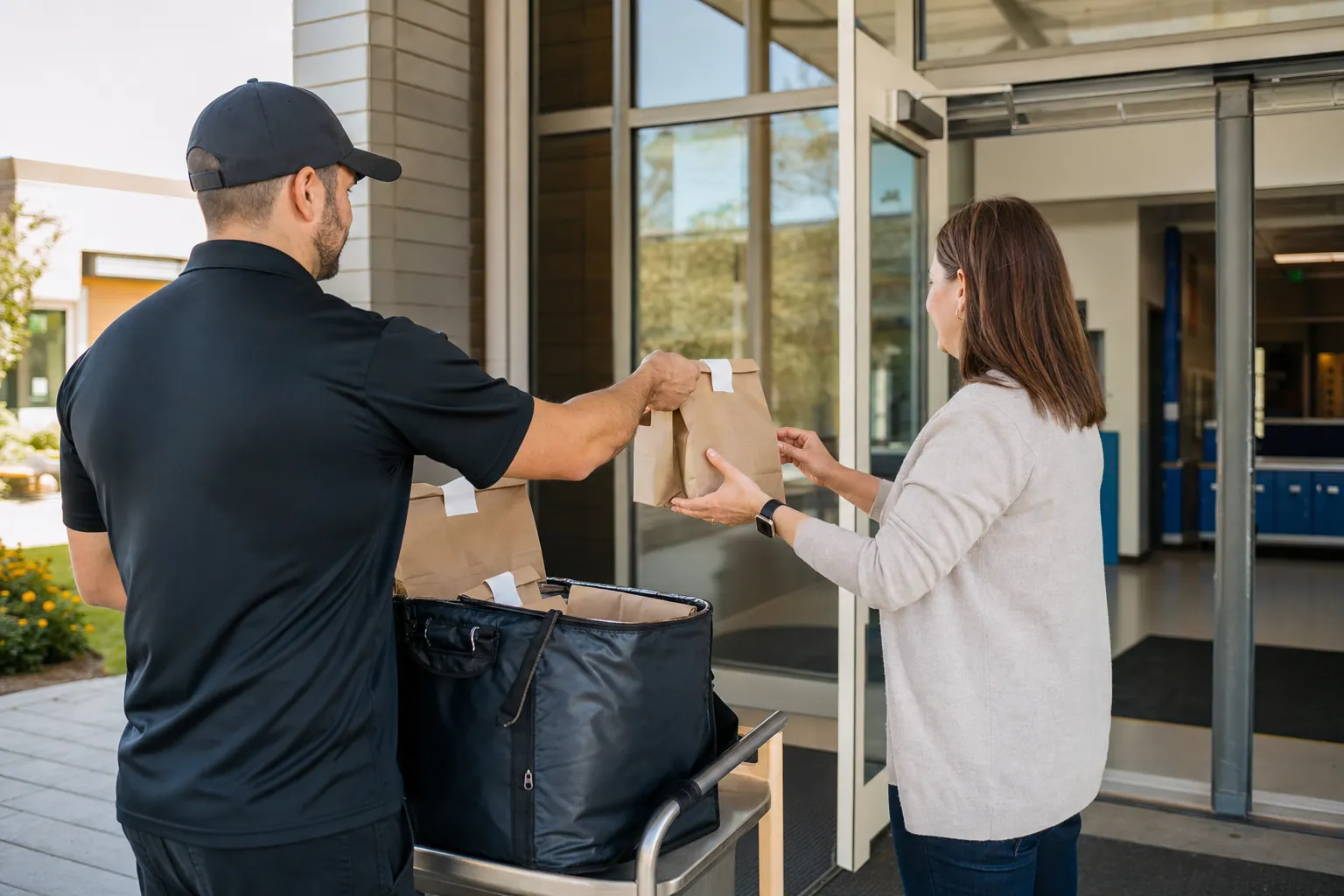
School lunch delivery sounds simple until a school tries to run it on a Tuesday with different classes, a short lunch period, dozens of individual orders, restaurant prep, a delivery window, and families who all understandably assume their child's lunch will arrive exactly where it needs to be. The food is only one part of the job. The real work is getting a known meal to a known student at the right moment without asking the front office to become a dispatch center.
A good school lunch delivery program turns that complicated chain into a repeatable routine. Families know when to order. Restaurants know what to prepare. The driver knows where to go. School staff know what is arriving and how to hand it out. Students get more time to eat instead of spending lunch waiting for an adult to solve a bag of mystery food.
This guide is for school teams and restaurant partners planning restaurant-prepared lunch. It is not about running a traditional cafeteria or replacing a federal meal program. It is about the practical delivery layer: orders, counts, packing, labels, route timing, school handoff, and the first-week adjustments that make the process feel calmer.
Key takeaways
- School lunch delivery is a chain of decisions, not simply a driver arriving with food.
- A clear ordering cutoff gives restaurants a reliable count and gives schools a predictable handoff.
- Labels, packaging, route timing, and one school-side owner matter as much as the menu.
- Preordering can reduce the time students spend waiting to receive food, which protects more of the lunch period for eating.
- A launch-week review should track real delivery and handoff problems before they become routines.
Start by defining the delivery promise
Before a restaurant publishes a menu, agree on the basic delivery promise. Which days are offered? What is the order cutoff? Where does the driver arrive? Who receives the bags? How are meals grouped for distribution? What happens when a student is absent or a bag is missing? Those answers do not need to be fancy, but they need to exist before a family places the first order.
There are several workable models. Some schools receive one consolidated delivery at the front office and distribute it by class. Others have a designated lobby table, campus coordinator, or lunchroom handoff point. The right choice depends on the campus, age group, security procedures, and lunch schedule. The bad choice is the one where everyone assumes someone else will be there when the driver arrives.
Write the first version of this plan on one page. Include the delivery address and entrance, arrival window, recipient name and backup contact, phone numbers, expected meal-count format, bag grouping, and the next step for a discrepancy. A school should be able to give that page to the restaurant and say, "This is how lunch lands here." That small bit of clarity prevents an impressive number of avoidable calls at 11:47 a.m.
Set an order cutoff that protects the whole chain
The order cutoff is the moment a menu becomes a production plan. Before that point, families are choosing. After that point, the restaurant needs a stable count to buy ingredients, schedule prep, portion meals, print labels, pack bags, and plan the route. A vague cutoff turns every one of those steps into a moving target.
A day-before cutoff is common because it gives the restaurant a full preparation window, but the best cutoff is based on the actual operating model. A restaurant cooking fresh food each morning needs enough time to make the count useful. A school with a late-night parent audience needs a deadline that is visible and predictable. The important part is not the exact hour. It is that the rule is clear, repeats every week, and matches what the kitchen can really deliver.
Pair the cutoff with a simple parent message: where to order, which dates are available, when orders close, how changes or credits are handled, and who answers food or ingredient questions. The parent ordering guide should be the place families can revisit when they need help, rather than the school office reconstructing the answer from an old email thread.
Prepare from a real count, not a hopeful estimate
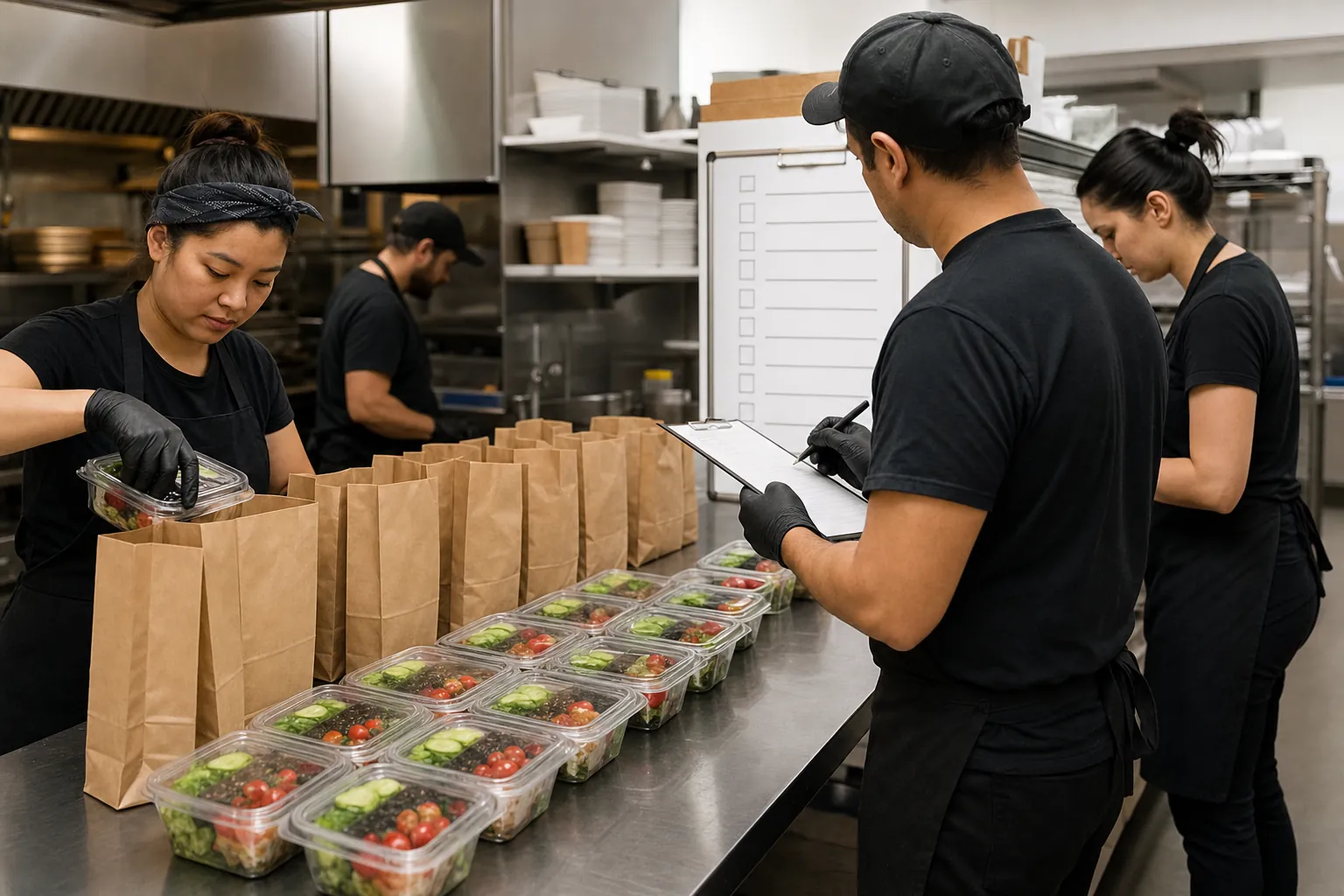
Restaurant lunch delivery works best when the kitchen sees a clean production count, not a pile of last-minute messages. Each order needs to resolve into the practical details the team needs: quantity by menu item, student or buyer identifier, class grouping when the school uses one, dietary information provided by the restaurant, and any approved packing note. That is how an order becomes a meal someone can hand to the right student.
The packaging plan belongs here too. A restaurant should test the meal as it will actually travel: in the chosen container, inside the delivery bag, through the normal route, and after a short wait at school. A hot meal can arrive hot and still fail if the lid leaks, the sauce has turned a crisp side soggy, the student cannot open it, or the label falls off when the bag is moved. Those are delivery problems, not small cosmetic details.
This is why a narrow menu is often smarter at launch. A few items that travel well and can be portioned, labeled, and counted consistently teach a team much more than a giant menu that requires improvisation. The school lunch menu guide explains how to test dishes against the full school day before a restaurant makes them a regular choice.
Build the route around the school clock
Delivery timing is not just an arrival time. It is a window that has to leave room for campus entry, bag transfer, sorting, and distribution before students need lunch. A driver arriving precisely at the first lunch bell may feel punctual on paper while still leaving staff with no time to hand anything out.
Work backward from the first group that needs meals. Estimate how long the recipient needs to receive and place the bags, how long staff need to sort them, and whether the campus has a walk, gate, security desk, elevator, or parking restriction that affects the route. Then create a delivery window with enough margin for normal traffic and a clear contact procedure when the driver is delayed. A driver should never be left wondering which door is correct while the school wonders why lunch has not arrived.
The school schedule matters because waiting takes time away from eating. CDC distinguishes the total lunch period from the time a student is actually seated with food, and recommends at least 20 minutes of seat time. Its school lunch time guidance also identifies preordering and efficient service as ways to reduce the time students spend waiting. A clean delivery and handoff are not merely an operations win. They protect the part of lunch that students actually get to enjoy.
Make the handoff obvious for school staff
The driver-to-school handoff should take minutes, not a committee. The receiving person checks the count, confirms obvious exceptions, and places bags where the school has agreed they will be sorted. If the delivery needs a signature or photograph for the restaurant's records, agree on that in advance. Do not introduce a surprise process when a staff member is already juggling a busy school day.
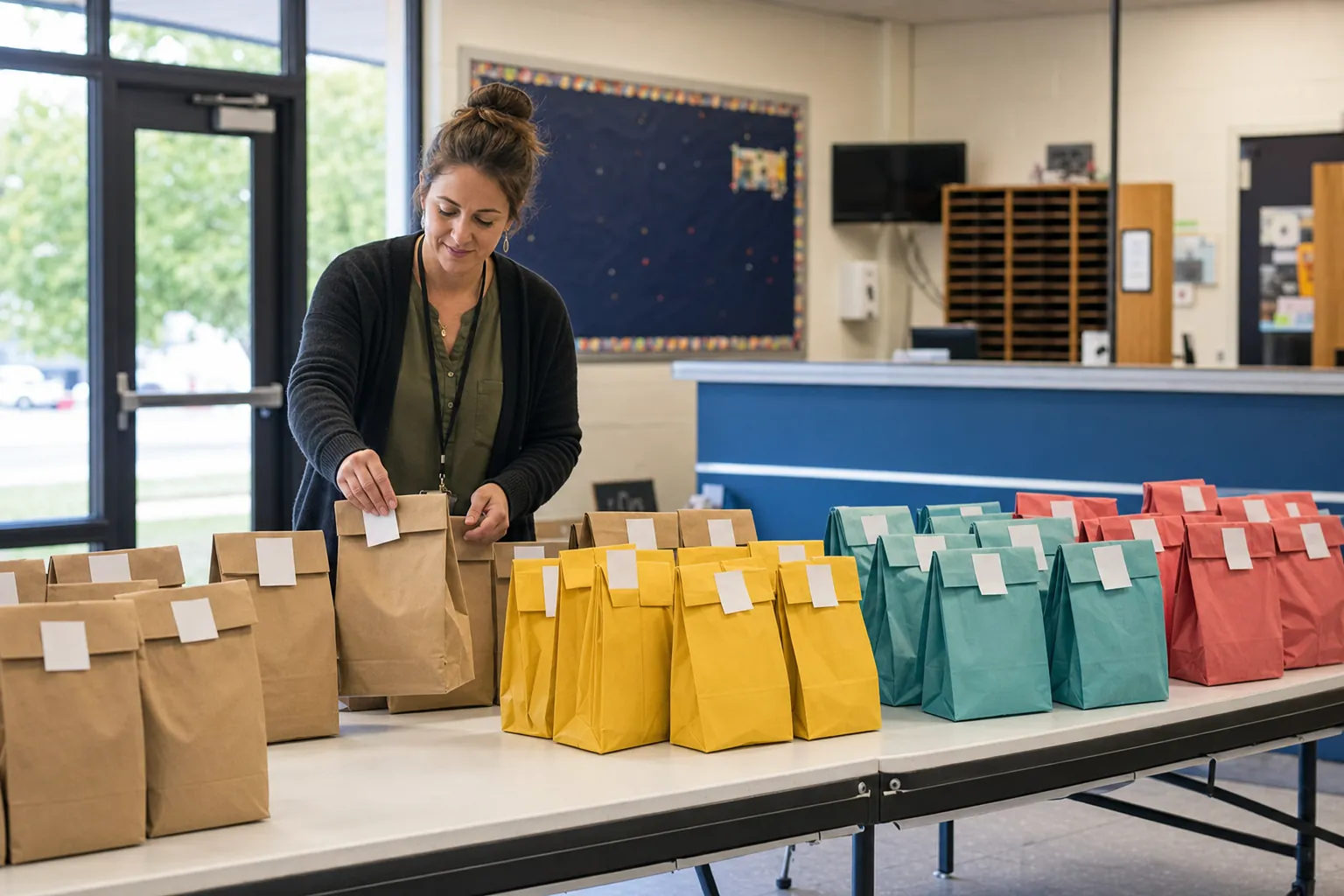
Labels should help staff make the fastest correct decision. At a minimum, they need enough information to move the meal into the school's distribution method: student name or identifier, class or teacher where appropriate, meal detail, and a short note only when the school genuinely needs one. Confirm the school's privacy expectations before choosing a label format. The goal is useful matching, not turning every bag into a file folder.
Give the school a small exception plan as well. If one meal is missing, who does staff call? If a student is absent, where does the meal go? If a bag is damaged, what information should be captured? A clear answer lets staff solve the exception once instead of inventing a new rule for every delivery. The back-to-school lunch program checklist has a broader launch list for the roster, labels, calendar, and parent communication around that handoff.
Keep distribution simple enough to repeat
Once bags are inside the building, distribution should match how the school already moves students. Younger grades may need classroom or teacher grouping. Older students may use a controlled pickup table. Some schools work best when a designated staff member brings grouped bags to one location. The best process is the one that fits the campus without making teachers, students, or office staff learn an entirely new job at noon.
Resist the temptation to add a separate system for every exception. One reliable grouping rule, one receiving location, and one backup contact are easier to train and easier to improve. If the process requires an adult to remember which unlabeled bag belongs to which student, the delivery has already pushed work downstream to the wrong person.
For schools comparing delivery options, the useful questions go beyond "Do they bring food?" Ask how the program handles parent ordering, cutoffs, restaurant counts, labels, delivery windows, missed meals, credits, and support. Those are the details that decide whether the program becomes a benefit for the school or another thing the office has to manage.
Run a short launch review before small problems grow
The first week is not the finished system. It is the best time to see the system honestly. After each delivery day, ask a few direct questions: Did the order count match? Were meals on time? Did the food arrive in good condition? Were labels readable? Did bags sort quickly? Which question came up more than once? One small review is more useful than waiting a month and discovering nobody has been happy with the handoff.
Keep the review practical. Fix one recurring issue at a time. Move the delivery window if the first class is rushed. Change a bagging pattern if classrooms are receiving mixed orders. Clarify a parent message if families are missing the cutoff. Swap a menu item if it does not travel well. The aim is not to make lunch complicated. It is to remove the handful of predictable details that make it feel complicated.
Programs serving federally reimbursable meals have their own requirements around nutrition, meal patterns, and program administration. USDA's National School Lunch Program overview is the right place to start for that model. A parent-paid, restaurant-prepared program should not claim to replace those responsibilities. It can, however, apply the same discipline to menu information, meal handling, timing, and a reliable student handoff.
Where Buy My Lunch fits
Buy My Lunch is built for schools that want restaurant-made lunch without making the school office stitch together ordering, payment, counts, labels, delivery, credits, and family support on its own. Families order ahead from the options available at their school. Restaurant partners prepare from organized counts. School teams receive meals with the information they need for a clearer handoff.
That structure makes it easier to ask the right operational questions before launch and improve the details after the first delivery day. Schools comparing the full program can explore school lunch delivery with Buy My Lunch, review online lunch ordering for schools, or use the school guide to see how setup, orders, delivery, and support connect.
A school lunch delivery checklist
- Set a clear, repeatable order cutoff that gives the restaurant a reliable prep count.
- Confirm the delivery entrance, delivery window, receiving person, and backup contact.
- Give restaurant partners a practical production count and an agreed label format.
- Test packaging, bagging, route timing, and meal condition on a real school day.
- Choose one simple school-side sorting and distribution method that fits the campus.
- Document how missing, late, damaged, and absent-student meals are handled.
- Review arrival time, count accuracy, labels, food condition, and repeated questions after launch.
- Make one useful improvement at a time until the process feels routine.
Frequently asked questions
What is a school lunch delivery service?
A school lunch delivery service brings prepared meals to campus for students. In a restaurant-prepared model, families order ahead, restaurants prepare from a real count, meals are labeled and delivered to school, and staff use an agreed handoff process to get each meal to the right student.
How early should parents order school lunch delivery?
The useful cutoff is the one that gives the restaurant enough time to buy, prepare, pack, label, and route meals accurately while still being easy for families to understand. Many programs use a day-before cutoff, but the right timing depends on the restaurant, school calendar, and delivery route.
Who should receive a school lunch delivery at the school?
One named school contact should receive the delivery or clearly delegate that job. That person needs the delivery window, restaurant contact, expected meal count, location for the bags, and a simple plan for any missing, late, or damaged meal.
How should school lunch bags be labeled?
A label should give staff enough information to sort and hand off the meal without exposing more personal information than the school needs. Programs commonly use a student name or identifier plus class, homeroom, teacher, meal detail, and any school-approved note needed for distribution.
What should a school track during the first week of lunch delivery?
Track on-time arrival, expected versus delivered meal count, labeling mistakes, meal-condition issues, common parent questions, distribution delays, absences, credits, and any repeated point of confusion. The goal is to fix the process while the pattern is still small.
How does Buy My Lunch support school lunch delivery?
Buy My Lunch connects school-specific menus, parent orders, payment, restaurant prep counts, labels, delivery coordination, credits, and the school handoff. The result is a clearer workflow for families, restaurant partners, and the staff receiving lunch at school.
Related posts
 School Lunch OperationsSchool Lunch Program Benefits That Matter Every Day
School lunch program benefits go beyond the meal: clearer routines for families, a steadier school day, and a more workable plan for the teams serving lunch.
 School Lunch OperationsSchool Lunch Ordering Cutoffs: A Practical Guide
A practical guide to setting school lunch ordering cutoffs that give families clarity, restaurants time to prepare, and schools a reliable handoff.
 School Lunch OperationsSchool Lunch Payment Integration: What Schools Should Ask
A practical guide to connecting school lunch ordering and payment without leaving families, staff, or restaurant partners to reconcile lunch-day loose ends.