
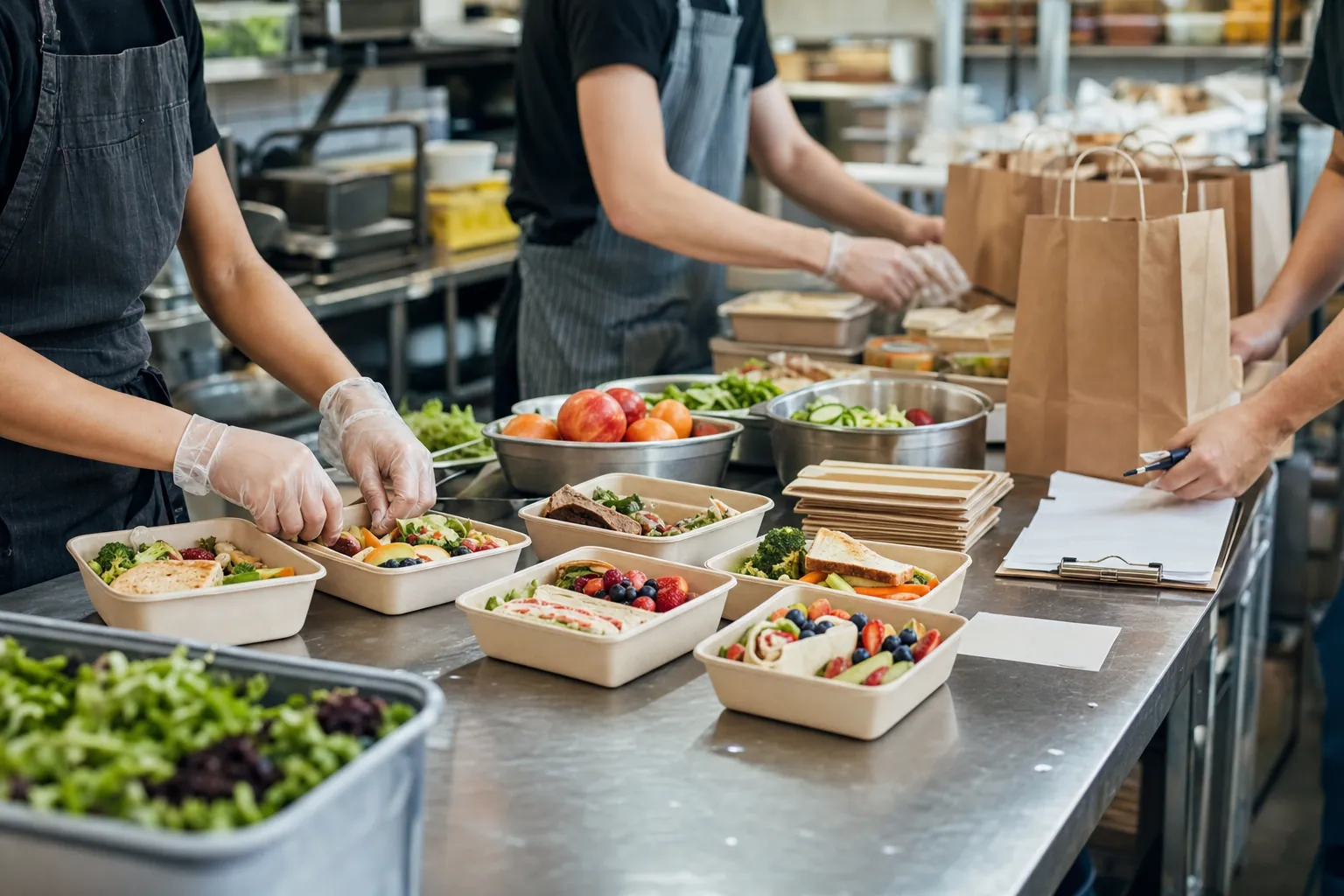
School lunch menu ideas are easy to collect and much harder to run. A row of beautiful options can look great on a planning board, then become a very expensive way to discover that a restaurant cannot prep them at the same pace, a label will not stick, a sauce does not travel, or a ten-year-old will not touch the thing that sounded excellent in the meeting.
A useful menu does two jobs at once. Families need choices that sound appealing and are easy to order. Schools and restaurant partners need choices that can be made, counted, packaged, delivered, and handed to the right student without turning noon into a scavenger hunt. That is why the best menu is rarely the biggest. It is the one that makes sense after the delivery bag hits the school lobby.
This guide is for school teams and restaurant partners building a restaurant-prepared lunch menu. It is not a list of packed-lunch recipes. The point is to create a realistic set of meals for a school day, then connect that menu to the ordering and handoff details that determine whether lunch feels easy or loud.
Key takeaways
- The best school lunch menu is not the longest one. It gives families clear choices while remaining realistic for restaurant prep, packaging, delivery, and distribution.
- A repeatable rotation of familiar meal formats is easier to run than constant novelty and still gives students enough reason to look forward to lunch.
- Schools in federal meal programs need to plan against the applicable USDA meal pattern. Other schools can still use the same discipline: define portions, ingredients, substitutions, and the lunch-day handoff before a menu goes live.
- Taste tests, actual order patterns, and delivery-day feedback are more useful than guessing what families want from a menu meeting.
- Buy My Lunch connects school-specific menus with family ordering, restaurant prep counts, labels, delivery, and the daily handoff.
Start with the lunch model, not a recipe list
Before choosing dishes, decide what kind of school lunch program you are building. A public school participating in the National School Lunch Program has specific meal-pattern, procurement, and nutrition responsibilities. USDA's Food Buying Guide explains that menu planning for school meals uses age groups and meal-pattern requirements. That work belongs with the school's nutrition professionals and applicable state guidance.
A private school using a parent-paid restaurant model may have more menu flexibility, but the operational questions are just as real. What can the restaurant make at the expected count? What time must orders close? Which items hold up in a delivery bag? How are meals labeled? What happens when a student is absent? Who answers a family's ingredient or credit question? A menu does not solve those questions by itself. It has to be designed around them.
Write down the program basics before the first menu draft: student ages, delivery days, expected order volume, delivery time, school handoff point, restaurant prep time, dietary information, packaging limits, and the support path. That turns menu planning from "What sounds fun?" into "What can this school run consistently?" Less glamorous. Far more useful.
Build a rotation around familiar meal formats
Variety does not require a brand-new concept every day. A strong rotation starts with formats students can recognise and restaurants can repeat: wraps, rice bowls, pasta, tacos, quesadillas, sliders, soups, salads, and simple comfort-food plates. The ingredients can change. The format stays familiar enough that families know what they are ordering.
Think in menu lanes instead of a pile of unrelated dishes. One restaurant might rotate a taco bowl, a chicken quesadilla, and a rice-and-bean bowl. Another might offer pasta, a turkey wrap, and a salad with a practical protein. A pizza partner can vary slices, toppings, sides, and vegetable options without introducing a new kitchen workflow every week. The goal is enough change to keep the menu interesting, without asking a team to invent a different lunch operation every Tuesday.
The Institute of Child Nutrition notes that repeating a planned set of menus can save planning time, support predictable purchasing and preparation, and give operators room to fine-tune recipes. Its menu-planning guidance is written for child nutrition programs, but the operational point travels well: repetition is not laziness when it makes quality and execution easier to control.
Use a simple test for every menu item
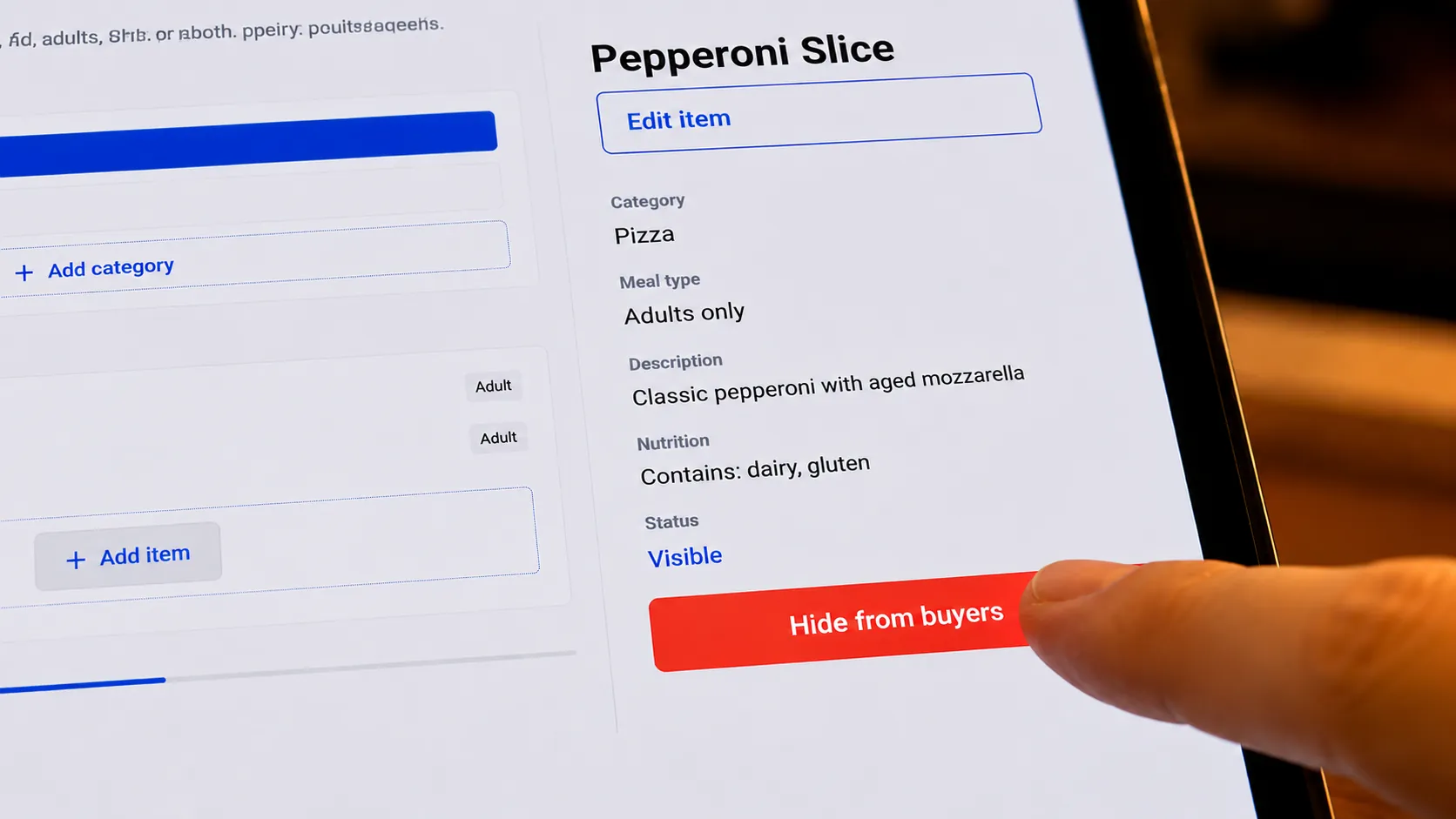
A candidate item should pass more than the "Would I order this?" test. Run it through the whole lunch day. Can a restaurant portion it consistently? Can it be prepared against a real order count? Does the container protect it? Does the label have a clear home? Can the meal sit through the normal delivery window? Can a student open it independently? Can school staff hand it out without re-sorting every bag?
This is where a short pilot beats a heroic launch. Offer a new item on one delivery day, keep the menu description clear, and observe the result. Did families order it? Did the restaurant hit the count? Did it arrive in good shape? Were there avoidable questions? Did the meal require a second explanation at handoff? Those are not annoying side notes. They are the menu review.
Schools can also ask students and families for structured feedback rather than relying on the loudest voice in the pickup line. CDC lists taste tests and improving the taste of school meals among evidence-based strategies schools can consider in their nutrition environment. Its school nutrition strategy guide provides a useful reason to test a menu item before treating it as a permanent answer.
Make choice clear, not endless
More choices can feel generous right up until a family is scrolling through twenty nearly identical options, the restaurant is deciphering modifiers, and a school is receiving three bags that all look like they contain "chicken." Choice works when each option has a clear purpose and the menu is easy to scan.
Keep categories obvious. Name the main item in plain language. State the included side or side choice. Explain an important dietary note where the restaurant has provided it. Avoid cute menu names that obscure the actual meal. A parent ordering for a child needs to understand the option quickly, not decode a restaurant chalkboard at 9:43 p.m.
It also helps to decide where variety belongs. Some schools may rotate restaurant partners by day. Others may keep one partner and refresh the menu within a stable format. Some may offer a regular vegetarian option, a familiar comfort choice, and one rotating special. The right balance depends on volume, restaurant capacity, and school logistics. The useful rule is simple: every option needs a reliable path from app to kitchen to student.
Plan for the actual delivery and handoff
Menu planning changes once food leaves the kitchen. Fries, crispy toppings, ice cream, overfilled cups, and loosely packed salads may all need a different format, packaging decision, or delivery expectation than they do in a restaurant dining room. That does not mean they are forbidden. It means they should be tested in the version students will actually receive.
Make a short delivery specification for each regular item. Include the container, side placement, sauce handling, allergen or ingredient note when applicable, label location, bagging pattern, and whether utensils or napkins are needed. The restaurant should not have to rediscover this at the end of every prep shift, and the school should not be expected to repair it in the lobby.
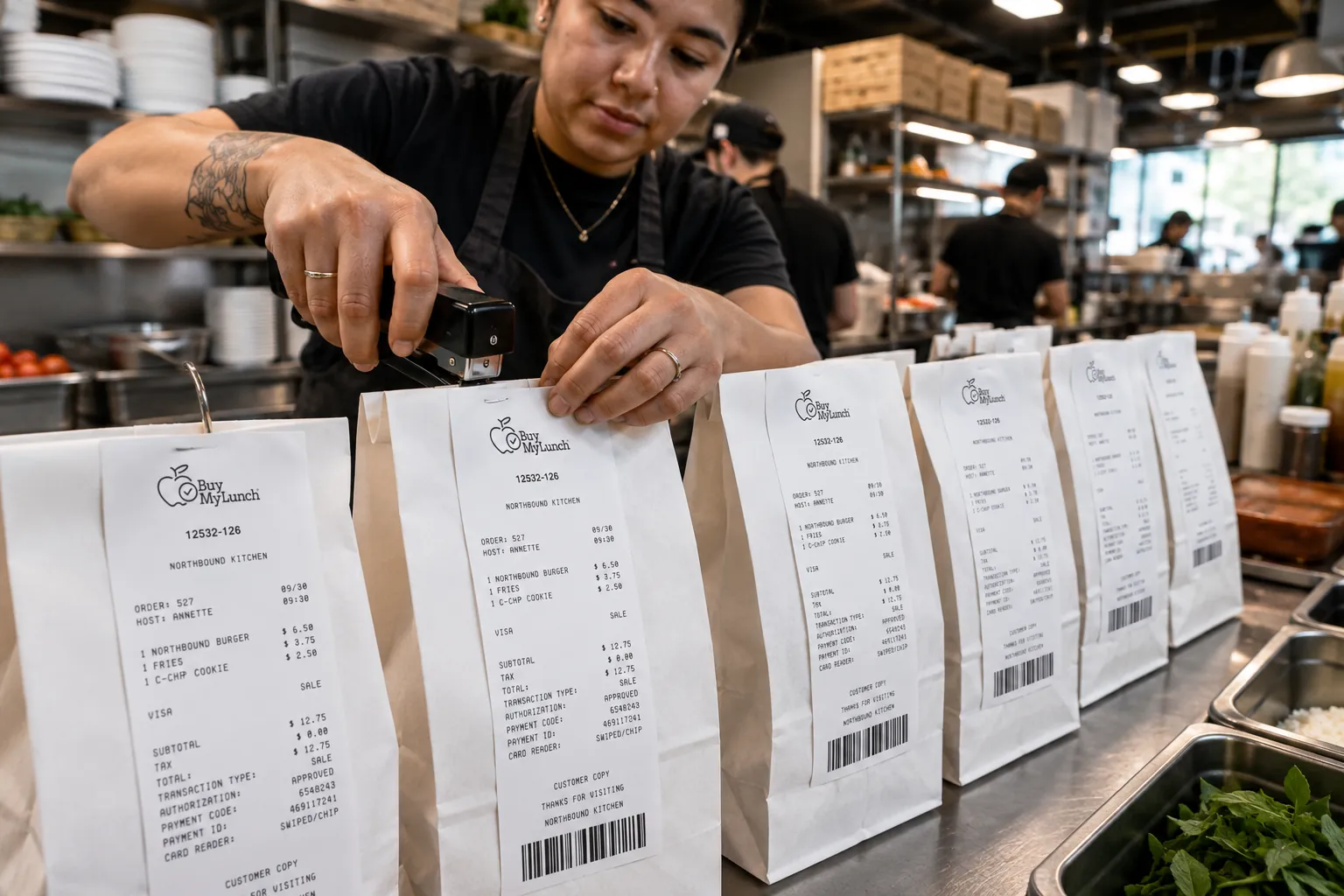
The same goes for labels. A meal needs enough information for the school's handoff process without turning the outside of a bag into a tiny novel. Buy My Lunch uses school-specific ordering and buyer identification so restaurant partners can prepare to known counts and school staff can distribute meals through the school's internal view. The practical win is not a fancier sticker. It is a menu and ordering flow that agree about who the meal is for.
Let family ordering teach you what to keep
Menu planning gets sharper after launch because families tell you what they value through their choices. A dish that received polite enthusiasm during a tasting but barely gets ordered is a signal. A familiar option that stays steady can earn its place. A popular item that produces late questions, messy packaging, or missing sides may need a better specification rather than a permanent spot.
Review a small set of signals after each menu cycle: orders by item, common family questions, restaurant feedback, delivery issues, credit requests, and handoff exceptions. Use the review to choose one action: keep, revise, move to a special, or retire. This is better than making ten changes at once and learning nothing. Menus get better through useful evidence, not through someone declaring that nobody wants pasta anymore.
For the broader launch checklist, use the back-to-school lunch program checklist. It covers the related pieces a menu cannot carry alone: rosters, cutoffs, parent communication, delivery instructions, labels, and the first-day handoff.
Where Buy My Lunch fits
Buy My Lunch is built for the kind of school lunch menu that needs to become a repeatable school-day service. Schools can offer restaurant-prepared choices without building their own cafeteria operation. Families order ahead from the options available to their school. Restaurant partners prepare against organised counts. Meals arrive labeled for a clearer handoff.
The menu becomes more useful when it is connected to the rest of the work: school-specific availability, ordering cutoffs, payment flow, restaurant counts, delivery visibility, credits, and parent support. Schools considering the broader setup can read about online lunch ordering for schools, explore school lunch ordering software, or use the school setup guide to see how the daily pieces connect.
A school lunch menu checklist
- Define the school's lunch model and the responsibilities each partner owns.
- Start with familiar meal formats that fit the student age range and restaurant capability.
- Build a repeatable rotation before adding novelty for novelty's sake.
- Write clear item names, included sides, and practical dietary information.
- Test prep, packaging, labels, delivery, and student handoff on a real lunch day.
- Use a small pilot or taste test before committing a new item to the regular menu.
- Review order patterns and operational feedback after every menu cycle.
- Keep the number of active choices aligned with what the school and restaurant can execute well.
Frequently asked questions
What are good school lunch menu ideas?
Good school lunch menu ideas use familiar meal formats that travel and hold up well, such as wraps, bowls, pasta, tacos, sliders, rice dishes, salads, soups, and simple comfort-food favorites. The right mix depends on the students, the restaurant or kitchen, dietary needs, delivery window, and how lunch is distributed at school.
How many choices should a school lunch menu have?
The useful number is the number a school and its restaurant partners can prepare, label, deliver, and hand off cleanly. A smaller menu with clear choices and reliable execution is usually easier for families than a large menu that creates substitutions, missed meals, and last-minute questions.
How can a school make lunch menus more appealing to students?
Start with formats students already recognise, then add variety through sauces, sides, proteins, vegetables, and rotating restaurant options. Schools can also use a small pilot or taste test before making a new item a regular part of the menu, then review what families actually order and what arrives well.
Do private schools need to follow the USDA school lunch meal pattern?
That depends on whether the school participates in a federal child nutrition program and on the program requirements that apply. Private schools operating a parent-paid restaurant lunch program may have a different model, but they should still document ingredients, portions, dietary information, ordering cutoffs, and who handles questions.
What should restaurants know before creating a school lunch menu?
Restaurants should know the student age range, expected order volume, school delivery time, packaging limits, labeling requirement, menu cutoff, dietary questions, and who receives meals at the school. A lunch menu has to work through prep and handoff, not only look good on a restaurant menu.
How does Buy My Lunch help with school lunch menus?
Buy My Lunch helps schools and restaurant partners organise school-specific menus, family ordering, cutoffs, prep counts, labeled meals, delivery visibility, credits, and handoff. Families order ahead from the options available for their school, so restaurants prepare from real orders rather than broad lunchroom estimates.
Related posts
 School Lunch OperationsSchool Lunch Program Benefits That Matter Every Day
School lunch program benefits go beyond the meal: clearer routines for families, a steadier school day, and a more workable plan for the teams serving lunch.
 School Lunch OperationsSchool Lunch Ordering Cutoffs: A Practical Guide
A practical guide to setting school lunch ordering cutoffs that give families clarity, restaurants time to prepare, and schools a reliable handoff.
 School Lunch OperationsSchool Lunch Payment Integration: What Schools Should Ask
A practical guide to connecting school lunch ordering and payment without leaving families, staff, or restaurant partners to reconcile lunch-day loose ends.