
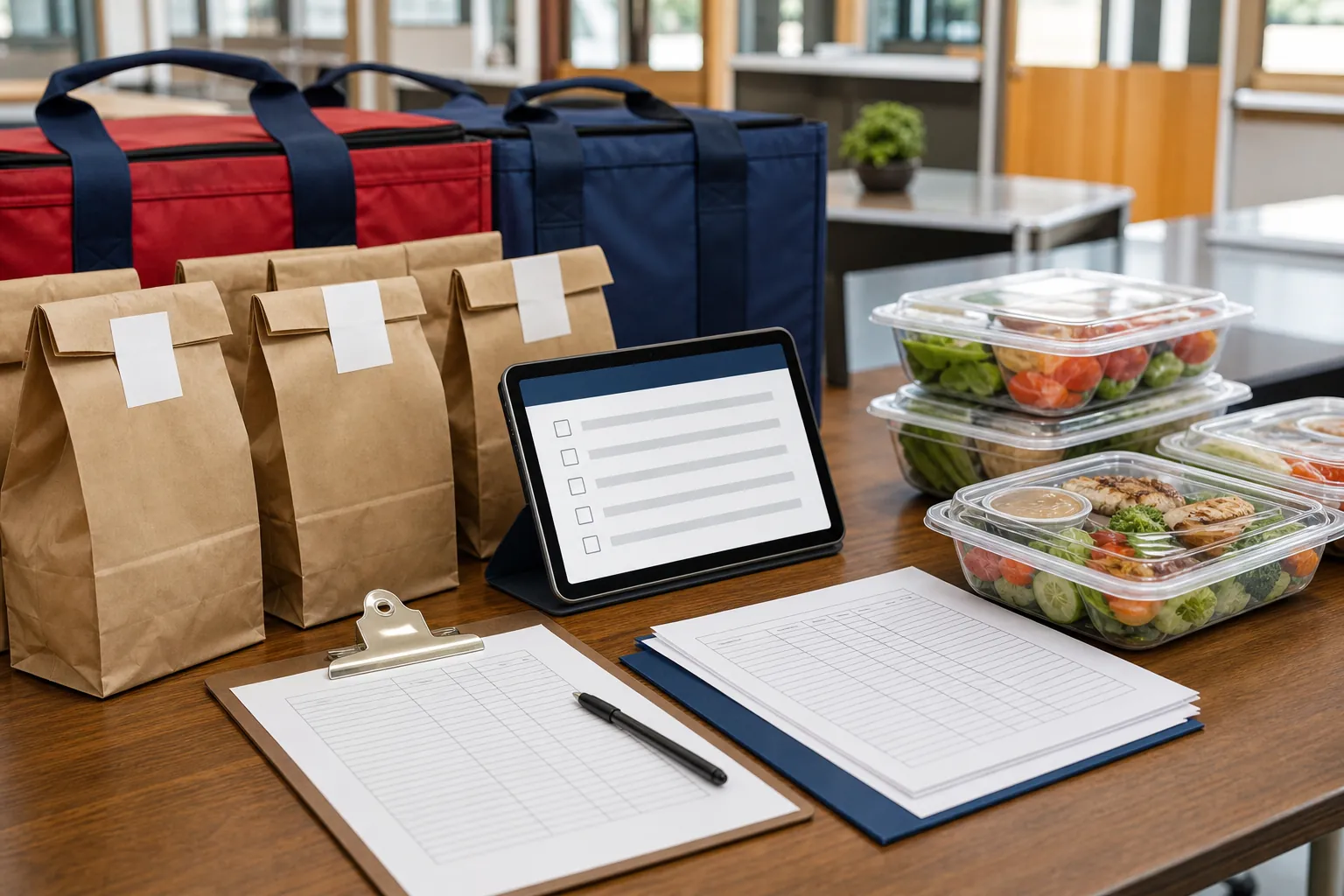
Searching for school lunch companies sounds simple until the options start blurring together. One company runs cafeterias. Another drops off boxed meals. Another handles parent ordering. Another brings in local restaurants. Another sells software but does not touch the food. All of them can call themselves a lunch provider, which is technically true and not especially helpful.
The useful question is not "Who sells lunch?" It is "Which lunch company solves the specific lunch problem this school actually has?" A large district with kitchens, staff, federal reimbursement, and formal procurement needs a very different partner from a private school that wants hot lunch twice a week from restaurants families already like.
This guide breaks down the main types of school lunch companies, what each model is built to handle, where the tradeoffs show up, and what schools should compare before choosing a provider. The food matters, obviously. But lunch succeeds or fails in the details: ordering, cutoffs, payments, counts, labels, delivery timing, parent questions, credits, allergies, and the handoff nobody wants to rebuild at 11:47 a.m.
Key takeaways
- School lunch companies are not all selling the same thing. Some run the cafeteria, some deliver prepared meals, some coordinate local restaurants, and some mainly provide ordering software.
- The right choice depends on the school's meal model, facilities, staffing, parent-payment process, nutrition obligations, delivery needs, and handoff reality.
- Public schools participating in federal meal programs need to pay close attention to procurement, contracts, reimbursement rules, nutrition standards, and state-agency guidance.
- Private schools may have more flexibility, but they still need clear ordering deadlines, payment handling, allergy communication, labels, credits, support, and delivery timing.
- Buy My Lunch is a strong fit for schools that want restaurant-prepared lunches with family ordering, local restaurant partners, organized counts, labeled meals, and less office work.
What school lunch companies actually do
A school lunch company helps a school make meals available to students. That broad definition covers a lot of ground. Some companies prepare meals. Some manage cafeterias. Some provide staff, purchasing, menus, training, compliance support, and financial reporting. Some coordinate restaurant partners. Some only provide the platform families use to order and pay.
USDA describes the National School Lunch Program as a federally assisted meal program operating in public and nonprofit private schools and residential child care institutions. That matters because public-program lunch is not just a food purchase. It can involve reimbursement, eligibility, nutrition standards, meal counting, procurement rules, and state-agency oversight.
Private-school lunch can be simpler in some ways, but it is not magically easy. Families still need to order. Someone still has to handle money. Restaurants or kitchens need accurate counts. Meals need to arrive on time. Students need to get the right food. Parents need a support path when a child is absent, a meal is missed, or a credit is due.
So the first comparison should be about responsibility. Who owns the menu? Who owns ordering? Who owns payment? Who owns parent support? Who owns allergy communication? Who owns delivery timing? Who owns the last 30 feet from the delivery table to the student? If a lunch company cannot answer those questions clearly, the school will answer them later, usually while lunch is already happening.
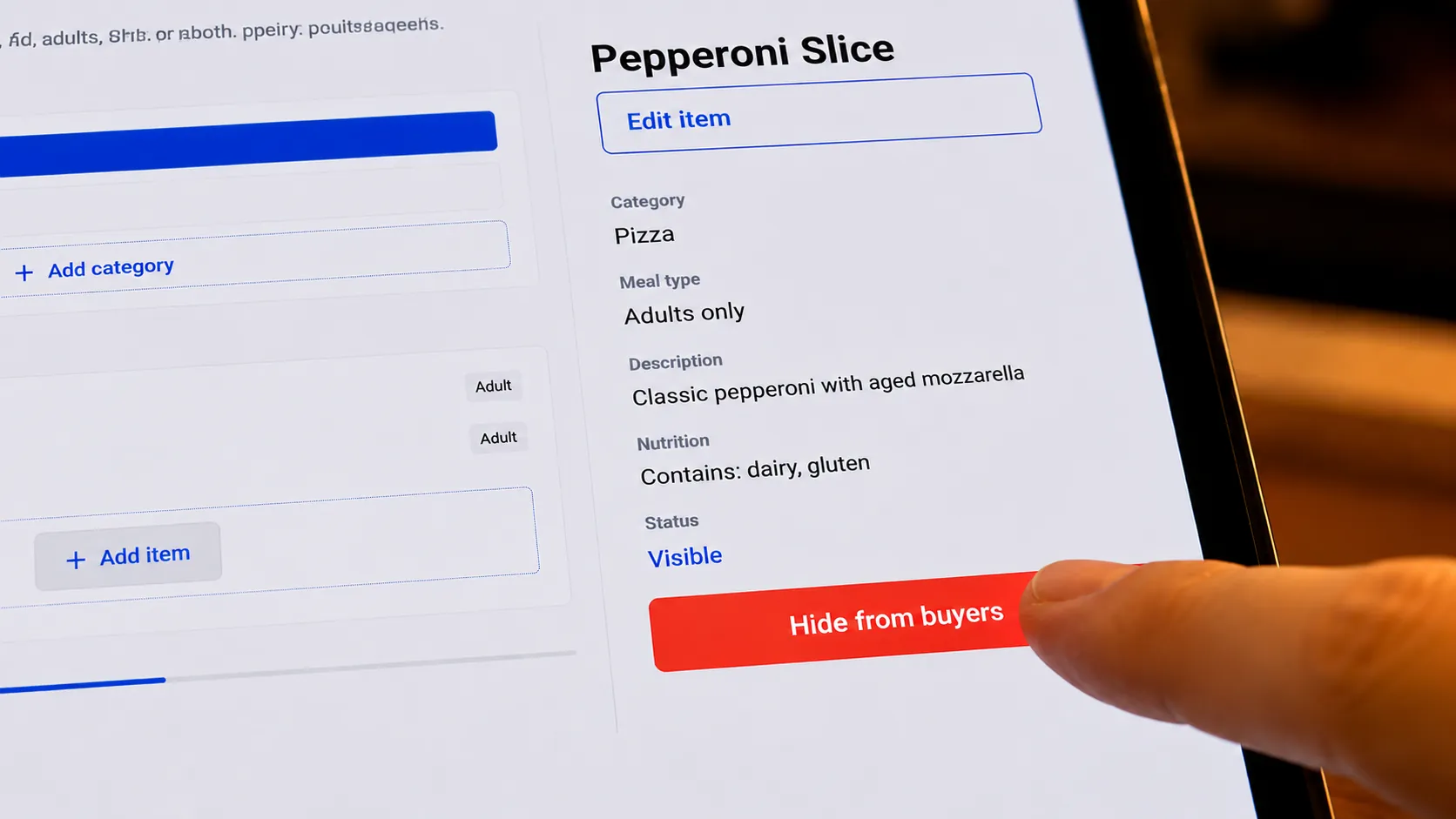
The main types of school lunch companies
Most school lunch options fall into a few practical models. The names are not always used consistently, but the operating differences are real.
1. Food service management companies
Food service management companies, often shortened to FSMCs in public-program contexts, can manage major parts of a school meal operation. A full-service partner may support menu development, purchasing, staffing, production, safety, financial management, student marketing, and compliance. Large providers such as Aramark and Sodexo describe K-12 school food service around exactly that kind of broad operational footprint. Aramark says its student nutrition work covers the scope of school nutrition programs from menu creation to staff training, while Sodexo describes K-12 food service brands and ongoing menu improvement based on student and community feedback. Aramark Student Nutrition and Sodexo's K-12 food services are useful examples of this model.
This model can make sense when a school or district needs a managed cafeteria program, staff support, procurement experience, and a partner that understands formal school meal operations. It can be too much machinery for a smaller school that does not want to run a cafeteria or sign up for a large food service relationship.
2. Vended meal providers and caterers
Some providers prepare meals off-site and deliver them to the school. The food may come from a commissary kitchen, a caterer, a food production facility, or a restaurant group. This can work when the school needs prepared meals but does not have the facilities, staffing, or appetite to produce lunch in-house.
State agencies often group caterers, restaurants, and food service management companies together in vendor resources because all three can be part of school meal service. Florida's child nutrition vendor page, for example, describes vendors as caterers, restaurants, and food service management companies interested in supplying food services to USDA child nutrition programs, while also noting that vendors are not required to be on that list to provide services. Florida's vendor guidance is a good reminder that the word vendor can cover several very different operating models.
3. Restaurant-based school lunch programs
Restaurant-based programs help schools offer meals from local or regional restaurants. Some programs use a marketplace model where parents order individual meals. Others rotate set menus from a small group of restaurants. Wholesome Food Services, for example, describes a model where local restaurants deliver meals to private and charter schools, with online ordering and parent payment. Choicelunch describes school lunch delivery for families in parts of California, with parents choosing meals in advance. Wholesome Food Services and Choicelunch show how this category can look in practice.
This model is often attractive to private schools, charter schools, and schools that want variety without building a kitchen. The risk is operational. Restaurant meals only work at school when counts, cutoffs, packaging, labels, delivery windows, and parent support are handled tightly. Otherwise, the school gets the appeal of restaurant food and the headache of restaurant coordination. Thrilling combination, in the same way a fire drill during algebra is thrilling.
4. Lunch ordering platforms
Some companies mainly solve the ordering layer. They may let parents select meals, pay ahead, receive reminders, and manage student accounts. The platform may or may not coordinate the food provider, restaurant partner, delivery details, credits, or labels. This can be useful when a school already has a caterer or kitchen but needs to stop managing lunch through paper forms, checks, emails, or spreadsheets.
The key question is whether the ordering platform is connected to the rest of the lunch workflow. If order data stays separate from kitchen counts, restaurant prep, labels, delivery, and parent support, the school still has to stitch everything together. A cleaner school lunch ordering system should reduce hand work, not simply move it from paper to a screen.
5. Hybrid school lunch providers
Hybrid providers combine pieces of the models above. A provider may coordinate restaurants, handle parent ordering, route kitchen counts, support delivery, manage credits, and give schools a cleaner handoff. This is the lane Buy My Lunch occupies for schools that want restaurant-prepared lunch without making the office manage the program manually.
Hybrid models are useful when the school does not need a full cafeteria operator but does need more than "a caterer drops off trays." They are especially relevant when parents choose and pay for meals individually, restaurants need accurate prep counts, and the school needs the food to arrive labeled and ready to distribute.
Start with the school model, not the vendor pitch
Before comparing school lunch companies, name the model the school is trying to run. This sounds obvious. It is also where many lunch searches go sideways.
A public district participating in the National School Lunch Program may need a partner that can work inside federal meal-pattern, counting, claiming, procurement, and reimbursement rules. USDA updates its school meal reimbursement rates annually, with payments and rates in effect from July 1 through June 30. A public-program partner should understand that world and be able to speak clearly about what it does and does not manage.
A private school may be solving a different problem: parents want better lunch, the school does not want cafeteria overhead, and the office does not want to chase paper orders every Friday. In that case, the best lunch company may be the one that manages parent ordering, restaurant menus, prep counts, labels, delivery timing, credits, and support without forcing the school into a larger food service model than it needs.
A school with a kitchen and staff may need menu planning support, a supplier relationship, or ordering software. A school without a kitchen may need prepared meals or local restaurants. A school with low participation may need a more appealing menu. A school with parent complaints may need cleaner communication. A school with office overload may need a better lunch workflow more than it needs another sandwich option.
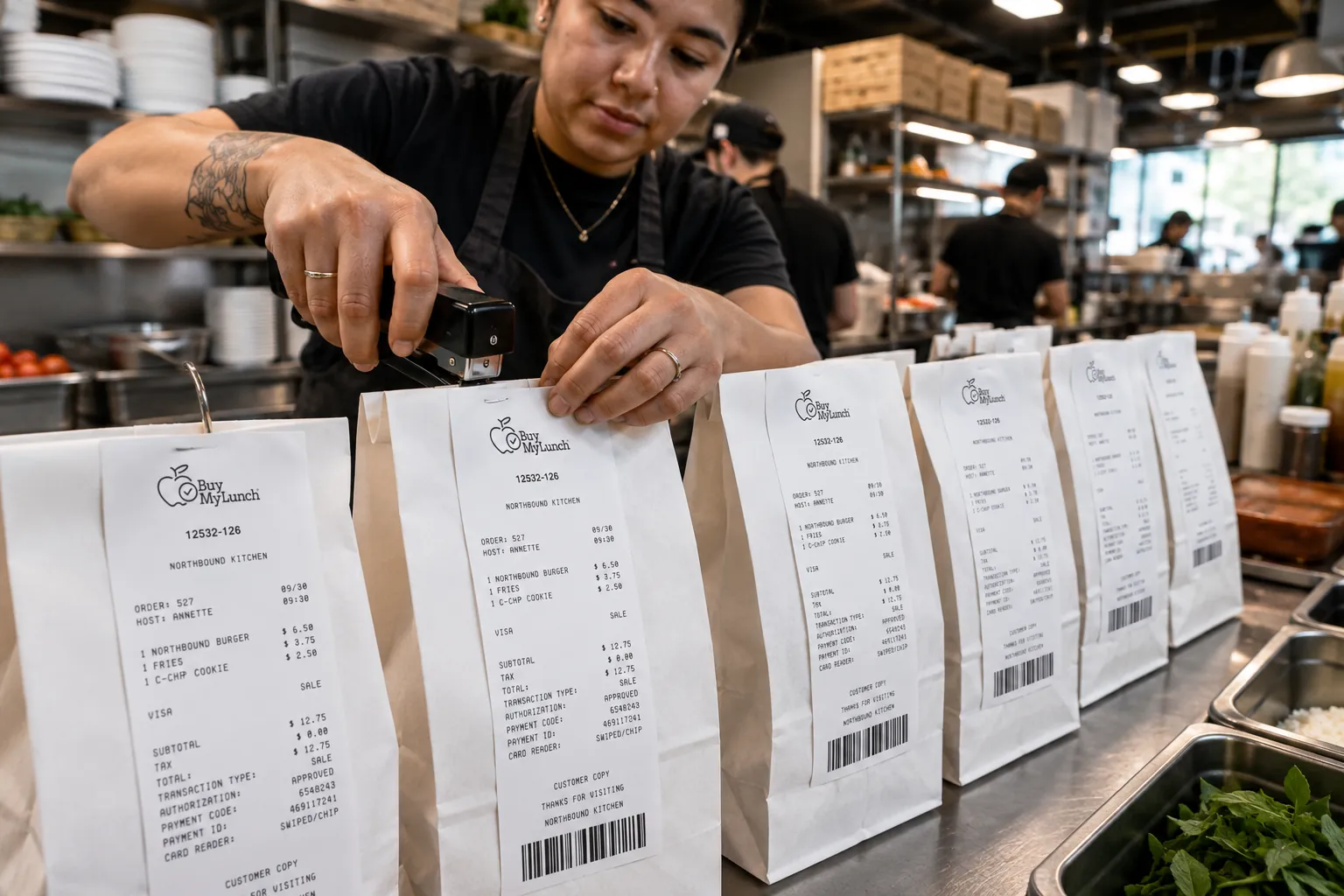
What to compare before choosing a school lunch company
A serious comparison should cover more than sample menus and per-meal price. Those matter. They just do not tell you whether lunch will work on Tuesday after a parent orders late, one student is absent, a delivery is early, and a teacher is asking who gets the gluten-free meal.
Food model and menu fit
Ask whether the provider offers bulk meals, individually ordered meals, hot lunch, cold lunch, rotating menus, restaurant options, allergy-aware choices, vegetarian options, and age-appropriate portions. Then ask who controls the menu. Some schools want a consistent cafeteria cycle. Others want local restaurant variety. Neither is automatically better. The right answer depends on the school's facilities, students, families, and schedule.
Ordering and cutoff rules
Ordering rules decide how much work lands on school staff. Can parents order in advance? Can they change meals? How late can they order? What happens when a student is absent? How are credits handled? Does the system prevent orders after the kitchen count is locked? Are cutoffs clear enough that the office is not negotiating lunch exceptions all morning?
Payment handling
Parent-paid lunch programs need clean payment handling. The school should know whether the provider collects payment, how refunds or credits work, whether the school handles any money, how fees appear, and who answers parent billing questions. For public-program meals, payment and reimbursement questions can be more formal and should be reviewed under the applicable program rules.
Payment handling is also a trust issue. Families want to know what they paid for, when the order closes, what happens if a child is absent, and whether a credit will appear without three follow-up emails. Schools want the same clarity because every unclear payment rule eventually becomes an office question. A lunch company should make the money path easy to explain before the first order opens.
Nutrition and compliance boundaries
If the school participates in federal school meal programs, the nutrition and compliance bar is specific. USDA is phasing in updates to school nutrition standards between 2025 and 2027, including added sugar limits for certain foods, no change to the whole-grain requirement that 80 percent of weekly grains be primarily whole grain-rich, and a later sodium reduction for lunch. USDA's school nutrition standards update is a reminder that a lunch company serving public-program meals has to keep up with more than taste.
Private schools may not be operating the same reimbursable meal model, but nutrition still matters to families. Ask how the provider handles balanced menu options, allergens, ingredient information, student preferences, special diets, and whether the menu can avoid becoming pizza every day with a small salad garnish for moral cover.
Delivery, labels, and handoff
This is where lunch companies earn their keep. Meals need to arrive at the right place, in the right window, with enough time for sorting. Individual orders need labels. Labels need enough detail to match the student and order without exposing unnecessary information. Delivery drivers need instructions. Schools need a backup path when a delivery is late or a bag is missing.
A lunch program can look beautiful in a proposal and still collapse if the handoff is vague. Ask the provider to describe exactly what arrives, how it is packed, who receives it, how students are matched to meals, and what happens when something is wrong. If the answer is "your office can sort that out," keep comparing.
Parent and school support
Lunch questions are not optional. Parents will ask about deadlines, ingredients, missed orders, credits, app access, menu changes, and what happened to lunch. Decide who answers. If the school owns every support question, the provider may be cheaper on paper while quietly borrowing staff time from the office.
Good support also protects the provider relationship. When parents know where to go, the school is not stuck relaying every small issue between the family, restaurant, caterer, or platform. That matters because lunch is visible. A missed sweatshirt can wait until the end of the day. A missed lunch cannot. The support plan has to match that urgency.
Launch support
Ask what happens before the first lunch day. Good launch support includes menu setup, parent communication, account setup, test orders, restaurant or kitchen deadlines, delivery instructions, staff handoff notes, and a plan for the first week. For a deeper setup list, schools can use the back-to-school lunch program checklist before choosing a partner.
Procurement questions for public school meal programs
Public schools and other sponsors in federal child nutrition programs need to be careful about procurement and contracts. Ohio's school nutrition procurement guidance says school meal programs procuring goods or services must follow USDA procurement requirements and have formal contracts in place. It also notes that local education agencies contracting with food service management companies must limit nonprofit school food service account funds to costs from proper procurements and contracts, and submit certain documents for state review before execution. Ohio's procurement guidance is state-specific, but the underlying lesson is broader: do not treat a public-program meal contract like a casual vendor signup.
If your school is in a federal meal program, ask your state agency which procurement path applies before choosing a company. Ask what documents are required, whether the contract needs pre-approval, what costs are allowable, how rebates and credits are handled, and whether the provider's role changes the school's responsibilities. The provider should be able to work within that process. If it cannot, the school carries the risk.
Private-school comparison checklist
Private schools can often compare school lunch companies with a more practical operations checklist. The following questions will tell you more than a glossy menu deck.
- Can families order and pay ahead without the school collecting money?
- Can parents order by student, grade, classroom, or buyer ID?
- Can the school choose preferred local restaurants or menu styles?
- Who reviews restaurant menu fit, prep capacity, and delivery practicality?
- How are order cutoffs enforced?
- What does the restaurant or kitchen receive before prep begins?
- How are meals labeled for the student handoff?
- How are allergies, dietary preferences, and substitutions handled?
- What happens when a student is absent after a meal is ordered?
- Who handles credits, refunds, app access, and parent questions?
- What does the school need to do on lunch day?
- How will the provider support launch week?
If the answers make lunch sound lighter for the office, the provider may be a fit. If the answers keep sending work back to the school, the proposal is not really solving the lunch problem. It is just delivering food to the edge of it.
Cost is more than the per-meal price
Price matters, especially when families are paying directly or a school is trying to keep lunch accessible. But the cheapest quoted meal is not always the lowest-cost lunch program. Schools should compare the visible price and the hidden work together.
A lower-cost provider may still require staff to collect forms, answer parent questions, chase late orders, print rosters, sort meals, reconcile payments, manage credits, or call restaurants when counts change. Those tasks have a cost even when they do not appear on the vendor invoice. They also pull administrators and front-office staff away from the work families actually expect the school to do.
A higher-priced program may be worth it if it removes enough friction: better ordering, fewer mistakes, clearer labels, stronger support, cleaner delivery, and higher participation because students actually want the food. A school comparing lunch companies should look at total value: meal price, quality, family adoption, staff time, reliability, and whether the program can keep working after the novelty wears off.

Where Buy My Lunch fits among school lunch companies
Buy My Lunch is built for schools that want restaurant-prepared lunch with structure around the parts that usually become office work. It is not a traditional cafeteria operator. It is not a public meal reimbursement program. It is not a loose list of restaurants where the school has to coordinate every detail by hand.
Buy My Lunch helps connect family ordering, local restaurant partners, school-specific menus, prep counts, delivery timing, labels, credits, and parent support. Families order ahead through participating schools. Restaurants prepare against clearer counts. Meals arrive with labels for the school handoff. The school gets a lunch program that feels more organized without building a cafeteria operation from scratch.
That makes Buy My Lunch a strong fit for private schools, charter schools, and school communities that want better lunch choice from local restaurants while keeping the daily logistics sane. Schools comparing the broader model can review lunch programs for schools, school lunch provider options, and private school lunch catering for the school-side decision pages.
Questions to ask school lunch companies before signing
Before choosing a provider, ask questions that force the company to explain the real lunch workflow. A good provider will not mind. A vague provider will start hiding behind words like seamless. That is when you know to keep going.
- Which parts of lunch do you own, and which parts does the school own?
- What does a parent do from account setup through final order?
- What does the kitchen, restaurant, or caterer receive before meal prep?
- How are meals packed, labeled, delivered, and sorted?
- What happens when an order is wrong, missing, late, or changed?
- Who handles parent support, credits, and billing questions?
- How do you handle allergies and dietary notes?
- What reports or counts does the school receive?
- What does launch week look like?
- What references or similar school examples can you share?
Then ask one final question: "What will our staff still have to do every lunch day?" The answer should be specific. If the provider cannot explain the remaining school workload, the school should assume that workload is larger than advertised.
Red flags when comparing lunch companies
Some warning signs show up quickly. Be careful when a provider talks only about the menu and cannot explain the handoff. Be careful when payment rules are vague, when parent support is pushed back to the school, when delivery windows sound loose, or when labels are treated as an optional add-on instead of a basic school-day requirement.
Also be careful when a company tries to sell one model as the answer for every school. A cafeteria-management company may be exactly right for a large district. It may be too heavy for a small private school. A restaurant-based lunch program may be perfect for families who want choice. It may not fit a public school meal program that needs a reimbursable meal structure. Good providers can explain where they fit and where they do not.
The best sign is operational specificity. A strong lunch company can tell you how ordering opens, how counts lock, what restaurants or kitchens receive, how labels work, when delivery happens, who solves parent questions, and what the school does on lunch day. If the answer is crisp, the provider has probably lived through real lunch days. If the answer is fuzzy, the school probably will.
The bottom line
School lunch companies are not interchangeable. The best choice for a district with a cafeteria operation may be completely wrong for a private school that wants parent-paid restaurant lunches. The best choice for a school with a kitchen may be unnecessary for a school that mainly needs ordering, restaurant coordination, labels, and cleaner delivery.
Compare providers by the whole lunch day: food, ordering, payments, compliance needs, communication, prep counts, delivery, labels, handoff, support, and the amount of work left for staff. A lunch company is not just feeding students. It is either removing daily friction or handing it to the school in a nicer box.
Schools that want restaurant-prepared lunch without turning the office into a lunch desk can start with the Buy My Lunch online lunch ordering for schools page or the school FAQ to see how parent ordering, restaurant partners, delivery, and handoff work together.
Frequently asked questions
What are school lunch companies?
School lunch companies are businesses that help schools provide meals to students. They can include food service management companies, caterers, prepared-meal delivery providers, restaurant-based lunch programs, ordering platforms, and companies that support specific parts of the lunch process.
How should a school compare lunch providers?
Compare the full lunch workflow, not only the food. Schools should ask how each provider handles menus, ordering, payments, allergy information, cutoffs, counts, packaging, labels, delivery windows, refunds, missed meals, parent support, and the daily student handoff.
Are food service management companies the same as school lunch caterers?
No. A food service management company may manage a school's meal program or cafeteria operation under a formal contract. A caterer usually prepares and delivers food. A restaurant-based program may coordinate individual family orders from local restaurants. The models can overlap, but the operating responsibilities are different.
Do private schools need a traditional cafeteria company?
Not always. Some private schools need a full cafeteria partner. Others mainly need a reliable way for families to order ahead from local restaurants, with payments, counts, labels, delivery, and handoff handled cleanly.
What makes Buy My Lunch different from a traditional lunch vendor?
Buy My Lunch focuses on restaurant-prepared school lunch with parent ordering and school-day structure. Families order ahead, restaurant partners get organized counts, meals arrive labeled, and the school gets a cleaner handoff instead of managing orders by spreadsheet, paper form, or email.
Should a school choose the cheapest lunch company?
Usually no. A cheap meal can still be expensive if it creates extra office work, parent complaints, missed orders, confusing payments, poor delivery timing, or low student participation. The better comparison is total fit: food quality, price, operations, support, and how much daily work lands on school staff.
Related posts
 School Lunch OperationsSchool Lunch Program Benefits That Matter Every Day
School lunch program benefits go beyond the meal: clearer routines for families, a steadier school day, and a more workable plan for the teams serving lunch.
 School Lunch OperationsSchool Lunch Ordering Cutoffs: A Practical Guide
A practical guide to setting school lunch ordering cutoffs that give families clarity, restaurants time to prepare, and schools a reliable handoff.
 School Lunch OperationsSchool Lunch Payment Integration: What Schools Should Ask
A practical guide to connecting school lunch ordering and payment without leaving families, staff, or restaurant partners to reconcile lunch-day loose ends.