
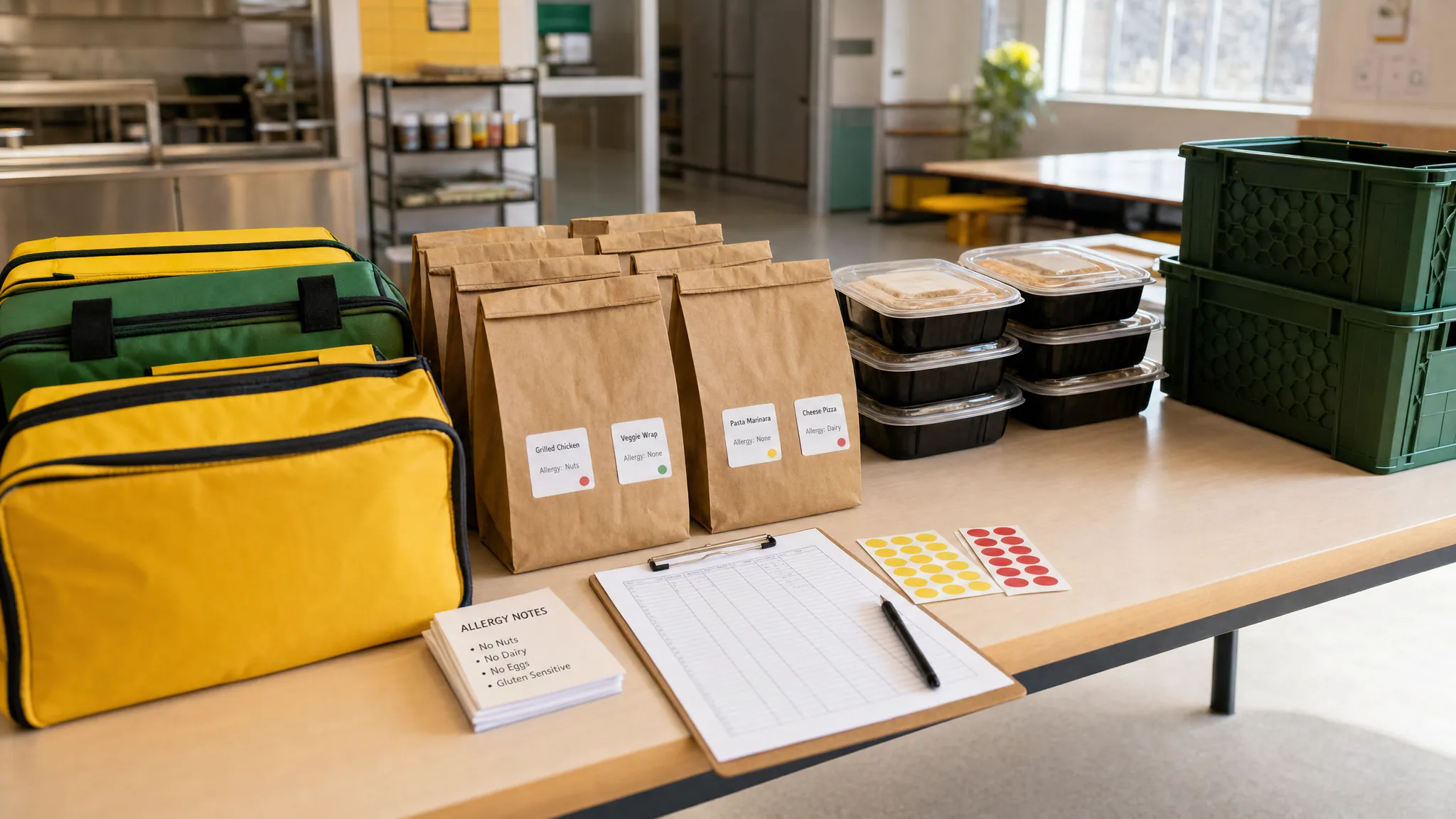
The National School Lunch Program sounds simple from a distance: schools serve lunch, families pay what they qualify to pay, and the federal government helps cover the cost. In real life, it is a lot more operational than that.
For parents, the program can mean reliable access to lunch during the school day. For schools, it can mean reimbursement, nutrition standards, eligibility rules, point-of-service counting, paperwork, menu planning, staffing, unpaid balances, and a lunch line that still has to move when 11:45 a.m. arrives. Very noble mission. Very unglamorous logistics.
This guide explains how the National School Lunch Program works, what participating schools still have to manage, and how it differs from private, catered, or restaurant-prepared lunch programs. If you are comparing lunch models for a school, the funding structure is only one part of the decision. The rest is execution.
Key takeaways
- The National School Lunch Program is a federal meal program that reimburses participating schools for eligible lunches served to students.
- It can operate in public schools, nonprofit private schools, and residential child care institutions, but participation comes with rules, paperwork, meal standards, claiming, and daily operations.
- A school lunch program is not only a funding model. It is also a practical workflow: menus, orders, counts, payments, eligibility, labels, delivery, service, credits, and parent questions.
- Private schools and schools outside the federal program still need a lunch model. They may compare in-house cafeterias, caterers, vendors, or restaurant-prepared ordering.
- Buy My Lunch fits schools that want restaurant-prepared meals and cleaner lunch coordination without turning the school office into a food-service command center.
What the National School Lunch Program is
The National School Lunch Program, often shortened to NSLP, is a federally assisted meal program. USDA's Economic Research Service explains that it operates in nearly 100,000 public and nonprofit private schools and residential child care institutions, with USDA's Food and Nutrition Service reimbursing participating institutions for meals served to students. USDA's National School Lunch Program overview is the cleanest starting point for the official definition.
The basic idea is that any student at a participating school can get a lunch. Some students qualify for free meals, some qualify for reduced-price meals, and some pay the school's paid meal price. The school receives reimbursement based on the eligible meals served and claimed through the program.
That last sentence is where the operational work begins. The school is not just "getting lunch money from the government." It has to serve meals that meet program requirements, count them correctly, protect student privacy around eligibility, keep records, submit claims, manage payments where paid meals exist, and keep the lunch service moving for real children in a real school day.
Who pays for school lunch?
In a participating school, the cost of lunch can be shared across several places: federal reimbursement, family payments, state or local support, school food-service budgets, and sometimes school or district subsidies. The exact mix depends on the school, the state, the eligibility mix, and whether the school serves meals free to all students through a universal model.
A school serving free, reduced-price, and paid meals has to track which meals are served in each category. USDA posts reimbursement rates for school meal programs, and those rates are updated for each school year. USDA's school meal reimbursement rate page is the right source for current federal rate information.
This matters because meal price is not the same thing as meal cost. A paid lunch price may be lower than the full cost to prepare, serve, administer, and clean up that lunch. A free meal may be free to the student but still require reimbursement, claiming, production planning, labor, compliance, and administration. Somebody always pays. The only question is whether the cost is visible, subsidized, reimbursed, bundled into a budget, or hiding in staff time.
This is also why two schools can both say they have a "school lunch program" and mean very different things. One may operate a federally reimbursed cafeteria. Another may use a caterer with parent preorders. Another may include lunch in tuition. Another may approve restaurant meals for certain days of the week. The phrase is broad. The operating model underneath it determines the budget, workload, and parent experience.
What schools still have to manage
A school lunch program is a daily operating system. It has food, money, compliance, people, and time pressure all stacked on top of each other. Even when funding is in place, the school still has to make lunch work.
- Menus have to meet program rules and student needs.
- Meal counts have to be accurate at the point of service.
- Eligibility records and payment status have to be handled carefully.
- Staff need training, schedules, food safety procedures, and backup plans.
- Families need clear communication about prices, applications, menus, balances, and changes.
- Students need enough time to get food, eat it, and return to class without lunch becoming a daily traffic jam.
That is why "school lunch program" is not just a policy phrase. It is a workflow. Schools can have the right intention and still create frustration if the lunch period is too rushed, the payment process is confusing, or the handoff is not organized.
Nutrition standards are part of the model
Participating schools also operate under federal nutrition standards. USDA announced updates to school meal standards in 2024, with changes phased in over several school years, including limits on added sugars and updated sodium rules. USDA's school nutrition standards update gives the current federal guidance.
Standards matter because lunch is not only about feeding students quickly. It is also about offering meals that support health, participation, and learning. But standards also add practical decisions for schools: procurement, recipes, vendor choices, menu cycles, student acceptance, staff training, and communication with families.
The best lunch program is not the one that looks perfect on a compliance chart and comes back uneaten. It has to meet the rules and work for students. That is where menu fit, timing, presentation, and choice become more than nice-to-haves.
For schools outside the federal meal program, nutrition still matters even when the exact federal standards do not apply. Parents still want meals that feel balanced. Students still need food they will actually eat. Restaurants and vendors still need clear guidance on portions, sides, allergens, packaging, and age-appropriate choices. A lunch model can be flexible without being random.
Participation changes the economics
Participation is one of the most important numbers in school lunch. If more students eat lunch through the program, fixed costs can be spread across more meals, reimbursement can be more predictable, and the lunch operation can plan with better volume. If participation is low, schools can end up with more waste, weaker economics, and more parent complaints.
FRAC reported that nearly 29.4 million children participated in the National School Lunch Program on a typical day in the 2023-2024 school year, with 21.1 million receiving free or reduced-price lunch. FRAC's National School Lunch Program summary shows why school meals remain a major part of child nutrition in the United States.
For an individual school, though, participation is local and practical. Do students like the meals? Do families understand the process? Is the lunch line too slow? Are menus predictable? Are choices age-appropriate? Does the school day give students enough time to eat? The big national number matters, but the local lunch table decides whether the program actually works.
Meal debt and payment friction are real operating issues
When schools charge for meals, unpaid balances can become a painful operating issue. The School Nutrition Association's SY 2025-26 statistics reported that 92.2% of surveyed programs that do not offer meals free to all students had unpaid meal debt or charges, with median reported debt at $6,000 in Fall 2025. SNA's school meal statistics are a useful snapshot of how payment friction shows up for school meal programs.
For schools, meal debt is not only a balance-sheet problem. It can affect parent communication, staff time, student dignity, program budgets, and the relationship between the school and families. The lunch program becomes harder to manage when payment status is unclear or when staff are stuck in the middle of a sensitive family issue during lunch service.
That is one reason schools comparing lunch models should look past the headline price. A model with clearer ordering, payment, credits, and cutoffs can reduce avoidable friction. A model with poor payment flow can make even a decent meal feel like an administrative nuisance. Lunch should feed students, not create a second accounting department with napkins.
How private school lunch is different
Nonprofit private schools can participate in the National School Lunch Program if they meet the requirements, but not every private school wants or needs that model. Many private schools are comparing a different set of options: tuition-included lunch, parent-paid lunch, in-house cafeteria service, caterers, lunch vendors, or restaurant-prepared ordering.
That comparison should start with the school's goal. Is lunch part of the tuition promise? Is the school trying to avoid building a kitchen operation? Do families want more choice? Does the office currently manage too many forms, late requests, missing meals, or payment questions? Is the problem food quality, logistics, parent experience, or all of the above?
For a deeper private-school cost comparison, the Buy My Lunch private school lunch cost guide walks through cafeteria, catered, tuition-included, parent-paid, and restaurant-prepared models. Schools looking at commercial options can also review the private school lunch catering page.
Where restaurant-prepared lunch fits
Restaurant-prepared lunch is usually not a replacement for the National School Lunch Program. It is a different model for schools that want family ordering, local restaurant meals, and a cleaner operating layer around lunch. That distinction matters. If a school needs federal reimbursement, eligibility claiming, and program compliance, it should evaluate that path directly with its state agency. If a school wants a parent-paid or school-approved lunch option with less internal food-service burden, restaurant-prepared ordering may be a better comparison.
The value is not just that restaurants cook the food. The value is that the school does not have to run every surrounding process by hand. Families order ahead. Restaurants prepare against real counts. Meals are labeled. Cutoffs are known. Payments and credits are connected. Delivery and handoff are planned before the lunch bell rings.
That is the unsexy part that makes the model work. Without the operating layer, restaurant lunch can become a pile of bags, names, late orders, missing payments, and staff improvisation. With the right system, it becomes a school lunch program families can use without the school becoming the restaurant, the cashier, and the dispatcher.
It also gives schools a cleaner way to pilot change. Instead of rebuilding the entire lunch operation at once, a school can start with certain grades, certain days, or a limited restaurant rotation. That makes it easier to see what families order, what students eat, where handoff needs adjustment, and whether the model reduces work for the office instead of quietly moving the work somewhere else.
Questions to ask before changing lunch models
Whether a school is considering NSLP participation, a cafeteria refresh, a catered model, or restaurant-prepared ordering, the same practical questions keep coming up.
- Who pays for lunch, and where does the cost show up?
- Who owns menu planning, ordering, payment, eligibility, and parent support?
- How are meal counts known before food is prepared?
- What happens when a student is absent, a parent misses a cutoff, or a meal is incorrect?
- How are allergy notes, classroom rosters, labels, and pickup locations handled?
- Can the model scale without adding daily office work?
- Does the lunch model improve parent trust, or does it create one more thing families have to chase?
A school lunch program should be judged by the whole experience: food quality, cost, access, compliance needs, staff time, parent clarity, student experience, and daily reliability. A program that wins on one dimension and collapses on the others is not a program. It is a recurring lunch problem with a nicer name.
How Buy My Lunch helps schools run lunch cleaner
Buy My Lunch is built for schools that want restaurant-prepared meals without turning lunch into a daily scramble. The school can offer approved restaurant options, families order ahead, restaurants receive organized counts, and the platform keeps the key details connected: menus, cutoffs, payments, credits, labels, delivery, and handoff.
For schools comparing lunch options, that creates a useful middle ground. It is more organized than one-off catering or paper forms. It is lighter than building a full food-service operation from scratch. And it gives families more appealing choices without asking school staff to manually coordinate every meal.
Schools that want to evaluate the operational side can start with the online lunch ordering for schools guide or the school FAQ. For broader category context, the school lunch statistics page tracks current participation, cost, debt, waste, and student lunch data in one place.
Frequently asked questions
What is the National School Lunch Program?
The National School Lunch Program is a federally assisted meal program that helps participating schools serve lunches to students. Schools are reimbursed for eligible meals, and students may receive free, reduced-price, or paid meals depending on household eligibility and local program rules.
Can private schools participate in the National School Lunch Program?
Yes, nonprofit private schools can participate if they meet program requirements. Participation is not automatic, though. A school has to work through the relevant state agency, follow meal pattern and accountability rules, and manage the daily claiming and service process.
Does the National School Lunch Program make lunch free for every student?
Not always. Some schools serve meals free to all students through specific programs or state policies, while others serve a mix of free, reduced-price, and paid meals. The answer depends on eligibility, school participation, state policy, and whether the school uses a universal meal model.
What does a school still have to manage if it participates?
A participating school still has to manage menus, meal standards, eligibility records, counts, claims, food safety, staffing, point-of-service procedures, parent communication, unpaid balances when applicable, and the daily work of getting lunch to students correctly.
How is a restaurant-prepared lunch program different?
A restaurant-prepared lunch program is usually a school-approved ordering model rather than a federal reimbursement program. Families order ahead, restaurants prepare against real orders, and the school needs organized handoff, labels, cutoffs, payments, credits, and delivery coordination.
How does Buy My Lunch help schools with lunch programs?
Buy My Lunch helps schools offer restaurant-prepared meals with a cleaner operating layer. Families order ahead, restaurants get organized counts, meals arrive labeled, and schools have a more manageable handoff instead of chasing forms, cash, counts, and missing lunches.
Related posts
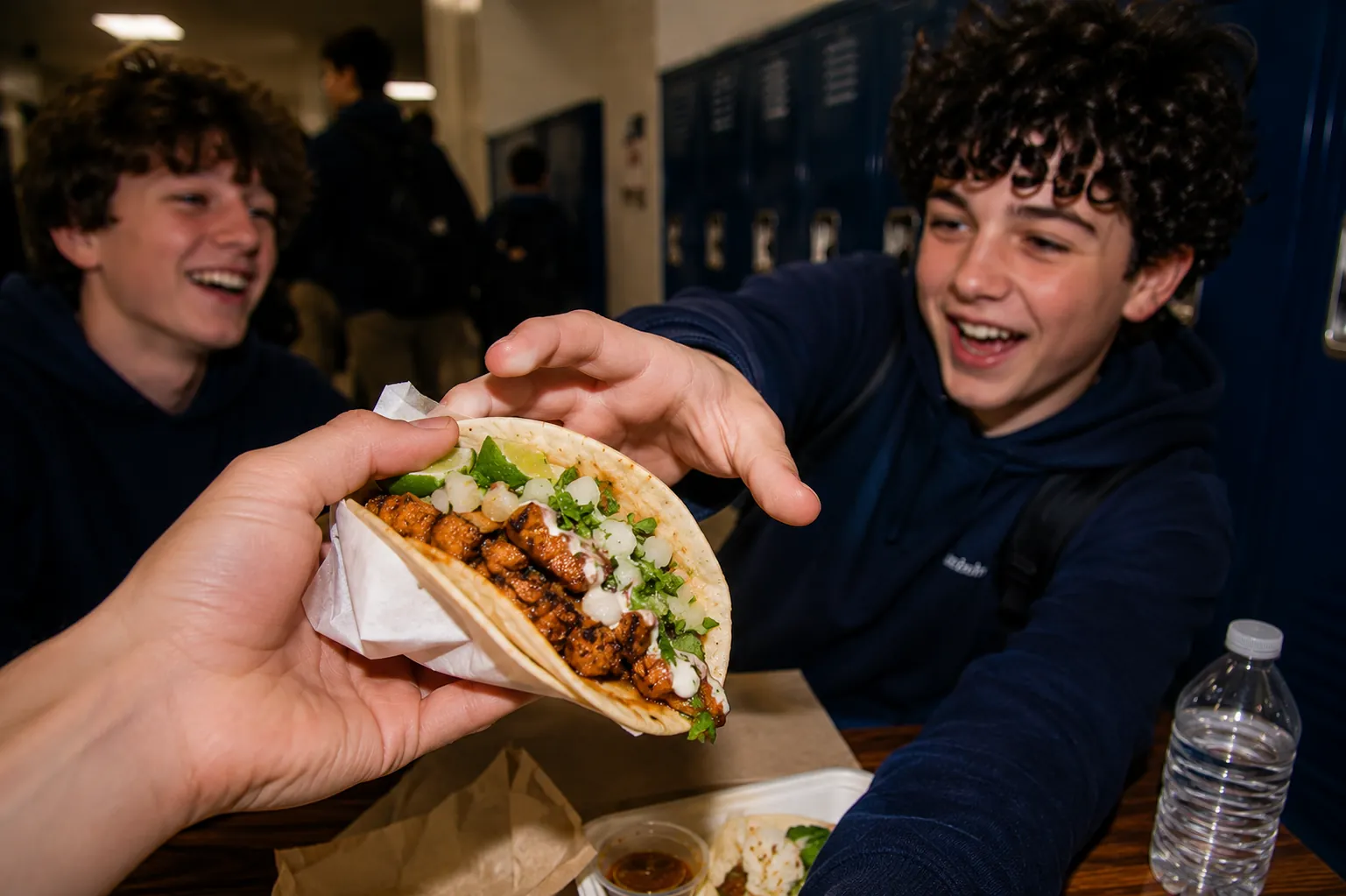 School Lunch OperationsSchool Lunch Payment Integration: What Schools Should Ask
A practical guide to connecting school lunch ordering and payment without leaving families, staff, or restaurant partners to reconcile lunch-day loose ends.
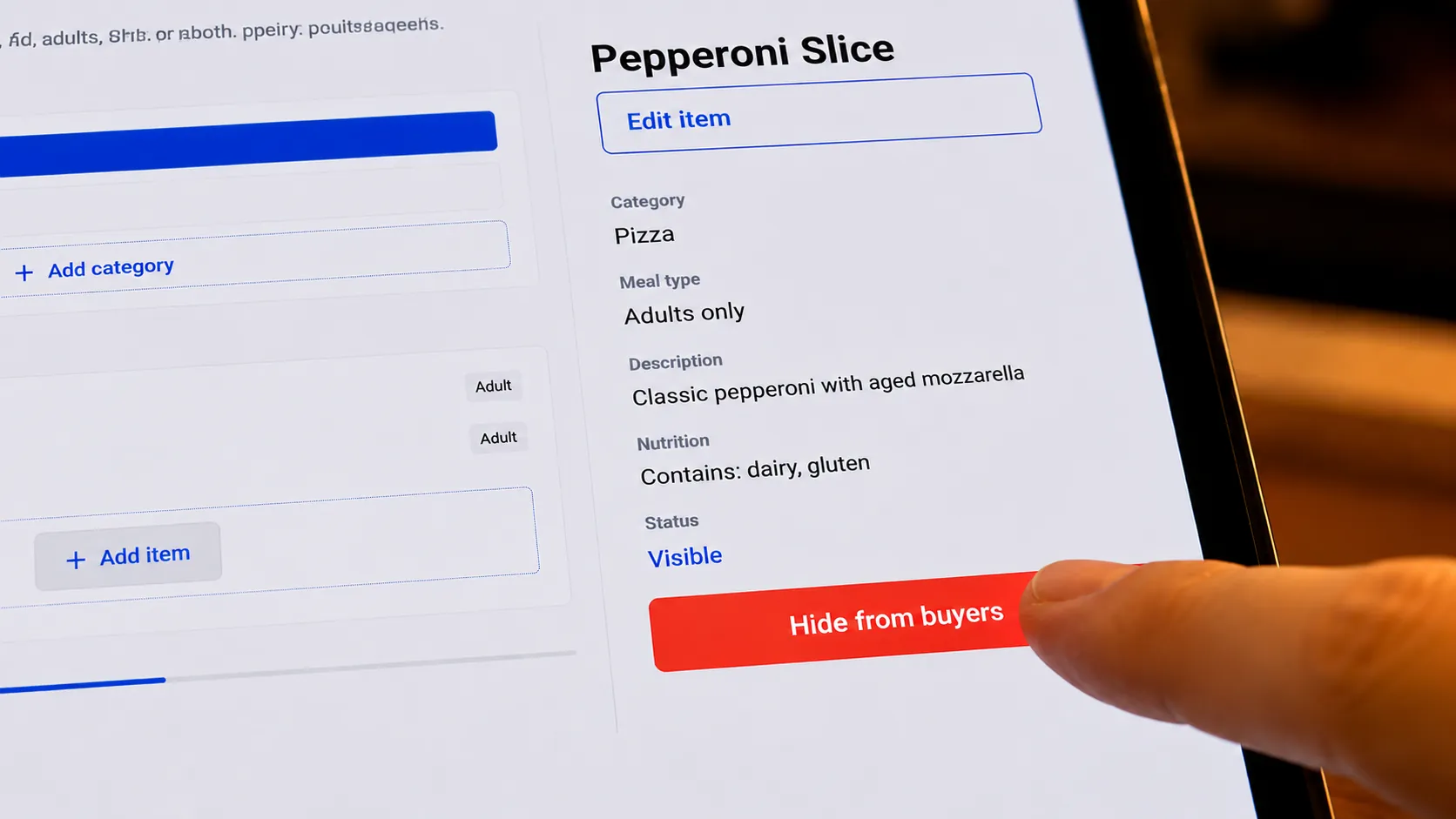 School Lunch OperationsSchool Lunch Menu Template for a Real School Day
A practical school lunch menu template that helps schools and restaurant partners plan clear choices, ordering cutoffs, prep, delivery, and a reliable handoff.
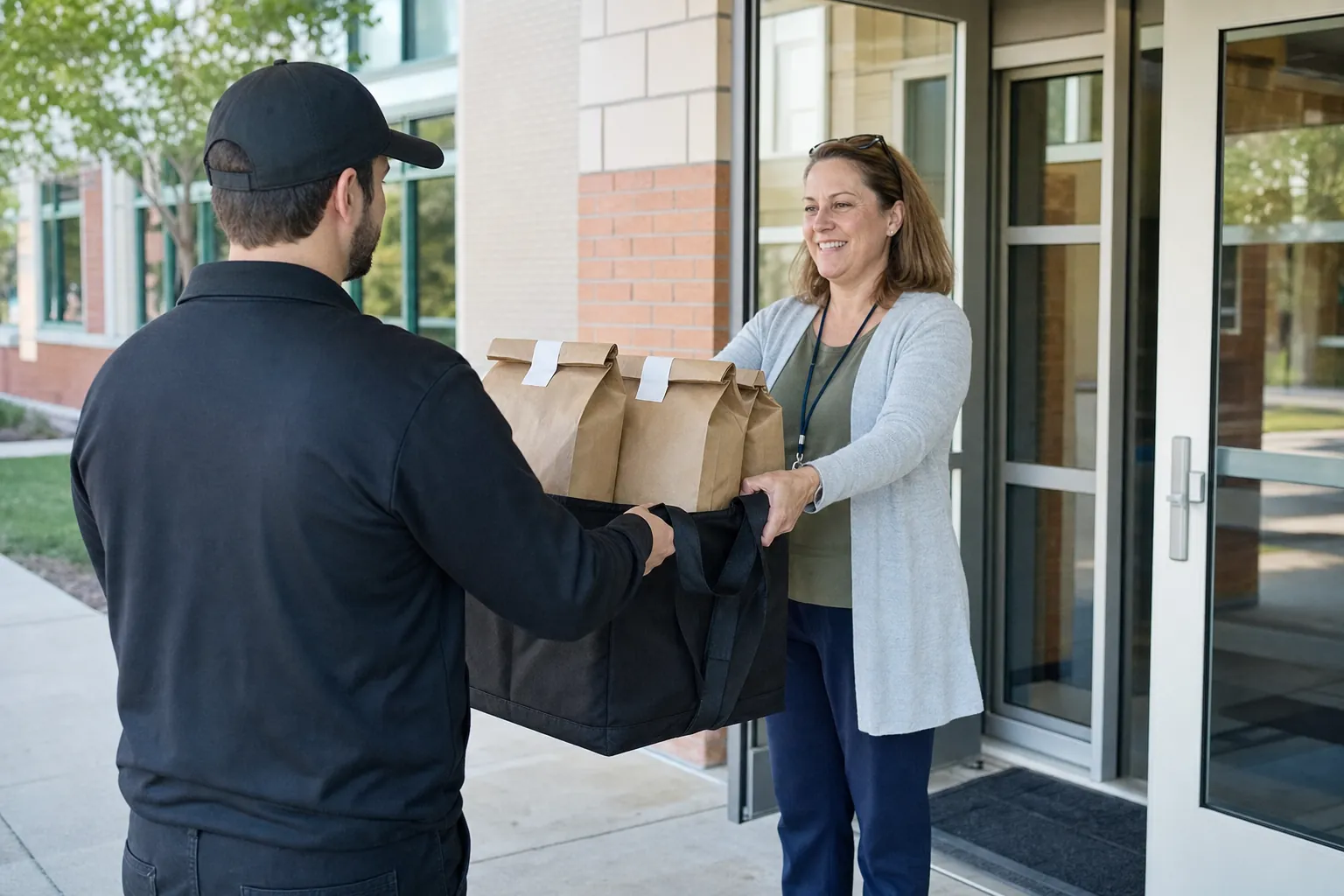 School Lunch OperationsCan You Get Food Delivered to School? What Parents Need to Check
Can food be delivered to school? Usually only when the school allows it. Check the policy questions parents should answer before ordering lunch.