
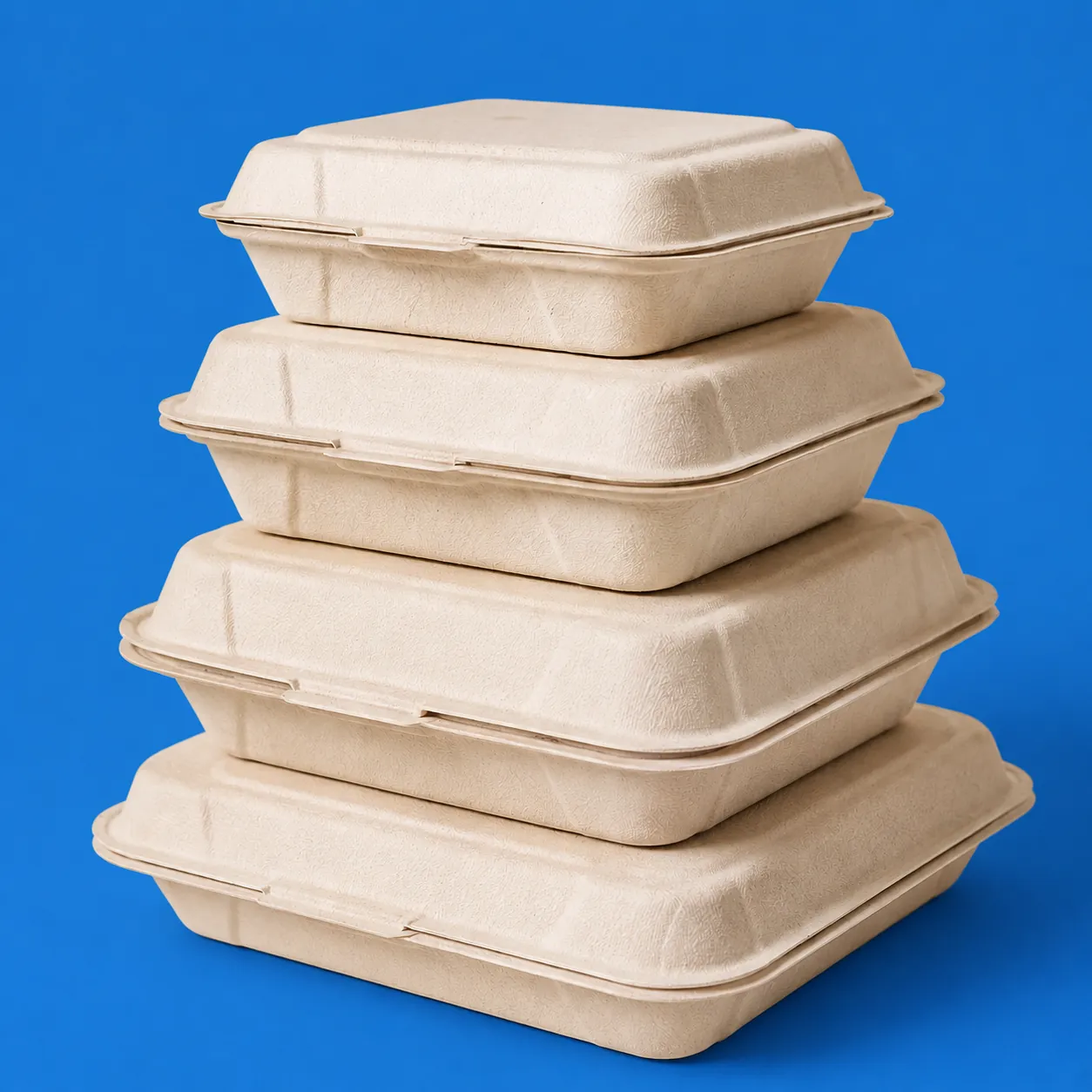
A clamshell looks simple until it meets a school lunch program. Then it has to carry a meal through prep, labeling, stacking, delivery, distribution, student hands, cleanup, and maybe a compost bin. The package is doing more work than it gets credit for. When it fails, everyone notices at once.
For restaurant partners, compostable clamshell containers are worth evaluating because they can fit a school’s waste goals. But the honest question is not “Are these better?” It is “Are these the right containers for this meal, this school, and this collection system?”
Begin with the meal, not the material
Start with what needs to travel. A dry sandwich and fruit behave differently from a saucy bowl, crispy fries, or a hot entrée with a cold side. The container needs to keep the intended meal intact until the student opens it. If steam makes the meal soggy, the hinge cracks in a delivery bag, or the compartments force the food into a strange pile, the disposal story is beside the point.
Test one meal per likely use case: hot, cold, saucy, crisp, and portioned. Include the real label position, the delivery bag, and the school’s normal wait time. The best answer may be one approved clamshell for many menu items and a different approved format for the outliers. Consistency helps the lunchroom, but false consistency produces bad lunches.
Check the whole package family
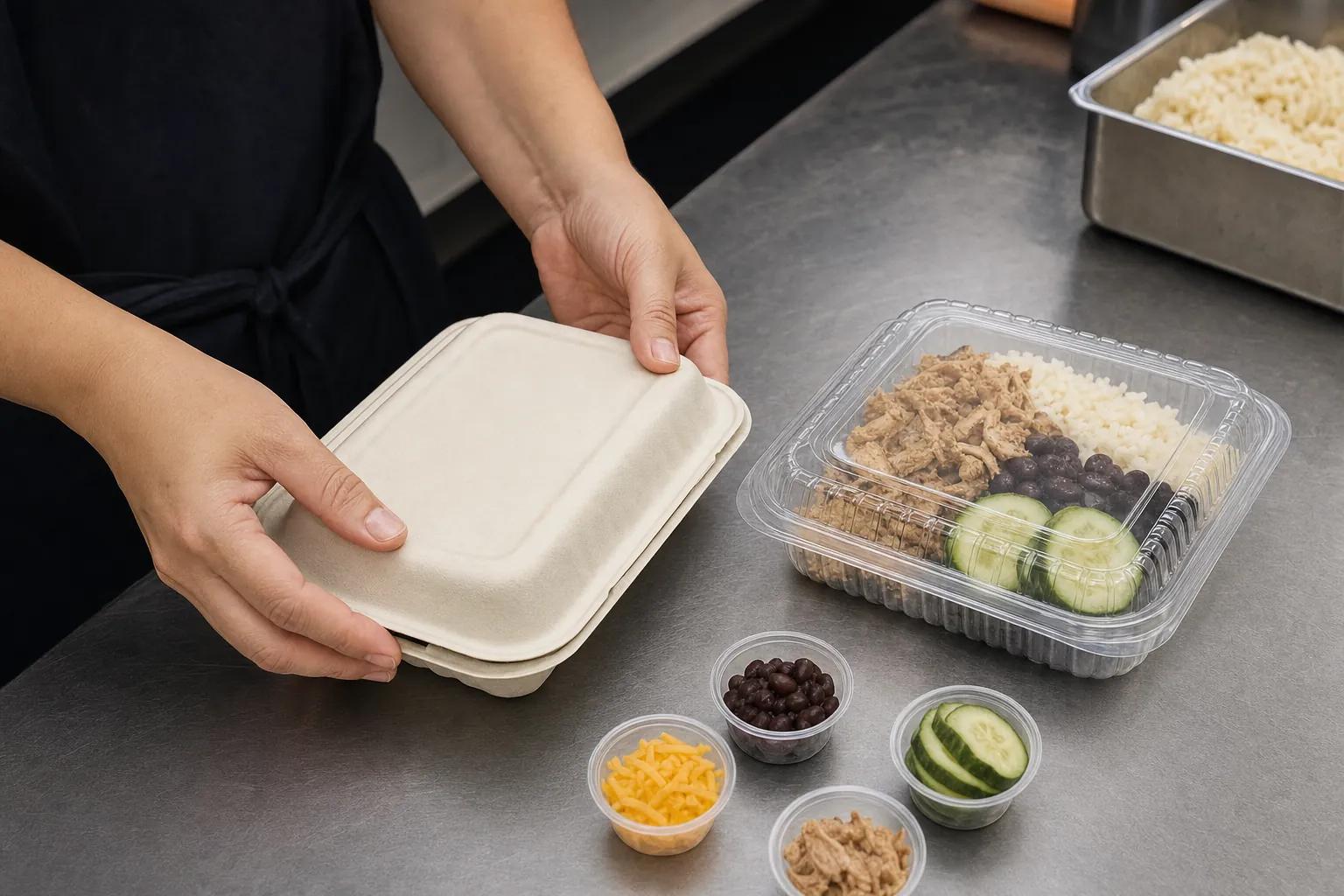
The base container is not the whole decision. Lids, condiment cups, utensils, straws, napkins, bag liners, labels, and tamper seals can all change what happens at the bin. If a compost facility accepts a particular clamshell but rejects its clear lid or adhesive label, that has to be part of the plan. The school should not have to reverse-engineer packaging after lunch.
The BPI product directory can help a buyer check specific certified products, while the local provider confirms what it will actually accept. That pairing matters. A certification is useful evidence about the product. Local acceptance decides the next move.
Skip vague “green” language in the restaurant’s own materials. The FTC’s guidance on environmental claims is a useful reminder that a compostable claim needs to match the real conditions and availability of composting. Clear operational instructions beat a big promise every time.
Design for the fastest decision in the room
A student in a busy cafeteria should not have to distinguish five shades of beige packaging and remember a policy from a poster. The more packaging formats you introduce, the more sorting decisions you create. Where possible, use a small, repeatable set of approved components that fit the facility’s rules.
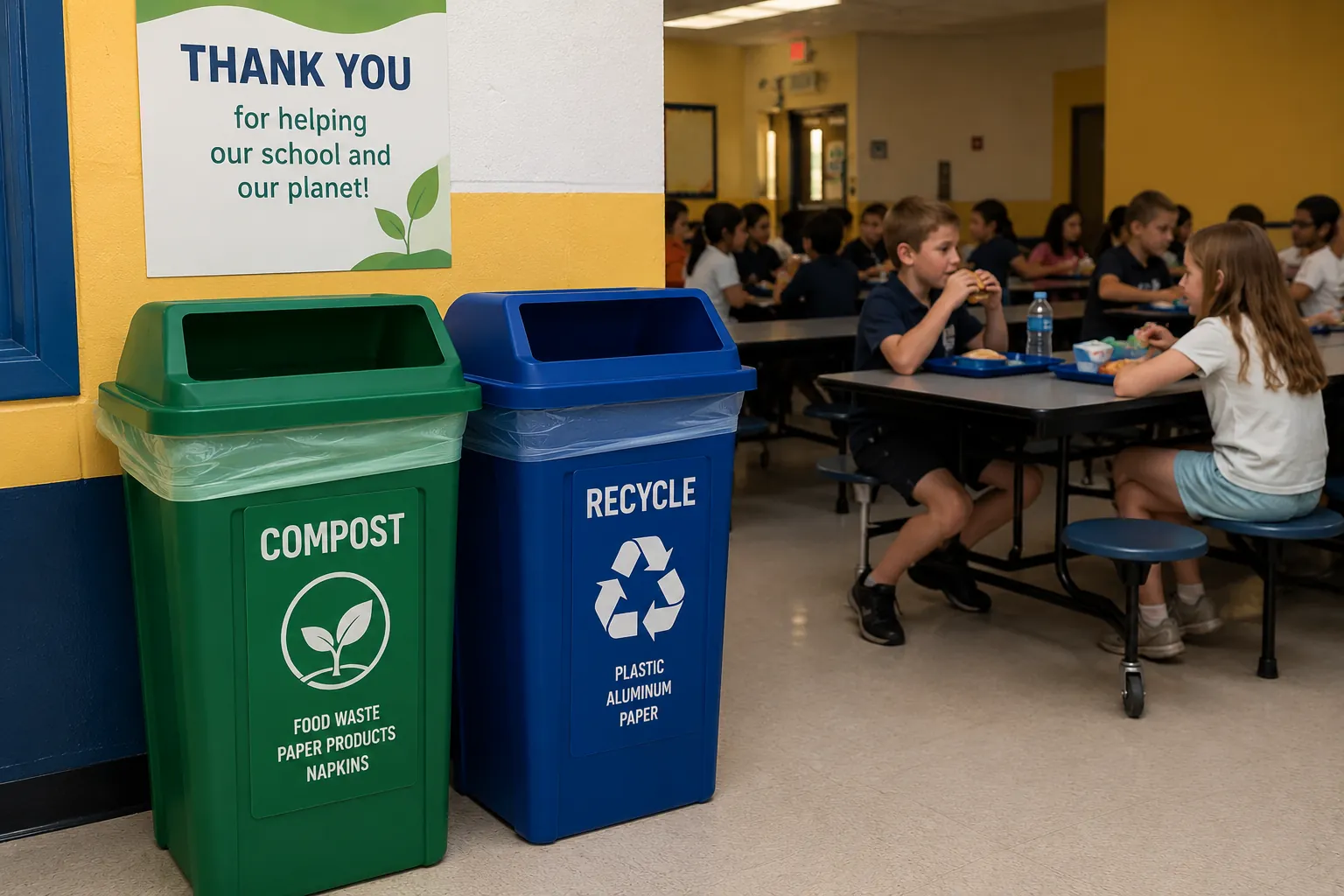
Work with the school on a direct bin setup: what goes in compost, what goes in recycling if anything, and what goes in trash. The EPA’s school waste resources support planning waste reduction and collection as a schoolwide operation, not a lone lunchroom project. If staff must stand at the bins during the first week, plan for that. It is not a failure. It is what a pilot looks like when it is taken seriously.
Make labels help, not hurt
School lunch labels need enough room for a student name, class or teacher, meal details, and any handoff note the school uses. Test whether the label sticks through refrigeration, warmth, condensation, and stacking. Also confirm with the compost provider whether labels need to be removed or whether a particular label stock is acceptable. An immaculate meal label that has to be peeled off by a lunch aide is not immaculate for long.
Buy My Lunch is useful here because the order and label workflow is already part of the program. Families order ahead through participating schools, restaurants prepare from real counts, and schools receive meals ready for a clearer handoff. Packaging becomes easier to evaluate when it is attached to a repeatable order, label, and delivery process.
Run a delivery-day pilot
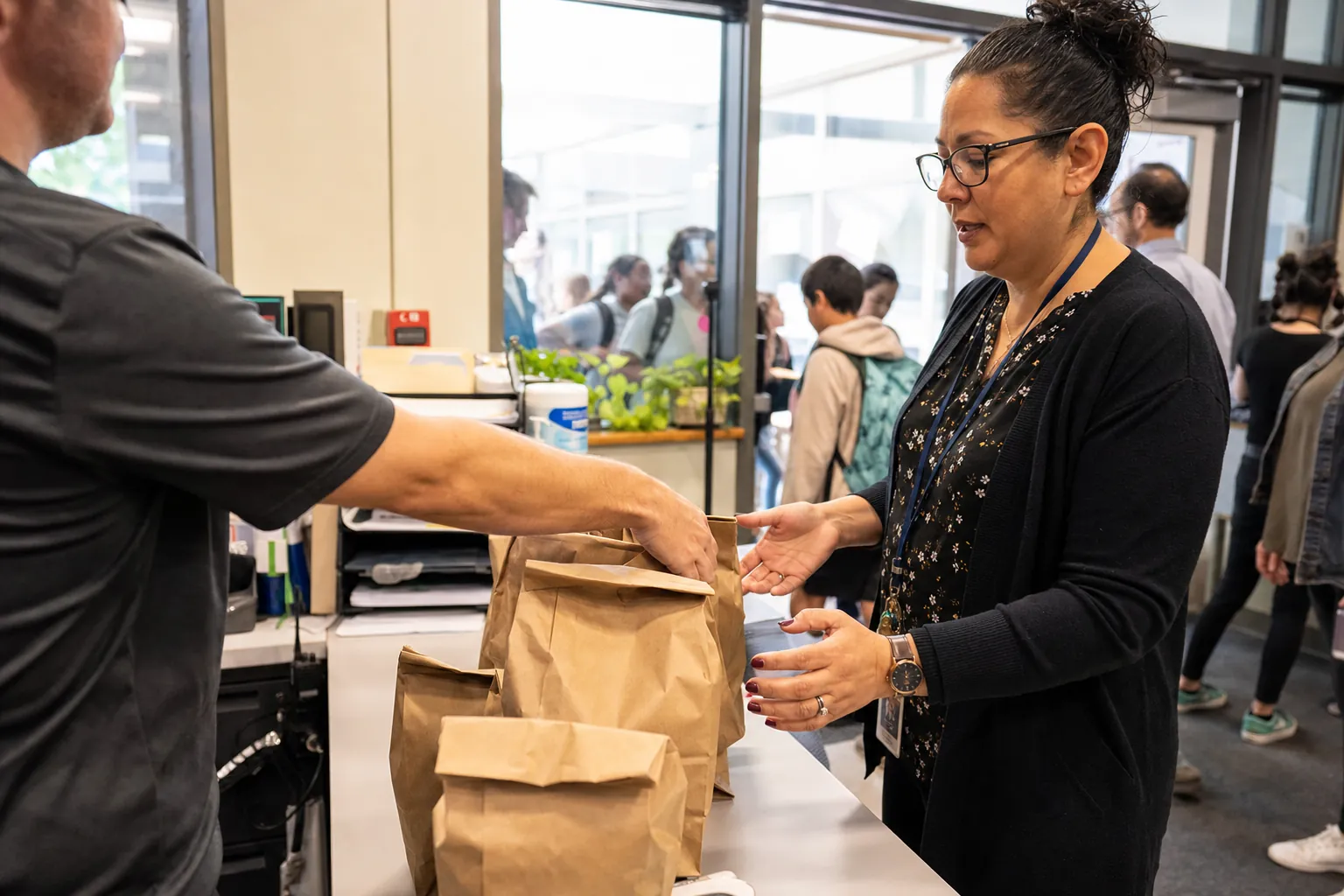
A countertop sample does not show you whether containers stack securely in the bag, whether corners crush during transport, or whether the right meal reaches the right student. Run the test on a normal delivery day. Count damaged containers, leaks, label failures, meals sent back, and bin mistakes. Ask students whether the container was easy to open and whether the meal was still good when they sat down.
Use the results to adjust the package, not just the instructions. If the container regularly traps steam, try a different format or change the menu arrangement. If the compost stream gets mixed with conventional plastic, reduce the number of materials. If delivery bags are too tall to stack safely, change the packing pattern. This is packaging engineering at school-lunch scale: practical, unglamorous, and very visible.
Write one approved packaging specification
Once a pilot works, write the decision down. Include the approved product name, material, lid, label, utensils, liner, meal types, supplier contact, and the school’s disposal instruction. Give the same document to restaurant partners, school staff, and the person managing collection. If an item needs substitution, the change should be reviewed before it reaches students.
For the wider context, read the compostable food containers guide before choosing materials, then use the food waste guide to connect packaging to menu planning, ordering, and the rest of the lunch operation.
Clamshell checklist for restaurant partners
- Confirm the school’s collection provider accepts the exact product and components.
- Test the container with real hot, cold, moist, crisp, and portioned meals.
- Check label placement, adhesion, readability, and local disposal rules.
- Test stacking, bagging, delivery, and handoff on a real school day.
- Keep the number of packaging materials easy to sort.
- Give school staff a clear written specification before the launch.
- Review contamination and meal-quality feedback after the first few service days.
Key takeaways
- A clamshell is part of the meal experience and the delivery workflow, not merely a disposable box.
- The strongest choice is the one that works for the actual menu and the school’s verified collection rules.
- Matching lids, labels, cutlery, and liners matters as much as choosing the base container.
- Pilots reveal issues that samples cannot: sogginess, broken seals, unreadable labels, bin confusion, and delivery friction.
Frequently asked questions
Are molded fiber clamshells always compostable?
No. Material descriptions and coatings vary. Schools and restaurant partners should verify the specific product’s documentation and ask the local collection provider whether it is accepted.
Can a restaurant use a compostable clamshell with a plastic lid?
It can, but the mixed setup may complicate sorting and can create contamination depending on local rules. The school should confirm how each component is handled before using the combination.
What packaging matters most for school lunch delivery?
The right package protects the meal, separates components when needed, takes a readable student label, stacks safely, opens easily, and matches the school’s disposal process. The best choice depends on the menu and delivery route.
How can Buy My Lunch support restaurant partners?
Buy My Lunch gives restaurant partners a school-specific ordering, cutoff, labeling, and delivery workflow. That makes it easier to test packaging against the actual count, menu, and handoff instead of improvising at the last minute.
Continue the series
 School Lunch OperationsFood Waste in Schools: A Practical Lunchroom Guide
How schools can think about food waste, ordering, share tables, composting, packaging, and restaurant-prepared lunch without creating more lunchroom chaos.
 School Lunch OperationsCompostable Food Containers for School Lunch
A practical school-lunch guide to compostable food containers, certification, local acceptance, sorting, and the questions to answer before switching.