A school fundraiser can start as a harmless sentence in a meeting: “We should do something this spring.” Then it becomes a signup sheet, a payment question, a stack of donated items, and a volunteer who thought they were only helping with one email. The idea was easy. The operating plan was not.
The strongest school fundraising ideas are not necessarily the flashiest. They fit a real calendar, give families a clear reason to participate, and ask the volunteer team to do work it can actually sustain. A bake sale, read-a-thon, direct-giving campaign, restaurant night, and recurring lunch program all have a place. The point is to choose one that matches the job.
This guide is for school leaders and parent groups deciding what to run next. It is not a promise that one format will fit every school. It is a practical way to compare options, avoid preventable busywork, and make a community partnership easier to explain.
Key takeaways
- A useful school fundraiser starts with a specific need, a realistic volunteer commitment, and a clear way for families to take part.
- One-time events can build excitement, while a repeatable option can be easier to work into an already full school calendar.
- Restaurant partnerships work best when the school, restaurant, and families know the offer, timing, ordering path, and purpose before the first order.
- Choose a fundraiser the school can explain in one sentence. If the plan needs a flowchart before anyone can help, it needs a simpler first version.
- Buy My Lunch can connect a school-approved restaurant lunch program with family ordering and a school giveback, without handing the front office a stack of payment forms.
1. Start with the job the fundraiser must do
“Raise money” is not yet a plan. Start with the thing the school is trying to support: a class trip, club supplies, teacher grants, a family event, or a broader school need. Then name a target, a deadline, and the person or group responsible for tracking the result. Families are more likely to understand a fundraiser when they can see what their participation supports.
The National PTA’s product-sale guidance treats fundraising as one part of a larger plan, not a substitute for it. That is the useful mindset. Pick the financial goal first, then choose the activity. Otherwise a school can spend weeks selling something only to discover the effort did not match the need.
Write a one-sentence brief before choosing the format: “We are raising money for ___ by ___, and families can help by ___.” If the sentence is vague, the message to volunteers and families will be vague too. A clear purpose also makes it easier to decide whether a one-time event or a repeatable activity makes more sense.
2. Choose an effort level before choosing an idea
Fundraisers have different costs, even when they do not require a big up-front check. Some need a committee, an event site, donation collection, permits, student supervision, and cleanup. Others need a short message, one partner, and a sensible deadline. Neither is automatically better. The mismatch is what causes trouble.
Use four plain questions to compare options:
- How many volunteer hours can the school honestly support?
- Does the school need money by a specific date, or can it build support over time?
- Can families take part without attending a separate event?
- Who owns payments, questions, delivery, and the follow-up after the fundraiser ends?
A read-a-thon or direct-giving campaign may be a good fit when the school can rally families around one defined project. A larger fair or auction may suit a school with experienced volunteers and a calendar that can absorb the planning. A local restaurant partnership can be worth considering when the school wants a community-facing option without asking families to sell a product door to door.
3. Five school fundraising ideas worth comparing
There is no universally best fundraiser. There are better fits for different schools. Here is a practical shortlist to put beside the calendar.
Before choosing, make a small comparison table for the team. Put the idea in one column, then list the likely setup work, the date it needs, how families participate, who handles money or orders, and what the school needs from an outside partner. It is not glamorous work. It is considerably less painful than discovering on Thursday that nobody arranged the pickup, the payment link, or the folding tables.
Direct giving for one clear project
Ask families and the wider community to support one specific need, such as new equipment, an arts program, or a field trip. This works best when the goal is concrete, the donation path is easy, and updates are honest. The school does not need to make a product the main character when the purpose is already compelling.
Read-a-thons, walk-a-thons, and student challenges
These formats connect a fundraising ask to an activity students can explain. They need a plan for pledges, supervision, progress updates, and the final thank-you, but they can bring the school community into the work rather than placing it all on a few adults.
Community events
A talent show, family movie night, silent auction, or school fair can raise funds and create a shared moment. The tradeoff is production. A community event requires a realistic decision about tickets, staffing, safety, cleanup, and what happens if attendance is lower than hoped.
Product or spirit sales
Spirit wear and student-art products can work when a school has a clear audience and a delivery plan. The PTA notes that groups often use items such as school-color spirit wear and student artwork. Keep the choice set tight and explain when orders close, how products are delivered, and where the proceeds go.
Local restaurant partnerships
A restaurant fundraiser connects an everyday purchase to a school goal. First Book includes a restaurant night, where a portion of orders supports a school or program, in its fundraising toolkit. The idea is simple. The details still matter: eligible orders, the share the school receives, the dates, the restaurant contact, and how families know their purchase counts.
Restaurant partnerships are also useful because they can make the school’s local network visible. A familiar neighborhood restaurant may have a reason to participate that is bigger than one evening of sales, and families can support both the school and a business they already know. That does not remove the need for an honest plan. The school should never imply that a restaurant has promised more than it has, and the restaurant should never leave the school guessing about the giveback terms.
4. Make a restaurant partnership easier to run
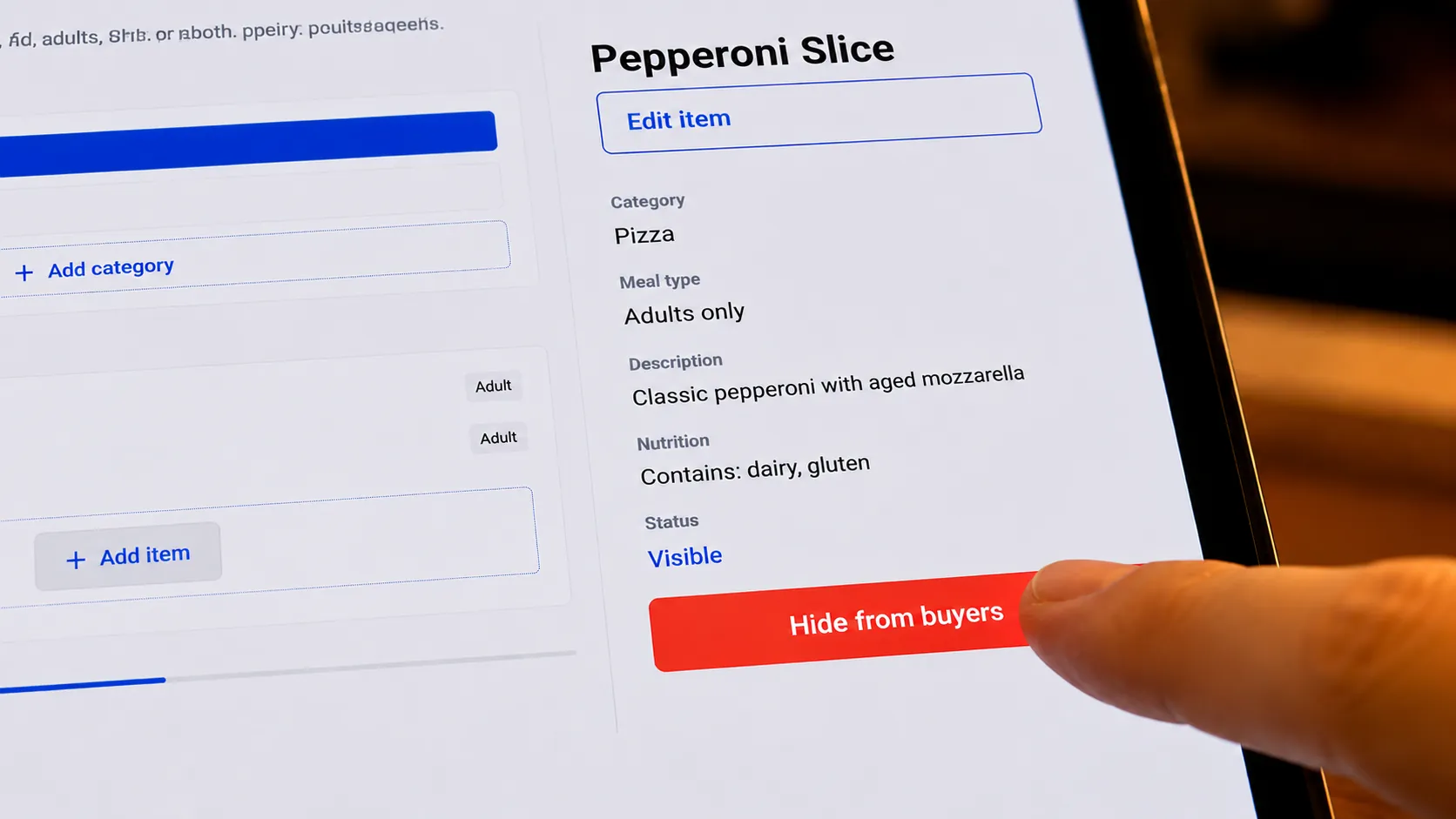
A restaurant partnership should not depend on a staff member remembering a verbal agreement from six weeks ago. Put the essentials in writing before anyone promotes it: the restaurant, the dates, the offer, what qualifies, the ordering path, the school’s share, and the contact person for both sides.
For an evening restaurant night, families may visit during a stated window and identify the school as required by the restaurant. For a school-day lunch program, the planning needs to go further. The school needs an approved delivery and handoff plan. The restaurant needs advance counts and meal details. Families need a clear deadline and one reliable place to order.
That is why it helps to separate “a restaurant event” from “a school lunch operation.” The first can be a one-night community gathering. The second is a scheduled meal service. The restaurant guide for selling food to schools explains the questions that need answers before a restaurant makes an offer, while the school lunch catering checklist covers the lunch-day side of the decision.
5. Plan a recurring lunch fundraiser around real lunch day
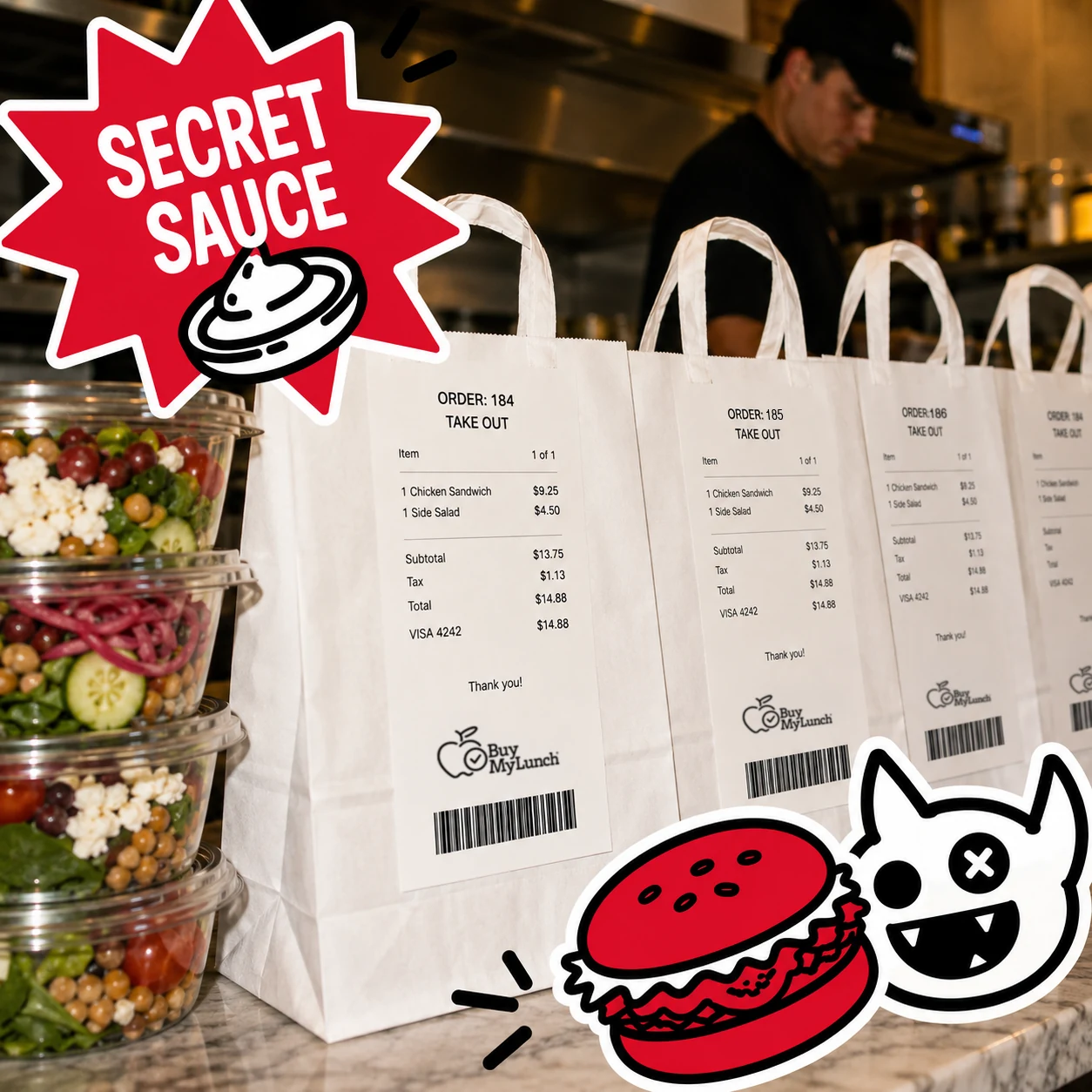
A recurring lunch fundraiser can turn a local restaurant partnership into a school-approved routine. Families order restaurant-made meals ahead of time. The restaurant prepares against a known count. The school receives meals through an agreed handoff, and the program can include a giveback for the school.
That does not make every lunch day a fundraiser automatically. The school, restaurant, and program need to agree on the model and the local details. It does mean the activity can be designed around work people are already doing: choosing lunch, preparing food, delivering meals, and supporting the school community.
Before launch, settle these points:
- Which lunch days, restaurants, and menu choices are included.
- When family orders close and when the restaurant receives its final count.
- How individual meals are labeled, delivered, and handed off at school.
- How the giveback is calculated, tracked, and shared with the school community.
- Who answers family questions without turning the school office into a restaurant support desk.
Those details are not fussy extras. They are the difference between a planned lunch day and a pile of bags arriving with a question mark attached. The school lunch ordering cutoff guide, delivery guide, and packaging guide can help a school and restaurant pressure-test the routine before it goes public.

6. Give families one clear message
Fundraising messages go sideways when the school tries to explain every background detail at once. Families need the decision, not the meeting notes. Lead with the purpose, the date or deadline, the action to take, and the one place to get help.
For example: “Order lunch by Tuesday for Friday’s school lunch day. A portion of the program supports the library refresh.” That gives a parent the essentials. The order page or school notice can hold the menu, pickup details, and any extra questions.
Use the same language everywhere. The school newsletter, restaurant note, parent-group post, and reminder should name the fundraiser in the same way. Mixed messages create the kind of inbox that makes a straightforward fundraiser feel like a scavenger hunt.
It also helps to say what the school is not asking families to do. If lunch is ordered ahead, say that no cash or paper form is needed at the school. If an event is optional, say that clearly. If the restaurant handles meal questions, make that path visible. Clear boundaries are part of a respectful ask, especially when school communications are already competing for attention.
7. Review the result before repeating it
After the event or lunch day, do not settle for “That seemed good.” Compare the goal, participation, money raised, volunteer hours, family questions, and partner feedback. A recurring activity earns its spot on the calendar when the school knows what it brings in and what it asks of people.
For a restaurant partnership, review the practical parts too: Was the offer clear? Did families order in time? Did the restaurant receive a usable count? Did the meals arrive and move through the school as planned? A small adjustment, such as a clearer cutoff or tighter menu, can be more valuable than a bigger promotion push.
Thank families and partners with the same clarity used to invite them. Share the result and what it supports. That closes the loop, gives the community a reason to trust the next ask, and helps the school decide what to keep, change, or skip next time.
Keep a short record while the details are fresh. Note the date, goal, participation, funds received, costs the school covered, volunteer hours, partner feedback, and the one change to make next time. A future parent-group lead should inherit a useful playbook, not a mysterious shared drive full of flyers called FINAL-final-2.
How Buy My Lunch helps schools raise support through lunch
Buy My Lunch helps participating schools run a restaurant-made lunch program that families can order from in advance. The platform organizes school-specific menus, family ordering, restaurant preparation details, delivery, and the school handoff. It can also create a school giveback from the program.
That lets the school focus on its community and the purpose of the fundraising support, while restaurants focus on the food and delivery. Visit Buy My Lunch for schools to see the program model, explore the school setup guide, or share the parent guide to hot lunch programs with families who want to know how ordering works.
Frequently asked questions
What are good school fundraising ideas?
Good school fundraising ideas match the school’s goal, calendar, and volunteer capacity. A read-a-thon, community event, direct-giving campaign, product sale, or restaurant partnership can each fit, depending on how much planning the school can support and whether it needs a one-time push or a repeatable activity.
How do schools choose a fundraiser?
Start with the amount or purpose, the time available, and the people who can run the work. Then compare ideas by setup time, cash handling, family communication, outside partners, and what needs to happen on the day. A smaller plan that can be repeated cleanly is often more useful than an ambitious event that exhausts the volunteers.
Can a restaurant fundraiser work during the school day?
It can, when the school approves the model and the details are agreed in advance. Families need a clear order deadline, restaurants need usable meal counts, and the school needs a planned delivery and handoff routine. The school should also agree on how the giveback is calculated and communicated.
What should a school tell families about a fundraiser?
Tell families what the fundraiser supports, how to participate, the deadline or event time, the price or donation expectation where relevant, and who to contact with questions. Keep the message short enough that a busy parent can understand the decision without reading three follow-up emails.
How does a recurring lunch fundraiser differ from a restaurant night?
A restaurant night is usually a single event where a restaurant shares a portion of qualifying sales. A recurring lunch program can be planned around an approved school lunch day, advance family orders, restaurant preparation, delivery, and a school handoff. The right choice depends on the school’s goals, policy, and appetite for an ongoing routine.
How does Buy My Lunch support school fundraising?
Buy My Lunch helps participating schools offer restaurant-made lunch through a planned, family-ordering model. Families order from school-specific menus before the cutoff, restaurant partners prepare against organized counts, and the school can receive a giveback from the program. The school and restaurant still agree the local details of the program.