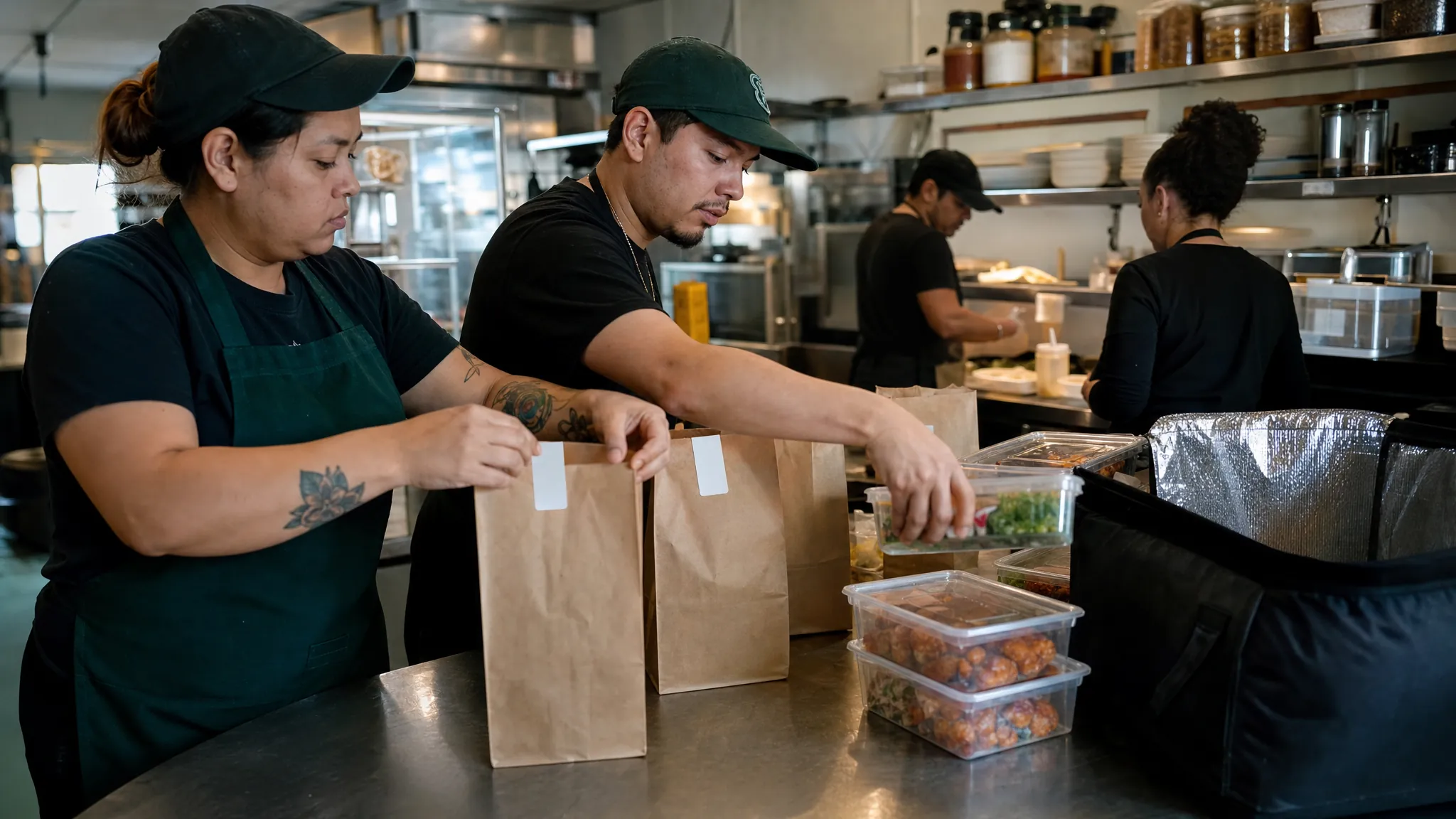
Catering for school lunches is not just a food order with a slightly larger headcount. A school day has a fixed bell schedule, busy entrances, children with different meals, and staff who already have actual jobs. The right catering plan makes the food easy to receive and distribute. The wrong one leaves somebody sorting bags, chasing a missing order, or trying to remember which child ordered what while the lunch period is already underway.
That is why a school should choose its meal model before it compares menus. A caterer can make great food, but a great school-lunch partner also has to fit the ordering routine, kitchen prep, packaging, delivery window, and handoff. This checklist helps school teams turn a promising catering idea into a day that works for families, restaurant partners, and staff.
Quick takeaways
- Choose the meal model first, then compare caterers against the work that model creates.
- Ask how family orders become a final restaurant prep count, not just how the menu looks online.
- Make packaging, labels, delivery instructions, and the receiving point part of the agreement.
- Run a small first-day review and fix the handoff details while the program is still new.
1. Choose the lunch model before choosing the menu
Start with a plain question: how will a meal get from the kitchen to the right student? A bulk catering order can work for a class event, a staff meeting, or a school where everyone receives the same meal. It gets more complicated when families choose different meals, pay individually, or need a clear path for order changes. In those cases, a restaurant-prepared lunch program may need school-specific ordering, individual meal details, and a more deliberate handoff.
Write down what the school actually needs. Is lunch offered daily, weekly, or only on selected days? Are students eating in one room or across several grades? Does someone need to track individual choices? Will families order and pay ahead? The answers rule out a lot of bad-fit options early, which is useful because a polished catering proposal can hide a very manual Tuesday.
Schools serving meals through federal child nutrition programs have additional responsibilities around standards, procurement, and local requirements. USDA's school meals resources are a sensible starting point for those programs. Private and independent schools may have a different model, but they still need to confirm applicable local health, allergy, and food-service requirements before launch.
2. Build a menu that survives a real lunch period
A catering menu for schools needs to work after it leaves the kitchen. The best choices are not automatically the fanciest items. They are meals that hold well for the journey, travel in a practical container, are easy for students to open, and can be identified without turning distribution into a guessing game.
Ask restaurant partners what they can prepare consistently at the planned volume and time. Keep the first menu focused enough that the kitchen can produce it cleanly. Then test it with the real route, arrival window, and lunch period. A smaller, dependable menu usually earns more trust than a long menu that arrives late or creates avoidable substitutions.
It also helps to choose a few menu formats that are easy to repeat. A familiar entrée, a simple side, and an optional drink or treat are easier to count than a dozen build-your-own combinations. That does not mean a school has to offer boring food. It means the menu should match the amount of choice the restaurant, delivery route, and school handoff can reliably support.
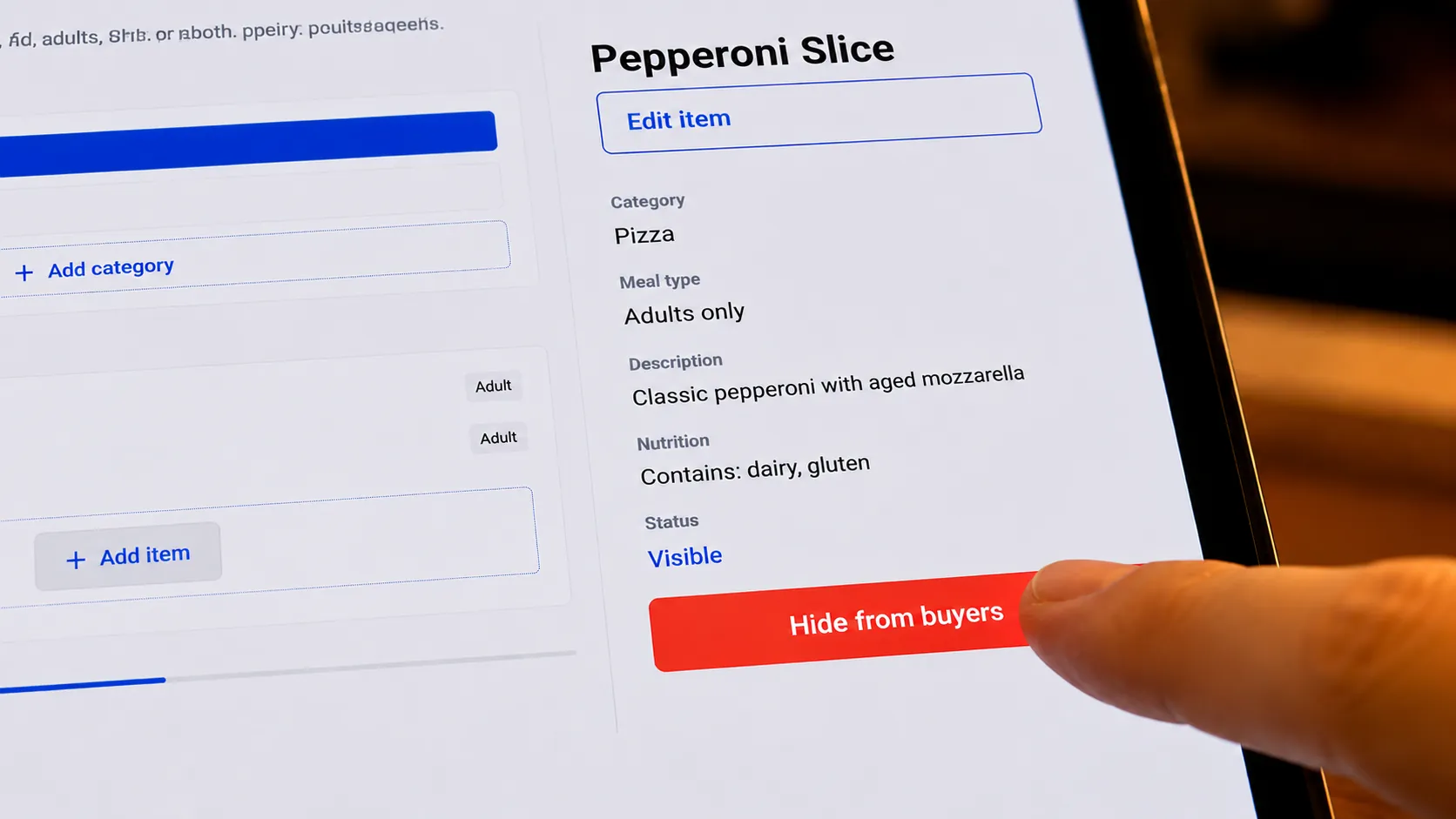
For a school that offers choices, each item also needs a clear name, a simple ordering description, and any practical dietary details the school has agreed to communicate. Our school lunch menu template can help turn those decisions into a family-facing menu that restaurants can work from.
3. Make the ordering cutoff protect the kitchen and the family
Ordering is where a catering idea becomes a restaurant plan. The kitchen needs a dependable final count to purchase, prep, pack, and label meals. Families need a deadline they can find before they are rushing through bedtime, homework, and the next morning. Both needs can be true at once.
Ask each caterer how they receive the final count, when it is final, and what happens with late requests. A day-before cutoff is common because it gives the restaurant time to plan, but the right schedule depends on the menu and service day. What matters is that the cutoff is visible, consistent, and connected to the restaurant's preparation routine. Our guide to school lunch ordering cutoffs explains the tradeoffs in more detail.
If families place individual orders, avoid making the school office re-enter, collect, or reconcile them by hand. That may sound workable for a few lunches. It becomes an unpaid second job once a program gains traction.
Before opening orders, walk through the calendar too. Account for half days, holidays, field trips, school events, and the first week after a break. A cutoff is only useful when it follows the real school calendar and the restaurant can see the same service dates. Clear notice for a non-service day saves families from ordering a meal that has nowhere useful to go.
4. Plan the package, label, and count together
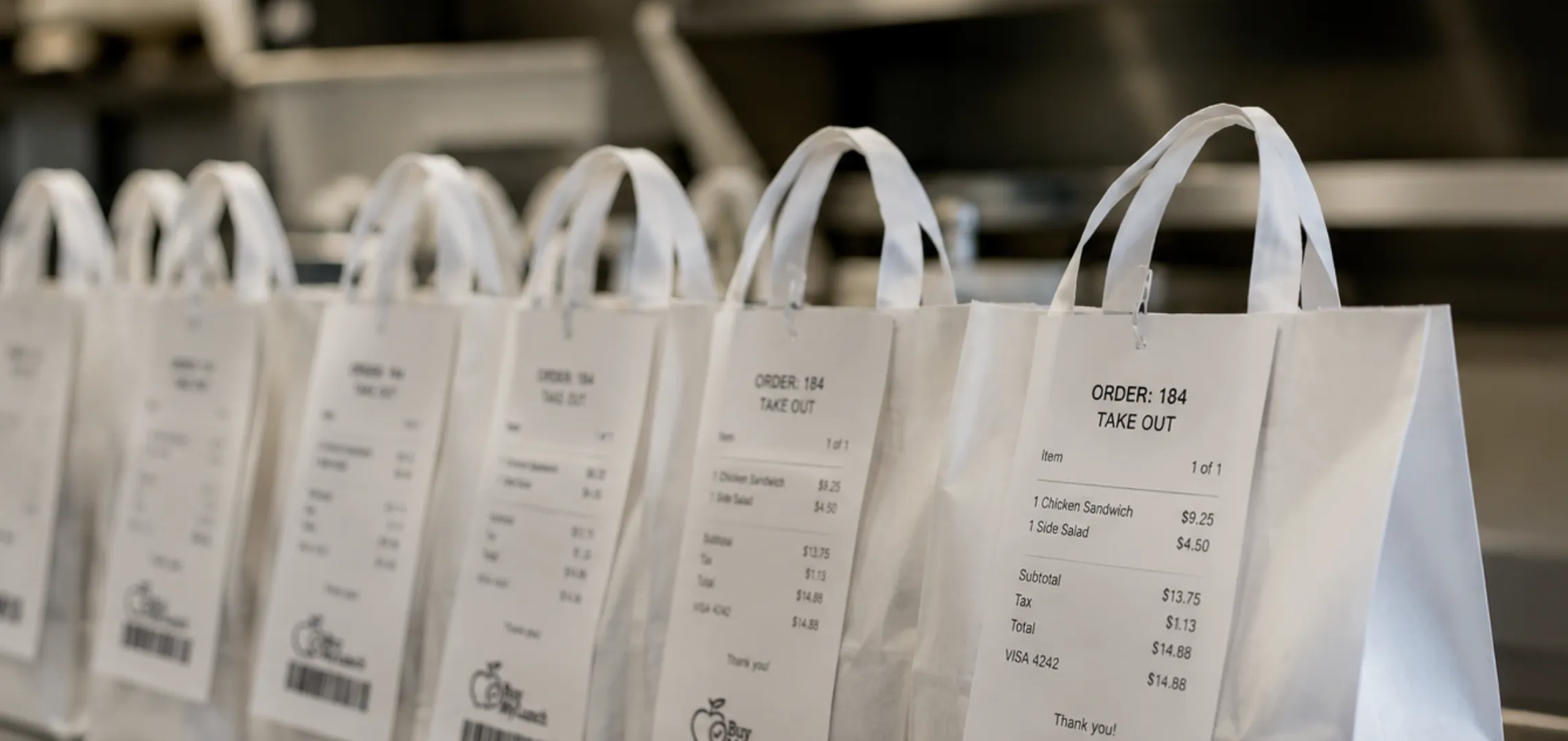
Packaging does more than keep food contained. It determines whether a meal remains intact on the route and whether the school can hand it to the right student quickly. Decide what information needs to appear on an individual meal, how bags will be grouped, and who completes the final check before delivery leaves the restaurant.
Give caterers the school's distribution reality. A front desk receiving 80 mixed meals has different needs than a grade-level volunteer handing out orders in classrooms. Labels should make the next handoff easier, not put staff in the position of opening containers to solve a mystery. Our meal packaging guide has a practical checklist for this part of the setup.
Ask to see one finished sample before launch. Look at it from the student's perspective, then from the person receiving it at school. Is the meal name clear? Is the bag sturdy? Does the information help the right person pick it up quickly? A two-minute sample review can prevent weeks of awkward workarounds.
5. Treat delivery as part of the service, not the last mile afterthought
Agree on the arrival window, parking instructions, entrance, receiving contact, and backup contact before the first service. The driver should know exactly where to go. The school should know who is expected. The restaurant should know what happens if a normal entrance is blocked, a school event changes traffic, or a delivery is running behind.
Food safety belongs in that delivery discussion too. The federal food safety guidance for perishable foods is a useful reminder that time and temperature matter outside the kitchen. Schools and caterers should use the requirements that apply to their area and menu, then build their receiving routine around them.
A named receiving person and a short, repeatable handoff beat a vague instruction to leave lunch at the office. The office is where many programs go to become a pile of bags. Be kinder to the office.
6. Decide who supports each lunch-day question
Families may have questions about an order, payment, dietary information, an absence, or a missing meal. Restaurant teams may need to clarify a count. School staff may need help when a delivery is late or a label does not match the distribution list. Those questions should have an owner before the program starts.
A good catering arrangement makes the school's role clear without making staff become default customer support. The school needs enough visibility to receive and distribute meals. The service and restaurant partner should own the ordering and fulfillment details they control. That separation protects the school's time and gives families a clearer answer path.
Put the contact path in the same place families find the menu and cutoff. A parent should not have to email a teacher to ask whether an order was received. Likewise, a restaurant should not have to call three different people to confirm where lunch belongs. Clear ownership is not glamorous, but it is what makes a program feel dependable after the first week.
7. Test the first day like an operation, not a celebration
After the first lunch day, review what actually happened with the people who saw it: the school contact, restaurant lead, delivery person, and whoever owns family support. Compare the expected and delivered count. Note arrival time, label clarity, distribution bottlenecks, parent questions, and any point where staff had to improvise.
Then fix the small things quickly. A clearer cutoff reminder, an earlier packing check, a different bag grouping, or a new delivery entrance can make the program feel dramatically calmer. The goal is not a flawless launch call. It is a lunch routine that improves after seeing the real school day.
Keep the review short and specific. Choose one owner and one due date for every change, then tell the people affected what will be different next time. That tiny bit of follow-through is how a catering pilot becomes a service families trust, rather than something everyone remembers as a nice idea that was too hard to run.
How Buy My Lunch helps schools run catered lunch
Buy My Lunch helps participating schools offer restaurant-prepared lunches without turning the office into the ordering system. Families use school-specific ordering, restaurant partners receive organized counts, and the program is built around delivery details and a clearer handoff.
Schools comparing options can explore school lunch catering or see how private school lunch catering can fit a family-order model. The useful standard is simple: lunch should make the school day easier to run, not give it another thing to manage.
Frequently asked questions
What does catering for school lunches include?
It can range from a simple bulk tray delivery to an organized program with family ordering, restaurant prep counts, individual labels, delivery timing, and school-side distribution. The right scope depends on how students receive meals and who owns the daily work.
How far ahead should families order catered school lunch?
The cutoff should give the restaurant a dependable count and enough time to prepare, pack, label, and deliver the meals. A day-before cutoff is common, but the right timing depends on the menu, restaurant capacity, and school schedule.
Can a school use local restaurants for catered lunch?
Yes, when the school and restaurant agree on a school-ready routine. The menu, ordering deadline, meal count, packaging, delivery instructions, receiving contact, and parent-support path should be settled before the first service day.
What should a school ask a lunch caterer before launch?
Ask how orders become a final kitchen count, how dietary information is communicated, who labels and checks meals, where the driver arrives, who receives the delivery, what happens when an order is missing, and who supports families after checkout.
How does Buy My Lunch help with school lunch catering?
Buy My Lunch helps participating schools run restaurant-prepared lunch with school-specific family ordering, organized restaurant counts, delivery planning, labeled meals, and a clearer school-day handoff.