Selling food to a school sounds simple until the first conversation turns into three different conversations. One person is asking for lunch for a school event. Another wants a restaurant option that families can order ahead. A third is responsible for a public school meal program with its own purchasing process. Same building. Very different work.
A restaurant does not need a giant sales deck to start. It needs a clear answer to a few practical questions: who is paying, who approves the offer, what food is being provided, how far ahead orders close, and how meals get from the kitchen to the right place at the school. Start there, and the next steps become easier to sort out.
This guide is for restaurant owners and operators exploring school food sales, especially repeat parent-paid lunch programs. It does not replace the school's purchasing rules, food-safety plan, or local requirements. It helps a restaurant make a useful first offer without promising a version of service it cannot actually repeat.
Key takeaways
- Selling food to schools starts with the lunch model. A district food-service purchase, a catered event, and a parent-paid restaurant lunch day are different conversations.
- The best first offer is simple: a small menu, clear price, realistic lead time, individual meal details, and a delivery plan the school can explain.
- Public schools may have formal purchasing requirements. Restaurants should follow the school food authority's process instead of assuming a friendly introduction is a contract.
- A parent-paid program still needs a written handoff plan, but it can give a restaurant and school a practical way to test a repeatable meal day.
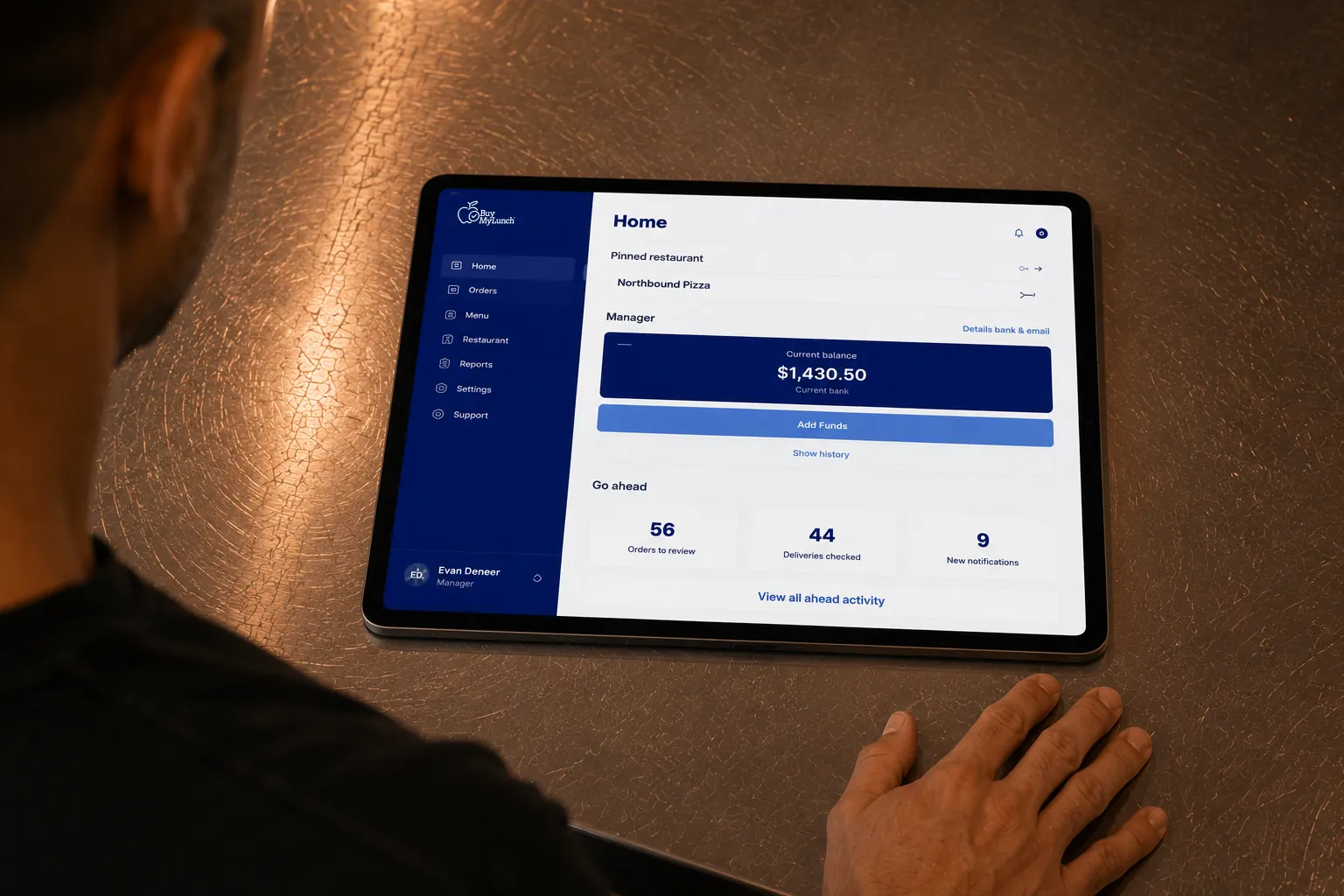
- Buy My Lunch organizes the advance order, payment, meal details, restaurant count, and school handoff that are easy to lose in a manually run lunch day.
1. Choose the school-food model before you pitch
Schools buy and organize food in several ways. A district may run its own cafeteria. A school may arrange food for an event. A parent group may organize a fundraiser. Or a school may want a restaurant-prepared lunch day where families place individual orders in advance.
Those are not interchangeable. The U.S. Department of Agriculture's Farm to School program describes how schools can bring local food into child-nutrition programs, but those programs remain the responsibility of the school food authority. If the school is asking a restaurant to supply part of a federally supported meal program, let the school explain the program, food requirements, and purchasing path before you quote a weekly menu.
A parent-paid restaurant program has a different job. Families choose and pay for their own meals. The restaurant prepares to a confirmed count. The school receives an organized delivery instead of a stack of separate restaurant orders. That is the model Buy My Lunch supports, and it works best when everyone agrees on the service details before the menu goes out.
2. Find the person who owns the decision
Do not open with, “Who handles lunch?” It is too broad, and it hands the school a riddle. Say what you are offering and ask who owns that type of decision: “We are a local restaurant exploring an ordered-ahead lunch option for families. Who would be the right person to speak with about that?”
For a public meal-service purchase, that may be the district or school food-service director. For a parent-paid lunch day, it may be an administrator, activities leader, parent organization, or office manager who already coordinates family communications. For an event, it may be the event organizer. The goal is not to push past the first person who answers the phone. It is to get the proposal to someone who can explain what the school needs.
Bring a concise introduction: the kind of food you make, the audience you can serve, a sample menu, your practical delivery range, and the service model you are proposing. Do not lead with a giant menu or a vague promise to “partner.” Schools are already operating a full day. A clear offer is easier to pass along.
3. Build an offer a school can actually evaluate
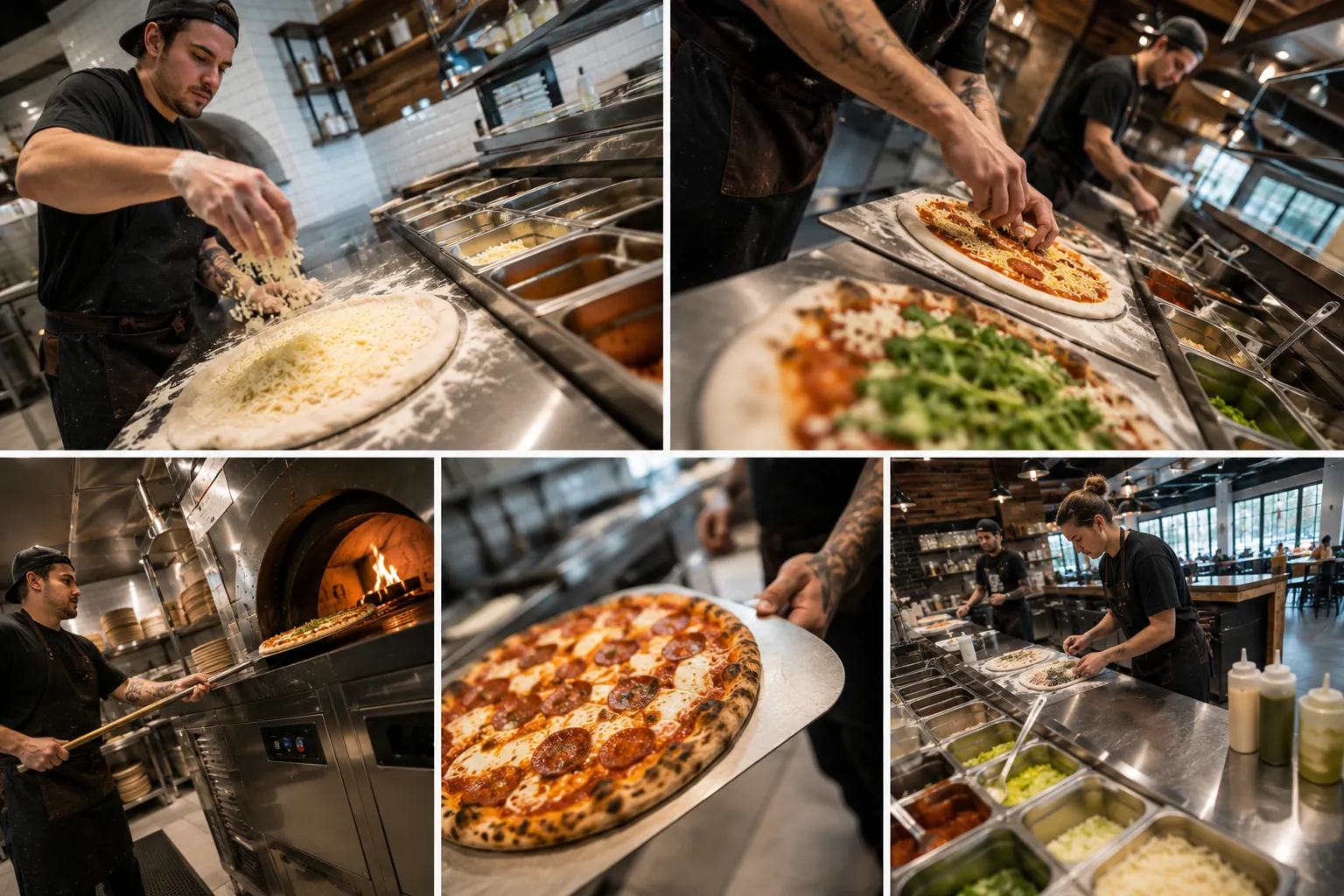
A school-ready proposal should answer the questions that will come up before the school has to ask them. Start with a small menu that your kitchen can make repeatedly. Include a price, serving details, clear item names, advance order cutoff, allergen or ingredient information you can provide, individual packaging plan, delivery window, receiving entrance, and a direct restaurant contact for the day of service.
Keep the menu tighter than your regular all-day offering. A school meal has to move through ordering, prep, labeling, bagging, travel, delivery, and distribution. A dozen custom modifiers may look generous online and create a miserable prep table at 10:30 a.m. The school lunch menu guide walks through the practical tradeoffs between choice, portions, prep, and delivery.
Put the school's concerns on the page, not in a later email thread. How are meals identified? Who receives the bags? What happens when an order is missing or incorrect? How much notice does the kitchen need? The clearer these answers are up front, the less likely a school is to assume it is signing up for cafeteria administration disguised as tacos.
4. Use a short outreach plan
The first message should make it easy for a school to decide whether a conversation is worth having. Identify the restaurant, name the type of food it serves, explain the proposed model in one sentence, and ask for the person who owns the decision. Attach or link a one-page sample rather than sending every menu, catering package, and social post you have ever made.
A useful school-lunch introduction can cover five points:
- The restaurant's name, location, and practical delivery area.
- The proposed service, such as a parent-paid weekly lunch day or event catering.
- A small sample menu with clear price and serving information.
- The advance-order timing and the expected delivery window.
- The next decision, such as a short call, a menu review, or a pilot day.
Do not confuse a school with pressure just because a response takes time. The contact may need to speak with an administrator, food service, a parent group, or a facilities team before replying. Follow up once with a useful detail, such as a revised sample menu or a clear answer about ordering and delivery. Repeated nudges that add nothing are not persistence. They are homework for the person trying to run a school.
It also helps to describe the service in the school's language. Say whether families order in advance, whether the restaurant delivers individual meals, how the school receives them, and who handles order questions. A school should not have to guess whether it is being asked to take payment, sort a list of names, or call the kitchen when a parent changes their mind at 9:45 a.m.
5. Handle public-school purchasing without guessing
When a public school is buying food with federal funds, its purchasing process matters. Federal procurement standards in 2 CFR 200.320 set out methods that recipients and subrecipients use when making purchases under federal awards. The details can vary with the purchase and the school's policies, so a restaurant should ask the school food authority which process applies.
That may mean responding to a request for pricing, providing business and food-service documentation, meeting menu or delivery specifications, or waiting for a scheduled purchasing window. It is tempting to treat this as paperwork standing between a restaurant and a sale. It is better to treat it as part of the buyer's job. Be organized, respond honestly, and do not claim that your restaurant meets a requirement before the school tells you what the requirement is.
Food safety belongs in that conversation too. The FDA's Food Code is a model used by state, local, tribal, and federal agencies. Your restaurant still needs to follow the permits, operating procedures, and transport practices that apply where it serves food. A school cannot approve that for you, and a sales page cannot replace it.
6. Make the parent-paid lunch option feel organized
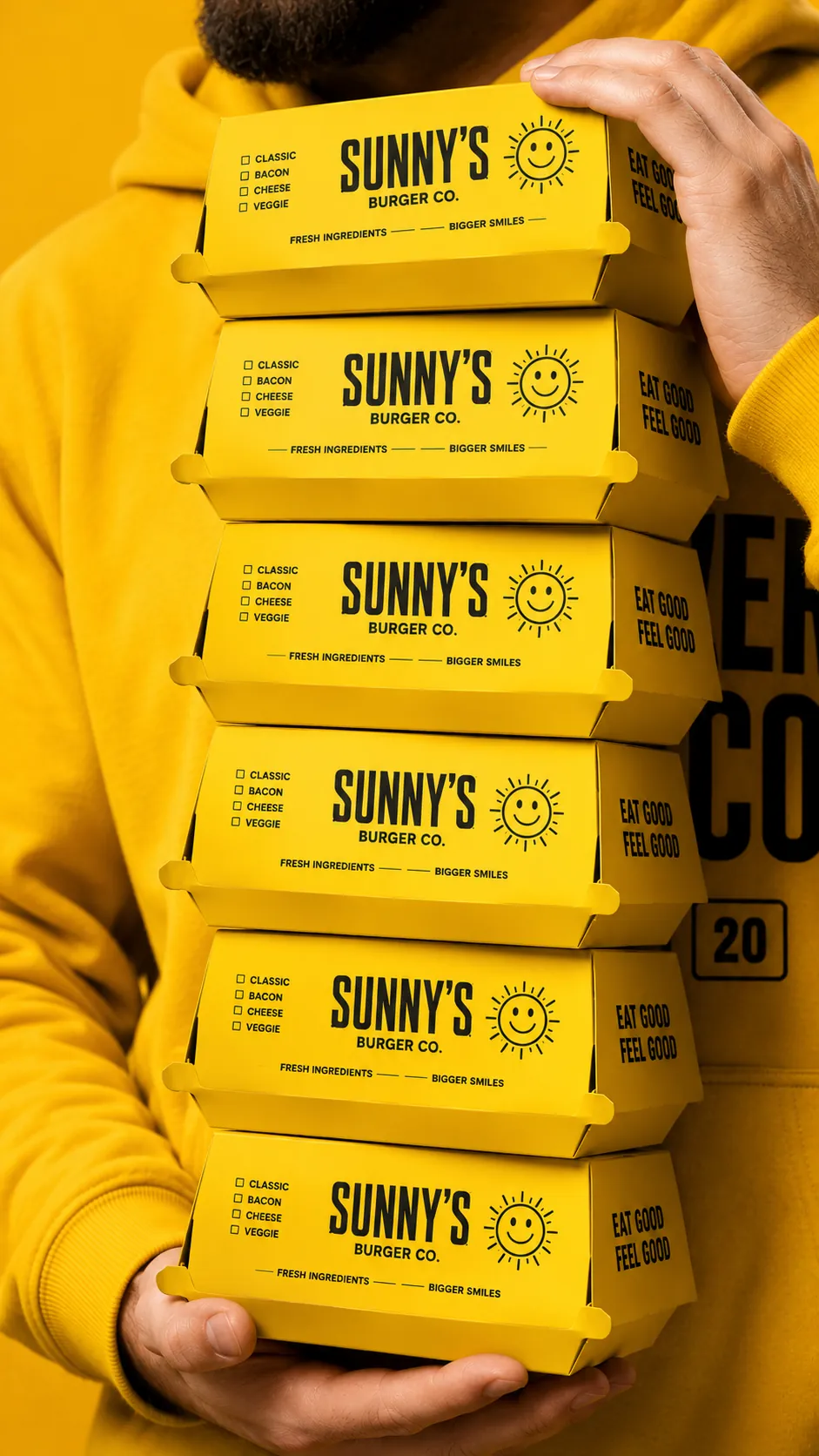
Parent-paid school lunch is usually where a local restaurant can offer something more flexible than a district meal contract. The school does not have to collect individual payments. Families do not have to call in separate orders. The restaurant is not trying to translate a flood of messages into a prep list while regular guests are lining up.
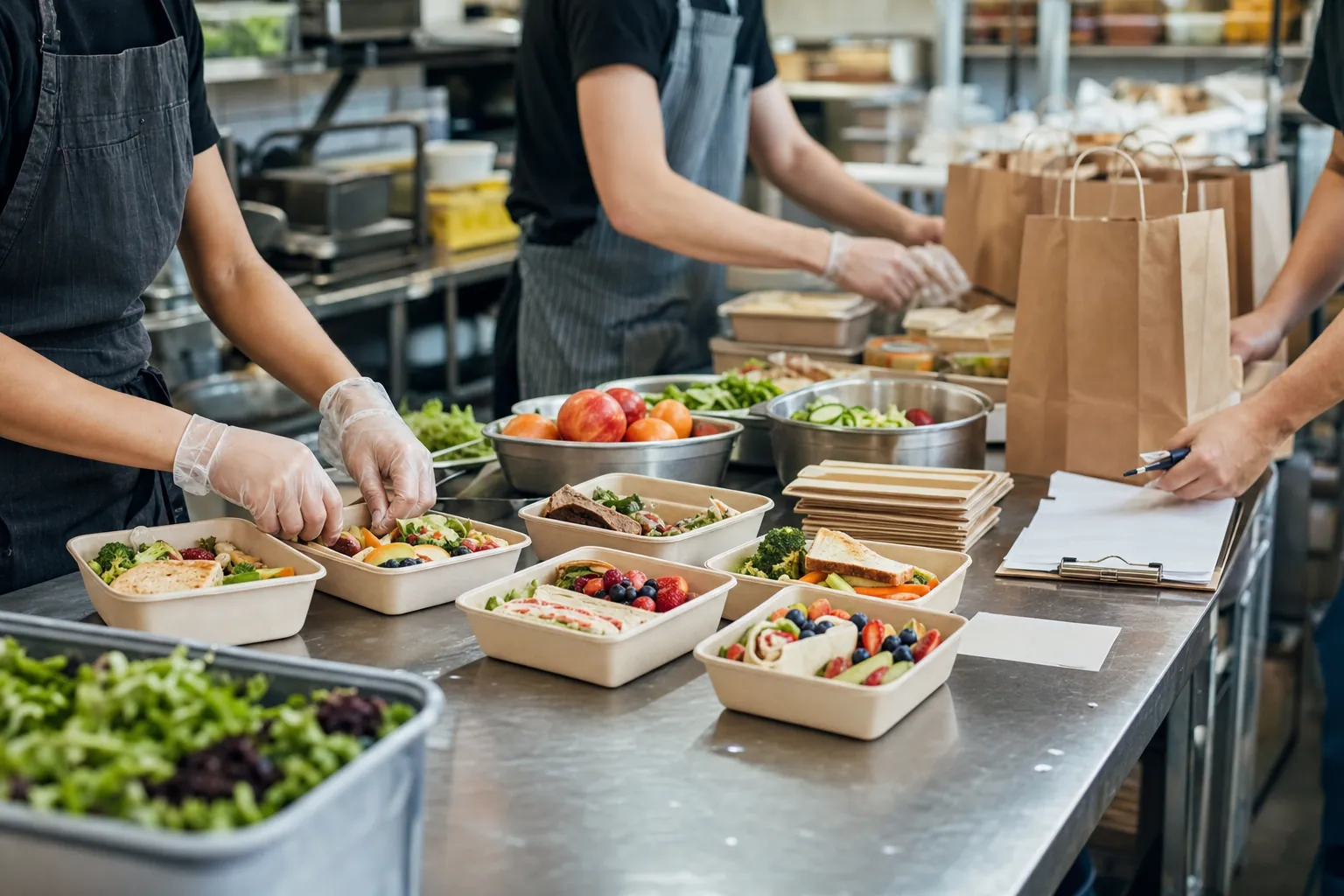
The essential move is advance ordering. Set a deadline that matches the kitchen's real purchasing and prep window. Once it passes, the restaurant should receive a final count and the individual meal details needed to label and pack each order. That makes the lunch day a planned service, not an unpredictable delivery rush with a school address.
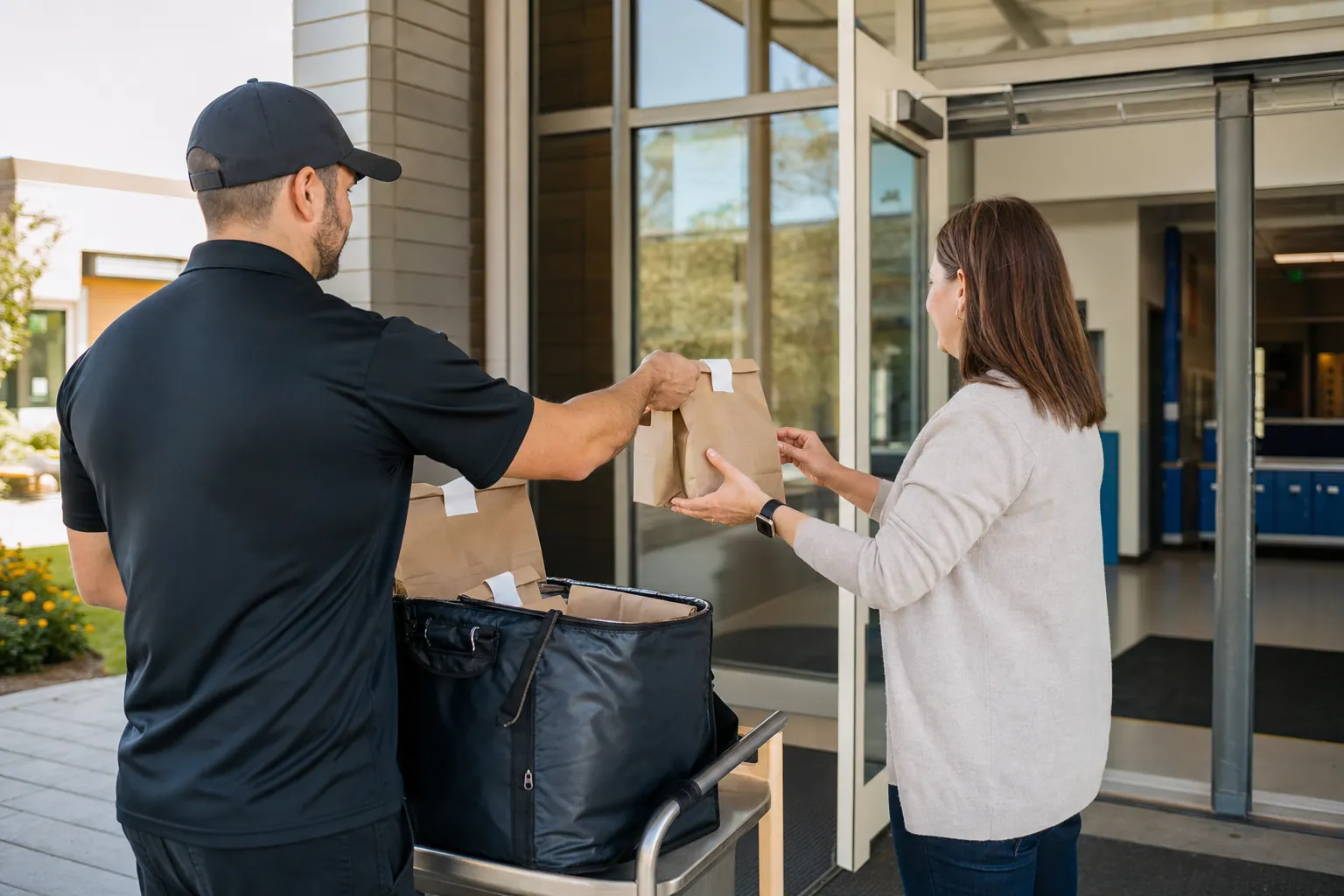
Be direct about the boundaries. Is the restaurant delivering? Where does the driver park? Which entrance is used? Who receives the meals? Does the school distribute bags by classroom, pickup table, or another agreed routine? The school lunch delivery guide explains why the handoff deserves its own plan before families begin ordering.
7. Set limits before the first order
A restaurant should know its own limits before the school opens a menu. Decide the order range the kitchen can handle alongside regular service, the days that work, how much lead time the team needs, and which menu items travel reliably. It is better to begin with one dependable day and an honest maximum than to accept a program that only works when everything goes perfectly.
Put those limits into the offer. A school needs to know what happens when demand exceeds the planned range, whether late orders are accepted, and how a holiday, closure, or restaurant schedule change will be communicated. Clear capacity is not a lack of ambition. It gives everyone a plan that can be repeated without turning a good lunch day into an emergency.
This is also where a restaurant can protect its regular guests. If Tuesday at 11 a.m. is already full, choose a different lunch day or a different ordering cutoff. The school does not benefit from a restaurant forcing a school program into the busiest window and then scrambling. A service model that fits the real kitchen is more useful than a larger promise that cannot hold.
8. Run a small first service day, then review the facts
The first lunch day should be manageable enough to inspect. Use a limited menu. Confirm the delivery window and receiving contact in writing. Pack individual meals in the agreed order. Give the driver one destination and one number to call. Avoid adding a new special, a new route, and a new packaging system all at once. That is not a pilot. That is a dare.
After service, review the specific points that affect whether the next lunch day is easier to run: final order count, prep timing, label readability, packaging condition, delivery arrival, receiving instructions, and any missing or incorrect meal questions. Ask the school for the operational view, not just a thumbs-up. A restaurant needs to know what took too long, what was hard to distribute, and what families asked repeatedly.
Then change only what the review supports. You may need a tighter cutoff, fewer menu options, a different bag grouping, a clearer label, or a better delivery contact. The school lunch packaging guide can help restaurant teams test the meal's full trip instead of judging containers only on the prep counter.
How Buy My Lunch helps restaurant partners
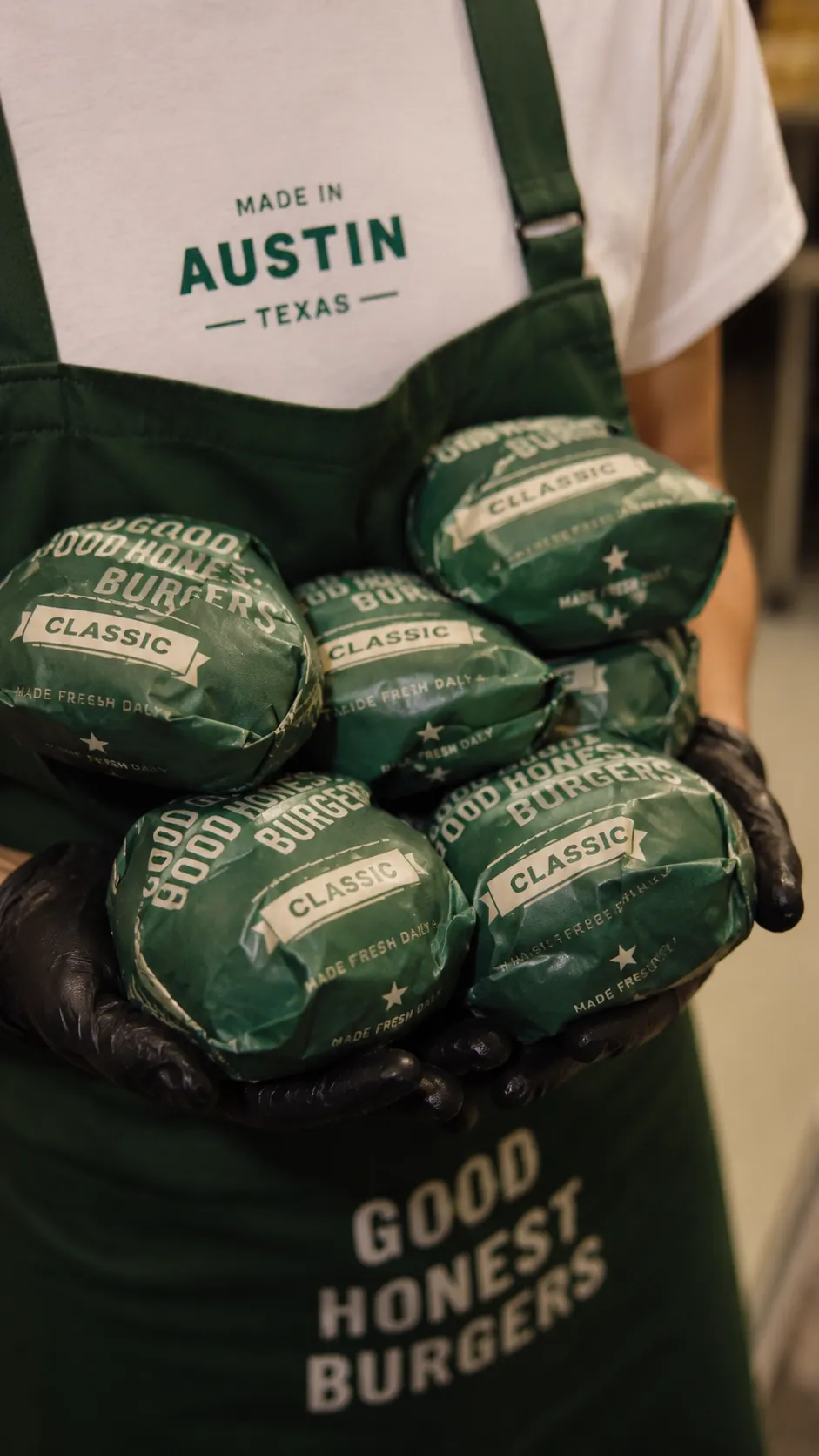
Buy My Lunch gives restaurants a practical way to offer parent-paid school lunch without collecting separate family orders or rebuilding the day's count by hand. Families order from school-specific menus before the cutoff. Restaurant teams receive organized meal details and final counts. The school has a planned delivery and handoff routine.
That leaves the restaurant responsible for the part it should own: good food, realistic menus, careful prep, clear packaging, and delivery. Buy My Lunch organizes the rest of the moving parts around the meal day. Visit Restaurant Partners to see the model, or use the restaurant setup guide for menu, labeling, order, and delivery details.
Frequently asked questions
Can a restaurant sell food directly to a school?
Yes, but the route depends on the school and the meal model. A public-school food-service purchase may follow a formal purchasing process. A parent-paid restaurant lunch program is often organized differently because families order meals ahead. Start by asking who is buying, who approves the program, and how the school wants meals to arrive.
Who should a restaurant contact at a school?
Start with the person responsible for the kind of program you are proposing. That may be the food-service director, school administrator, activities coordinator, parent group, or event organizer. A receptionist can point you in the right direction, but should not have to decode a vague sales pitch during the lunch rush.
Do restaurants need to bid to sell food to public schools?
Sometimes. Public-school food purchases can be subject to the school or district's purchasing rules, especially when federal child-nutrition funds are involved. The school food authority can explain its process, required documents, and whether a restaurant should respond to a formal solicitation.
What should be in a restaurant's school lunch proposal?
Include the menu, price, ordering deadline, portion details, ingredient or allergen information the restaurant can provide, packaging approach, delivery window, school receiving point, and the person who handles questions. Keep the first proposal narrow enough that a school can tell what the restaurant is actually agreeing to provide.
How can a restaurant test a school lunch program?
Use a limited first service day with an agreed menu, order cutoff, delivery time, receiving contact, and review plan. Afterward, compare the final count, packaging, delivery arrival, missing or incorrect meal questions, and the school's distribution experience. Adjust one or two specific details before expanding.
How does Buy My Lunch help a restaurant sell food to schools?
Buy My Lunch supports the parent-paid restaurant lunch model. Families order from a school-specific menu before the cutoff, restaurants receive organized meal details and counts, and the school has a planned delivery and handoff routine. That gives the restaurant a clearer service day than collecting separate family requests.