A good school lunch ordering system gives families one dependable place to see the restaurant choices available for their school, order before the cutoff, pay, and find help. It removes the uncertainty that leads to late notes, loose payments, and questions sent to the school office.
Give restaurant partners a usable plan.
The system should turn confirmed family choices into the meal counts a kitchen can actually prepare. When restaurant partners can see the right menu day, cutoff, and quantity in time, they can focus on making and packing lunch instead of interpreting a last-minute list.
Protect the last ten minutes before lunch.
The school experiences the whole program at handoff. Student information, labels, delivery details, Buyer IDs, and a clear support path help staff sort meals quickly and handle the exceptions that happen in a real school day.
One system, all the way through
From a family choice to a calmer lunch handoff.
A school lunch system has to work for families, restaurant partners, and the school team at the same time. Buy My Lunch keeps the steps connected so the person receiving lunch is not left untangling what happened earlier in the day.
01
Set the menu around the school day.
A school lunch program starts with choices that fit its schedule. Buy My Lunch helps connect restaurant partners, school-specific menu days, and the lunch options families can order. The school does not need to turn every menu change into a separate manual announcement or coordinate a different process for each restaurant.
02
Give families a clear window to order.
Parents need a simple way to make a lunch choice before it becomes urgent. A defined order cutoff gives families a predictable routine, while also protecting the preparation time restaurant partners need. The result is fewer late requests and less pressure on school staff to make exceptions at the last minute.
03
Turn confirmed choices into prep details.
Orders are useful only when they become a reliable restaurant plan. Buy My Lunch connects the menu day, family order, and meal count so partners know what they are preparing. That creates a more dependable starting point for packaging individual meals and meeting the expected delivery time.
04
Receive lunches with useful context attached.
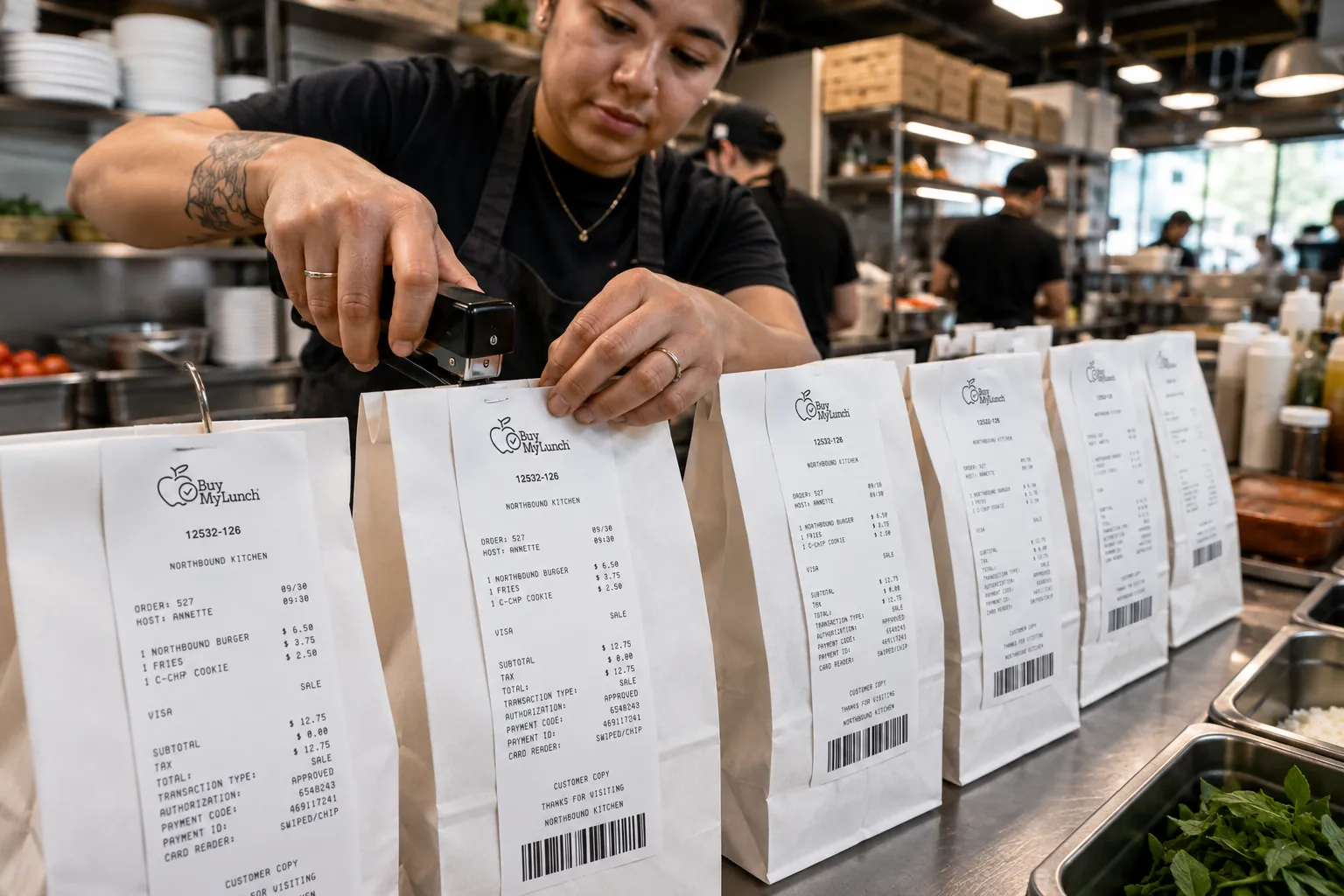
When lunch arrives, school staff should not have to reconstruct who ordered what. Labels and connected student details make it easier to sort meals, while a clear record of the order gives the team a practical place to start when a parent has a question or something changes.
The details that make lunch work
A connected lunch program has fewer loose ends.
The best system is not the one with the flashiest checkout. It is the one that gives each person involved the information they need at the moment they need it, without asking the school office to be the translator between families, restaurants, and lunchroom staff.
School-specific menus
Lunch should reflect what a particular school can receive and distribute, not a generic restaurant list. Buy My Lunch brings menus and meal days into the same ordering flow, helping schools offer local restaurant choice without asking the office to manage a patchwork of links and paper instructions.
Payments and credits
When families order and pay in the same place, the meal record and payment record stay together. That means less cash collection, fewer checks to reconcile, and a clearer starting point when a family needs help with a credit or order adjustment.
Restaurant-ready counts
Restaurant partners need confirmed demand before they begin prep. A useful system gives them counts that match the actual menu day and ordering deadline, so the kitchen can plan ingredients, packaging, and staffing around the lunches that have been ordered.
Labels and delivery details
A lunch is easier to hand off when the meal arrives with the details that matter. Student information and labels support sorting, while delivery expectations give the people receiving lunch a clearer view of what is coming and when.
A support path that knows the order
Questions will happen. The difference is whether they become a scavenger hunt across inboxes and spreadsheets. Keeping order context close to support helps the right person understand the meal, family, restaurant, and school details without making the front office the default help desk.
Made for restaurant-made lunch
More choice should not mean more work for school staff.
Restaurant-made lunch gives families the variety they want, but it also adds real operating detail. Menus need to fit the school day. Orders need a clear cutoff. Kitchens need dependable counts. Meals need useful labels and a practical delivery plan. Buy My Lunch brings those jobs into one school-ready flow.
Good lunch programs are not held together by one person remembering every exception. They work because the family, restaurant, and school responsibilities are clear before the first meal arrives.
Agree on the handoff before families order.
Before the first menu opens, the school should be clear on which lunch days are available, where delivery arrives, who receives it, how meals are sorted, and where families go for help. Those small operating decisions make the launch feel calm instead of improvised.
Give restaurant partners the details that change lunch day.
Partners need practical expectations: menu fit, order deadlines, confirmed counts, individual packaging, labels, delivery timing, and the school handoff point. A clear shared plan lets restaurants make food people want to eat without guessing at school logistics.
Use the early lunches to strengthen the routine.
The first few lunch days reveal the questions families ask and the details school staff need within reach. Because Buy My Lunch keeps the order, restaurant, delivery, and student context connected, the team can make focused improvements without rebuilding the program from scratch.
A calmer last handoff
Lunch should arrive with answers attached.
At lunch time, the school team should be able to receive and sort meals without hunting for order details. Clear student information, labels, and a connected support path make it easier to put the right lunch in the right place while the school day keeps moving.
That is the difference between a tool that collects orders and a system built to support the people who actually have to run lunch.
A school lunch ordering system gives families a way to order meals ahead and helps the people running lunch turn those choices into a workable plan. Buy My Lunch connects school-specific restaurant menus, parent orders, payments, restaurant counts, labels, delivery details, and the school handoff.
Is Buy My Lunch a cafeteria payment system?
No. Cafeteria payment systems often focus on student accounts or transactions at the serving line. Buy My Lunch is built for restaurant-made meals ordered ahead by families, then prepared, delivered, labeled, and handed off at school. It supports the coordination needed when lunch comes from local restaurant partners.
Can a school use local restaurants in its lunch program?
Yes. Buy My Lunch helps schools work with restaurant partners by organizing school-specific menus, ordering windows, parent payment, kitchen counts, individual labels, delivery expectations, and the practical details that make lunch day easier to run.
What should a school compare before choosing a lunch ordering system?
Look past the checkout screen. Ask how the system handles menu days, cutoffs, roster changes, parent payment, restaurant counts, labels, delivery timing, missed meals, credits, and support. The right choice is the one that keeps lunch organized after the orders close.