A menu that belongs to the school.
Families should see restaurant choices, lunch dates, and ordering windows that apply to their own school. A useful ordering experience removes the guesswork before a parent decides what to buy.
 Account
Buy My Lunch gives schools one organized path from a family’s choice to a restaurant-made meal ready for the school day, not just a completed checkout.
More than an order form
Families should see restaurant choices, lunch dates, and ordering windows that apply to their own school. A useful ordering experience removes the guesswork before a parent decides what to buy.
The cutoff gives families a clear decision point and gives restaurant partners the time to prepare the meals that were actually selected. It is the difference between a planned lunch day and a stream of exceptions.
School lunch ordering does not end at payment. Meals still need to be prepared, delivered, identified, and distributed. Buy My Lunch keeps the order details connected through that full path.
One connected lunch routine
School lunch ordering has to serve more than a checkout screen. Parents need a simple decision. Restaurant partners need dependable information before they cook. Schools need a handoff that fits the bell schedule. Buy My Lunch connects the work that happens between those moments.
Before a family orders, the school and restaurant plan needs to be clear. Buy My Lunch helps align available lunch dates, restaurant options, ordering cutoffs, delivery timing, and the school contact for handoff. That groundwork means the menu families see already fits the day it is meant to serve.
Parents can review the meals available to their school, choose for the correct date, and pay in one place. The experience is designed to be simple enough for a routine week, not just a one-time lunch event. Schools avoid collecting envelopes, tallying paper forms, and answering the same payment questions again and again.
When ordering closes, a restaurant needs more than a rough headcount. It needs the confirmed meal choices and order details that make individual preparation practical. Buy My Lunch turns completed family orders into information the kitchen can use before lunch day, helping partners plan packaging, quantities, and delivery.
At school, staff should not be reconstructing an order from bags, messages, and memory. Individually packaged meals arrive with Buyer IDs and the context needed for distribution. If a question comes up, the lunch date, restaurant, order, and support path are already connected.
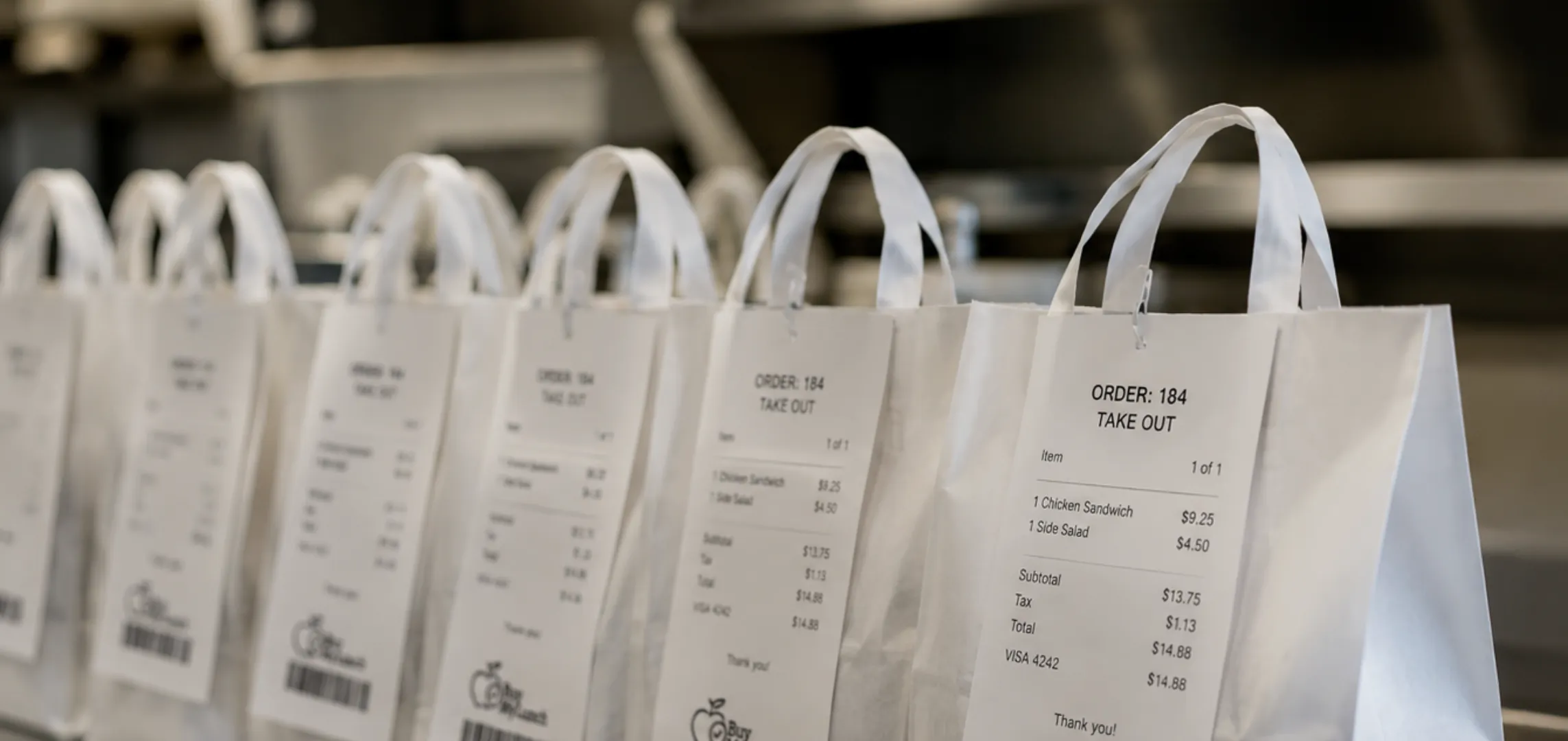
The part after payment
Many school lunch tools stop at the order confirmation. That still leaves the school team to coordinate restaurant counts, delivery timing, meal labels, family questions, and the last few minutes before distribution. The work does not disappear just because a parent has paid online.
Buy My Lunch is designed around the full routine. It helps participating schools offer local restaurant choice while preserving the details that make a repeating lunch program manageable: planned order windows, restaurant-ready counts, delivery context, Buyer IDs, and a defined support path.
What schools should compare
A school can find a good menu and still inherit a difficult process. Comparing lunch ordering options means looking at who has the information and support needed before, during, and after delivery.
A strong school lunch ordering program makes it obvious what is available, who can order, and when the window closes. Parents need a clear route from a school-specific menu to a confirmed order, without relying on office reminders or a separate payment step. It should also make the everyday details easy to find, such as the meal date, restaurant, cutoff, and what happens after an order is placed. When those answers live with the menu, families are less likely to send routine questions back to teachers and office staff.
Restaurant-made school lunch is different from a single catering tray. Partners need final counts, individual meal choices, packaging expectations, and delivery context early enough to prepare well. The ordering system should make those details routine, not a manual handoff. A restaurant team should be able to move from final orders into preparation with a practical plan for individual meals, not spend the morning matching messages to a spreadsheet or trying to interpret a late change.
The right setup gives the school a defined role in receiving and distributing meals, while keeping routine orders, payments, credits, and restaurant follow-up out of the front office. A lunch program should add choice, not another administrative job. Before a school chooses an ordering approach, it should be clear who answers a payment question, who follows up on a missed item, and what the delivery contact needs to do when meals arrive. Clear roles protect the people who already have a full school day to run.
Even a well-run lunch day can bring a missing item, an order question, or a last-minute concern. The important question is whether there is a clear next step. Buy My Lunch keeps the program context together so schools, families, and restaurant partners are not left to untangle the issue alone. The school team can report what happened through the program instead of becoming the go-between for a family and a busy restaurant kitchen, and Buy My Lunch can follow up with the information already attached to the order.
Start with a plan
The best first lunch day is one where each person already knows their role. These are the practical choices that give a new school lunch ordering program a strong start.
Set the lunch dates, restaurant lineup, cutoff, and delivery plan first. Families are more likely to adopt a new routine when the important choices are clear from their first visit.
A popular restaurant is only a starting point. Meals need to travel well, be practical to package individually, and arrive when the school is ready to receive them.
Agree on the entrance, receiving contact, delivery window, and handoff routine before orders begin. A simple plan protects the lunch period from avoidable confusion.
Families should know where to go for ordering and payment support, while school staff know how to flag a lunch-day issue. Clear ownership prevents the office from becoming the default help desk.
School lunch ordering gives families a way to choose and pay for lunch ahead of time through their school’s available menu. Buy My Lunch connects that family order to restaurant preparation, delivery, labeled meals, and the school handoff.
Yes. Buy My Lunch helps participating schools offer restaurant-made lunches through local partners. The program connects school-specific menus, parent ordering, completed counts, delivery coordination, individual meal identification, and support.
Families order and pay through Buy My Lunch. That keeps schools out of payment envelopes, order reconciliation, and routine payment follow-up, so staff can focus on the planned lunch handoff.
After the ordering window closes, restaurant partners receive the completed meal information and counts needed for preparation. That gives the kitchen a more dependable starting point than an estimate or a stack of separate orders.
Meals are individually packaged and labeled with Buyer IDs. School staff use their internal view to distribute orders without sharing student names with restaurant partners.